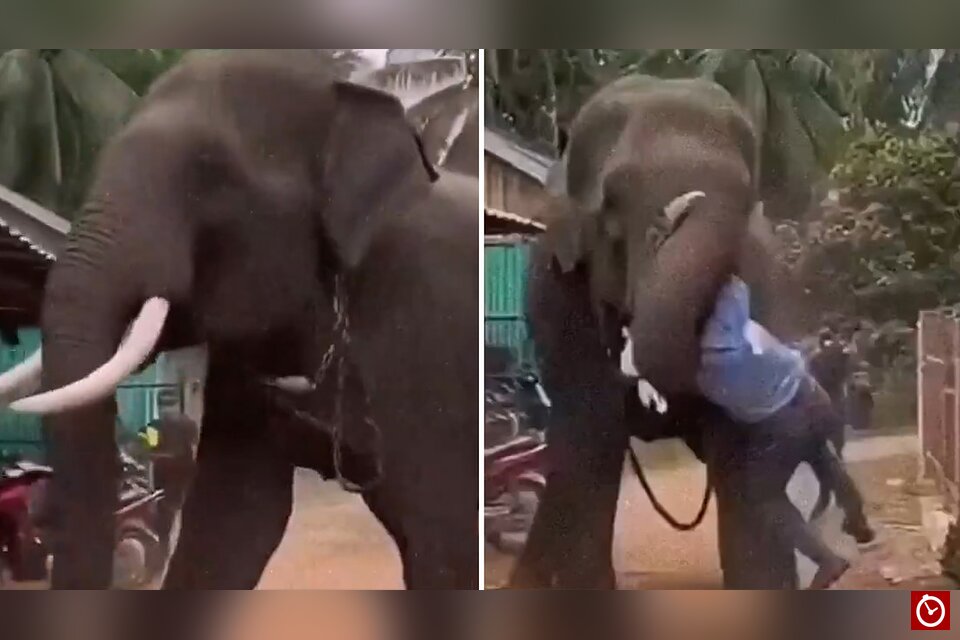

Indonesia, the first nation in Asia to completely ban elephant rides

9:27 am
Jakarta.- Indonesia has become the first Asian nation to completely ban elephant rides, an activity that attracts thousands of international tourists every year and which animal rights organizations are also calling to eradicate in countries like India and Thailand.
The Indonesian Agency for Natural Resources and Conservation confirmed in a statement that the ban on this practice, decreed in December 2025, has been in effect since Monday in all tourist and animal conservation centers registered with the authorities.
Read more: An earthquake of magnitude 5.7 shakes the Indonesian island of Java
The regulations, which required the end of elephant rides and the exhibition of this activity from January 21, 2026, had been violated last week at a private center located in Bali – the quintessential tourist destination of Indonesia – so the Government issued two warnings against this establishment. After the Ministry of Forestry threatened to revoke the operating license, the center removed the elephant mount since last Sunday, when a team appointed by the Government went to the place and corroborated the implementation of the veto. Following this, the non-governmental organization People for the Ethical Treatment of Animals (PETA) issued a statement celebrating this “historic decision”. “Too often, elephants lose out in the tourism industry. PETA investigations have revealed that elephants are routinely chained and beaten with sharp hooks to force them to obey on tourist rides,” said PETA Asia President Jason Baker in the statement. This ban, the NGO remarked, “puts Indonesia at the forefront of elephant welfare.” “We now urge Nepal, Thailand, India and other countries to follow Indonesia’s example, and we ask travel agencies around the world to stop selling packages that include elephant rides,” the text concludes. Indonesia is home to the Sumatran elephant, a subspecies of the Asian pachyderm, whose population was halved between 1985 and 2012 due to poaching to remove its tusks – highly prized in the illegal trade -, deforestation that has significantly reduced its natural habitat, and conflicts with humans. Currently, there are between 2,400 and 2,800 specimens of this animal left, which is why it is classified as “critically endangered” by the World Wildlife Fund.
We are a multiplatform outlet offering news and television content. The fastest-growing news outlet in audience in the history of Caribbean communication.


#Most read
- 1.Woman fined for sitting on playground bench while crying in Germany
- 2.84% of teenage girls in Spain fear that AI will use their photos to create fake sexual content
- 3.Roberto Ángel Salcedo heads the first preparatory meeting for the 2026 carnivals
- 4.Apple equips its AirPods with translation in English, Spanish, Portuguese, French, and German
- 5.Melissa Medina was accompanied by a 60-year-old man and a Venezuelan friend at the time of her death
- 6.NASA launches three missions to map the heliosphere and study the solar wind
- 7.Nvidia: From Video Games to the World’s Summit as a Colossus of Artificial Intelligence
- 8.Meet the 10 participants of “La Casa de Alofoke”
- 9.Alofoke’s House 3, return of an impact phenomenon
- 10.Colombian boxer Andrés Pérez wins two international titles after knockout in Dominican Republic

Newsletter
Subscribe to our newsletter to receive our latest articles instantly!
This site is protected by reCAPTCHA and the Google Privacy Policy and Terms of Service apply.