
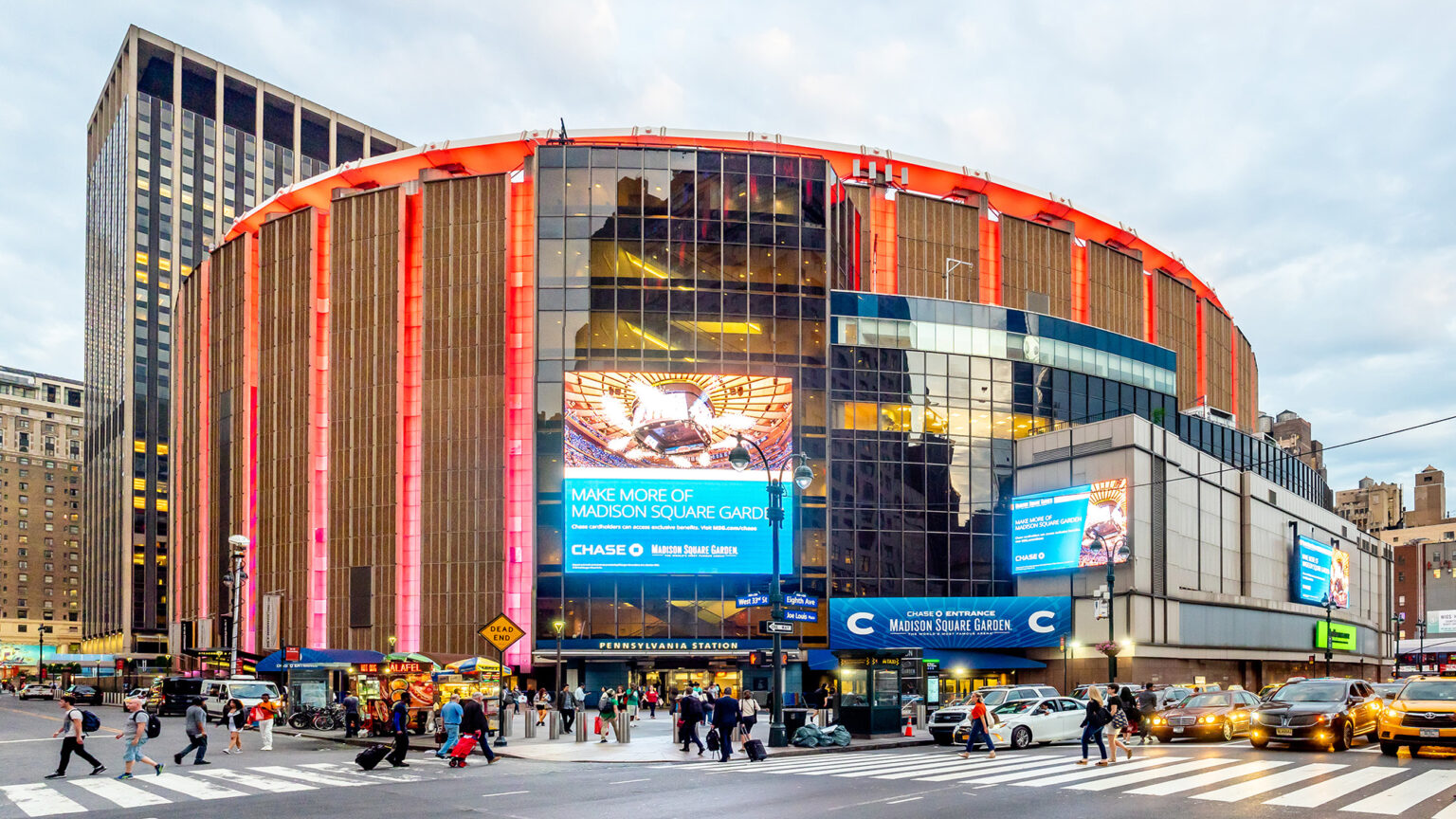

Activists and privacy advocates demonstrated in front of Madison Square Garden to demand limits on the use of facial recognition and other technologies intended to collect biometric information from people entering public and private establishments in the city.
Participants particularly questioned the practices used in facilities linked to Madison Square Garden, considering that these tools may go beyond security purposes and be used to identify or prevent the access of certain individuals.
Debate on facial recognition
New York City Council member New York Shahana Hanif is among those backing legislative initiatives aimed at restricting facial recognition and the collection of biometric data in retail stores and entertainment venues. The proposals would reach spaces such as Madison Square Garden and Radio City Music Hall.
One of the cases mentioned by activists during the debate corresponds to a woman who was previously denied entry to Radio City Music Hall due to her employment connection with a law firm involved in litigation against companies related to businessman James Dolan. The woman was accompanying a group of Girl Scouts at the time, according to the protesters.

Those who promote greater controls also argue that the massive storage of biometric data could pose a risk to citizens in the event of information leaks or cyberattacks. They also question who can access those records and under what criteria they can be used.
Limits on facial recognition
The proposals, however, do not have unanimous support. Some merchants defend the use of these technologies as an additional tool to prevent crime, while police authorities regularly resort to images captured by surveillance cameras as part of criminal investigations.
Madison Square Garden has defended facial recognition as a technological version of people’s ability to identify other individuals. Privacy organizations, on the other hand, insist that the debate is not limited to security, but also encompasses the handling, storage, and eventual selective use of sensitive personal information.
The discussion comes as sectors of the New York City Council push for measures to establish stricter rules on the use of biometric technologies in commercial spaces, in a debate that pits arguments related to security against concerns about privacy and individual rights.