
Scientists create a ‘universal’ kidney compatible with any patient

9:53 pm
A team of Canadian and Chinese researchers has made a breakthrough in kidney transplantation by creating a ‘universal’ kidney compatible with all patients, regardless of their blood type. This achievement has enormous potential to significantly reduce the wait for donor organs and save more lives, indicates a statement from the University of British Columbia, in Canada, which has participated in the clinical trial.
Currently, donor organs can only be transplanted to people with a compatible blood type. This is because the immune system of recipients with different blood types can produce antibodies that attack and destroy the transplanted organ. There are different types of antigens, such as A and B. People with blood type O are universal donors because their red blood cells lack the A or B antigens.
You may be interested in: Kidney stones cause erectile dysfunction
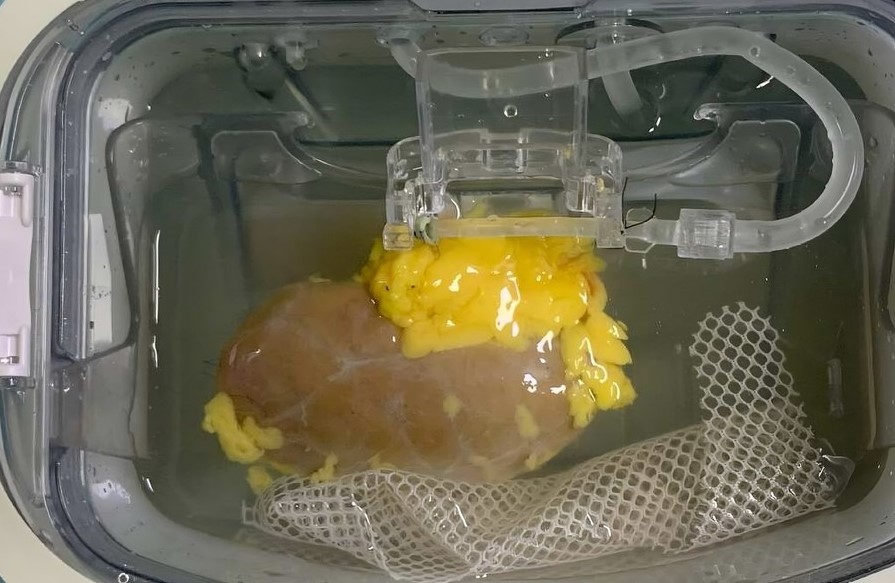
The team of scientists was able to remove type A antigens from a donated kidney and make the organ universal for transplants. To do this, they used specialized enzymes that removed type A antigens from the organ to convert it to type O. Then, they transplanted it to a 68-year-old patient with brain death in Chongqing, China (with the family’s consent), reports Nature.“It’s the first time we’ve observed this phenomenon in a human model”
For two days, the kidney functioned without signs of rejection. On the third day, some markers of the blood type reappeared, causing a mild reaction, but the damage was much less pronounced than that of a typical incompatibility. After this, the researchers observed signs of graft of the organ and, in this way, successfully completed the experiment. “This is the first time we have observed this phenomenon in a human model,” said biochemist Stephen Withers, one of the people responsible for the study. “It provides us with invaluable information on how to improve long-term results,” he affirmed. Now scientists are awaiting regulatory approval to conduct pilot clinical trials on living patients. Successful results could significantly address the current shortage of donor organs, which remains a serious problem: patients may wait years to receive their turn to receive a compatible organ.
Redacción de De Último Minuto



#Most read
- 1.Woman fined for sitting on playground bench while crying in Germany
- 2.Armed attackers shoot at vehicle in Peru in suspected robbery targeting gold bars
- 3.Meet the 10 participants of “La Casa de Alofoke”
- 4.84% of teenage girls in Spain fear that AI will use their photos to create fake sexual content
- 5.Roberto Ángel Salcedo heads the first preparatory meeting for the 2026 carnivals
- 6.Apple equips its AirPods with translation in English, Spanish, Portuguese, French, and German
- 7.NASA launches three missions to map the heliosphere and study the solar wind
- 8.Nvidia: From Video Games to the World’s Summit as a Colossus of Artificial Intelligence
- 9.Alofoke’s House 3, return of an impact phenomenon
- 10.Melissa Medina was accompanied by a 60-year-old man and a Venezuelan friend at the time of her death

Newsletter
Subscribe to our newsletter to receive our latest articles instantly!
This site is protected by reCAPTCHA and the Google Privacy Policy and Terms of Service apply.