You can also read: 26 years since the murder of the child Llenas Aybar are commemorated today | De Último Minuto | Dominican Republic News
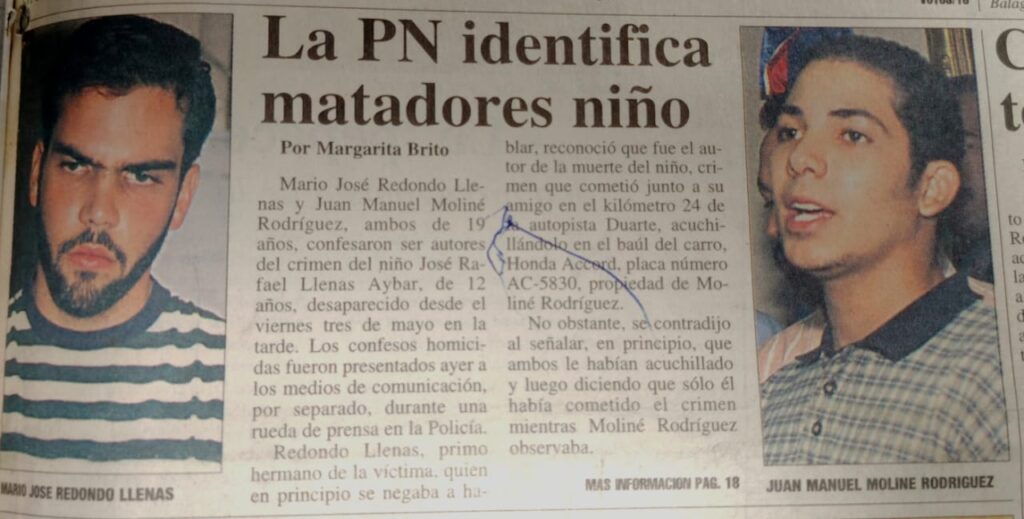
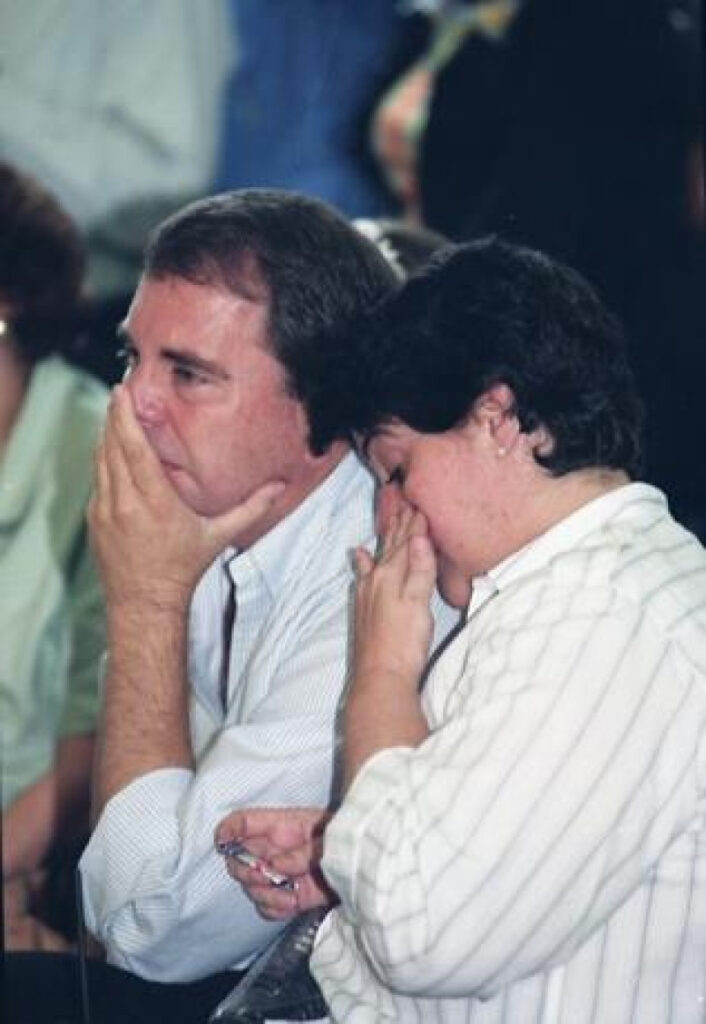
Moliné Rodríguez was sentenced to 20 years in prison for complicity in the murder and was released on May 5, 2016, after serving his entire sentence. Redondo Llenas, who resided opposite the victim’s house, was sentenced to 30 years in prison for premeditated murder and will be released on May 5, upon completing the maximum sentence established by the legislation in force at the time of the crime. In an interview, Ileana Aybar de Llenas, the child’s mother, stated that “I am not happy about the sentence, because that wouldn’t be the word, but the pain of the event and the absence of my son is not compensated by any sentence“, reflecting the feeling of a wound that remains open. Redondo Llenas is not the first Dominican to serve a 30-year prison sentence. According to lawyer Carlos Balcácer, he was preceded by Carlos Moronta, alias Carlos Cajita, who in 1967 was accused of dismembering a coworker, allegedly out of jealousy. Mario José has been the subject of psychological and psychiatric studies that classify him with personality disorders, dissociation from reality, and sociopath traits. Juan Manuel was diagnosed with a severe personality disorder. These analyses have been used both to understand the crime and to assess the behavioral evolution of the condemned within the penitentiary system. The murder was marked by kidnapping, torture, and barbarity, evidencing an alarming dehumanization on the part of those responsible. Furthermore, the investigation presented multiple irregularities that hindered the full clarification of the case: the murder weapon was never recovered, the victim’s clothing as well as that of the accused was lost while in police custody, preventing the performance of additional forensic analyses. Redondo Llenas came to allege that the then Argentine ambassador to the country, Teresa Meccia de Palma, her husband Luis Palma de la Calzada and their son Martín Palma Meccia were involved in the crime. But the Palma family left the country under the protection of their diplomatic immunity without being formally interrogated and said accusations were never proven. “**After all the disaster he caused, the least he can do is serve his sentence**,” expressed Ileana Aybar, mother of José Rafael, summarizing the feeling of a society that has not yet managed to close this chapter of its history.In May 2026, every moment of this case will be relived, which will soon come to an end with the release of the person responsible, Mario José Redondo Llenas.