
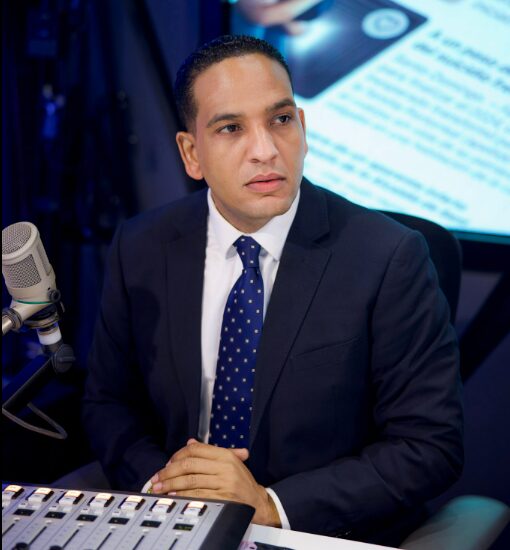

SANTO DOMINGO, DR. – In a revelation that has shaken the legislative landscape, journalist and coordinator of the Politikal program, Hansel García, denounced that the Chamber of Deputies surprisingly excluded the Labor Code reform bill from its agenda this Wednesday, following an alleged direct intervention by the business sector.
García described the event as an act of weakness on the part of the first branch of the State, asserting that “the Chamber of Deputies has just had its arm twisted by the businessmen”. According to the communications professional, the piece, which already has the approval of the Senate and a first reading in the Lower House, was scheduled to be heard and approved today in a second reading, but was withdrawn without prior notice to the members of the corresponding commission.
RELATED CONTENT: Senate to approve labor reform without modifying severance pay issue
The influence of Celso Juan Marranzini
The journalist pointed directly at the president of the National Council of Private Enterprise (CONEP), Celso Juan Marranzini, as the key actor in this legislative maneuver. Garcia detailed that Marranzini visited the National Congress last Tuesday and took the opportunity to meet with “powerful deputies from all sectors.”

According to the information provided on the radio program, the business representative expressed the sector’s disagreement with the code being approved as it stands, arguing that at least 85 business associations oppose the fact that the legislation does not address changes to severance pay.
“Celso Juan Marranzini’s visit to the Chamber of Deputies yesterday beat the Chamber of Deputies in a power struggle, and that is why they removed the discussion of the labor code from the agenda today,” declared García.
The knot of discord: Severance pay
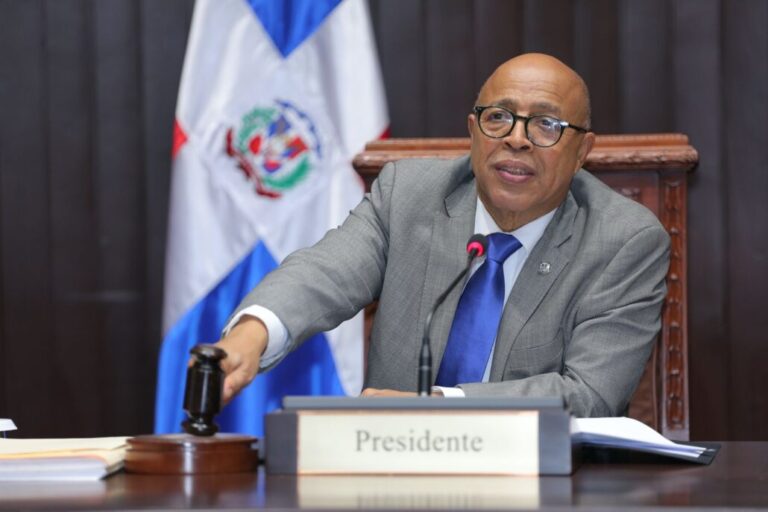
The complaint highlights that business pressure seeks to prevent the severance pay chapter from remaining intact, a point that, as previously reported, already had tripartite consensus not to be touched in order to facilitate the approval of the reform. García even mentioned the existence of an alleged letter signed by the President of the Chamber, Alfredo Pacheco, in which it would be suggested to extract the issue of severance pay to discuss it later within the framework of the social security law.
During the debate on Politikal, it was highlighted that the employer sector considers severance pay as a “double taxation” alongside Social Security (TSS) contributions, describing it as “unsustainable” for small and medium-sized enterprises.
Risk of the reform expiring
This new interruption jeopardizes the final approval of the reform, given that the current legislative session ends on July 25th. If it is not approved before that date, the bill —which has been under discussion for more than a decade— runs the risk of expiring, which would force the entire legislative process to restart in a new session.

García concluded by criticizing that Congress allows itself to be managed by “interested parties” and urged legislators to protect the institutionality and credibility of the Chamber of Deputies before society.