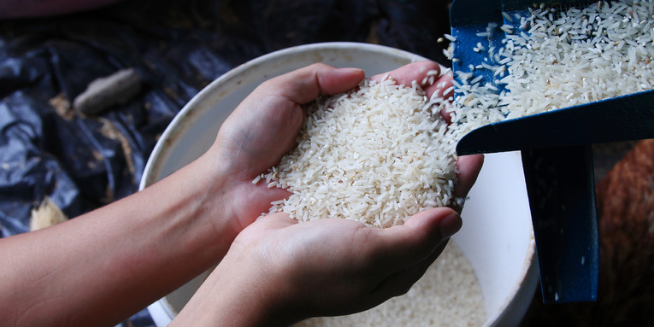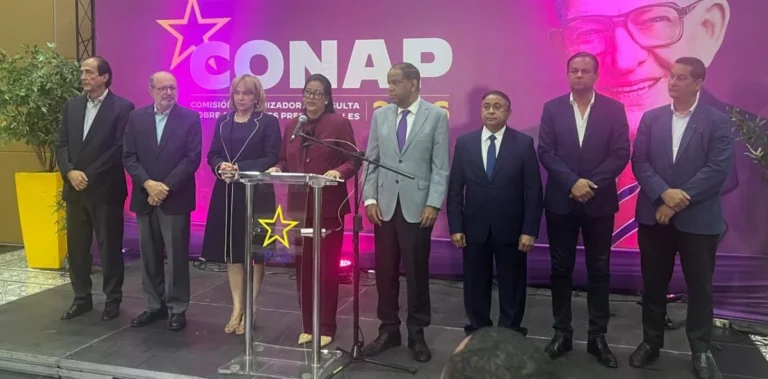

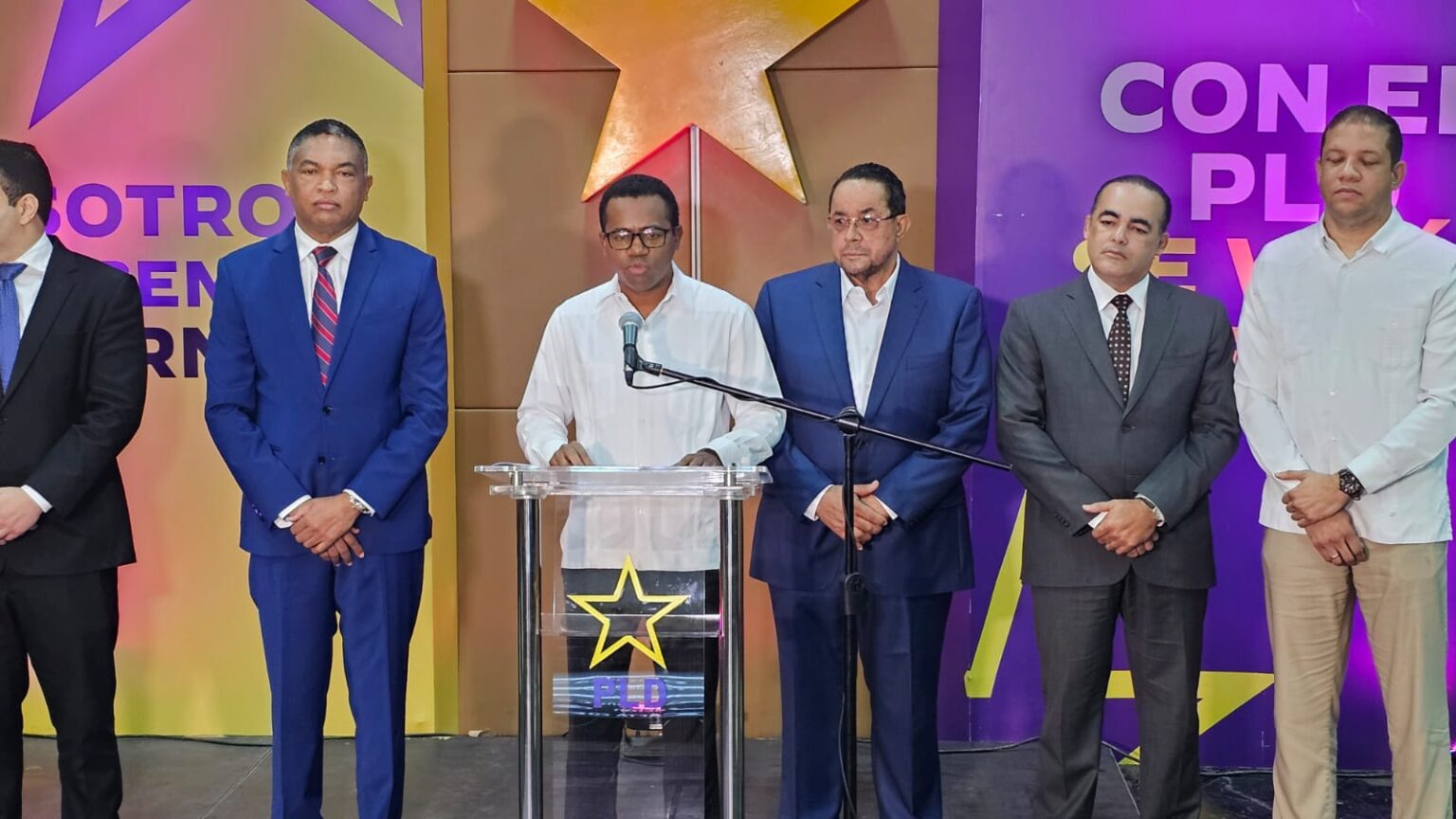

The Dominican Liberation Party (PLD) demanded this Monday that the Government of President Luis Abinader immediately present a contingency and modernization plan for the rice sector, following the repeal of Decree 693-24 through Decree 635-26, a decision that, according to the opposition organization, highlights contradictions in the current administration’s agricultural policy and creates uncertainty among national producers.
In its meeting with the press, the PLD questioned that the Government has eliminated a provision that established protection mechanisms for national production against rice imports from the United States, without simultaneously announcing concrete measures to guarantee the stability and competitiveness of the sector.
The political organization maintained that President Abinader knew since he took office in August 2020 that the rice tariff phase-out period contemplated in the Dominican Republic-Central America-United States Free Trade Agreement (DR-CAFTA) would conclude on January 1, 2025, which is why it considers that the authorities had sufficient time to prepare farmers for the new trade conditions.
PLD questions contradictions in rice import policy
The party recalled that Decree 693-24, issued on December 17, 2024, established a preferential quota of 23,300 metric tons of U.S. rice free of tariffs and a 99% levy for imports exceeding that volume.

However, he pointed out that during that same year the Government authorized imports that, according to his figures, reached 4.7 million quintals, a situation he considers contradictory to the official discourse of protecting national production.
Likewise, he questioned the elimination, in September 2021, of Decree 569-12, enacted during the administration of former President Danilo Medina, which established public auctions to grant import permits for certain agricultural products.
In the opinion of the PLD, these decisions merit explanations regarding the transparency mechanisms applied to imports and the reasons that led the Executive Branch to establish a tariff protection that was subsequently withdrawn.
The organization also demanded that the authorities present an assessment of the progress made between 2021 and 2026 regarding productivity, cost reduction, mechanization, rehabilitation of irrigation systems, and strengthening the competitiveness of Dominican rice.

Remember support programs executed during their governments
In its approach, the PLD highlighted that during its administrations, genetic improvement programs, agricultural land leveling using GPS technology, rehabilitation of irrigation canals, construction of dams, financing, and support for commercialization through pledging mechanisms were developed.
According to the data provided by the organization, those initiatives contributed to increasing rice productivity from 4,127 kilograms per hectare in 2012 to 5,145 kilograms in 2019, equivalent to an increase of 1,018 kilograms per hectare.
He also recalled the efforts made during the Danilo Medina administration to seek a ten-year extension of the tariff phase-out period, including conversations with then-U.S. President Donald Trump and contacts between agricultural authorities of both countries.
Proposes five measures to address the situation of the rice sector
Given the current scenario, the Dominican Liberation Party proposed five actions it considers priority to guarantee the sustainability of national production.
The first consists of convening a national negotiation table with representatives of producers, rice industrialists, and competent authorities, in order to evaluate the consequences of the repeal and agree on immediate responses.
As a second measure, he requested a public evaluation of the rice policy developed between 2021 and 2026, detailing the resources invested, the results obtained, the evolution of costs, and the initiatives adopted to face trade liberalization.
Third, he demanded that the Government explain the legal and economic reasons that supported both the issuance and the repeal of Decree 693-24, including the communications exchanged with the United States and the recommendations of national agencies linked to food security.
The fourth proposal contemplates initiating formal negotiations with U.S. authorities to identify mechanisms for cooperation, transition, and support for producers that are compatible with DR-CAFTA commitments.
Finally, the PLD demanded the implementation of an extraordinary modernization program for the rice sector, with a defined budget, execution schedule, and verifiable goals, which includes access to credit, technical assistance, agricultural research, mechanization, infrastructure rehabilitation, and special measures for small and medium-sized producers.
Warns about impact on jobs and food security
The party highlighted that rice constitutes one of the main components of the Dominican diet and represents a fundamental economic activity for numerous rural communities.
According to figures from the National Confederation of Agricultural Producers (Confenagro), cited by the organization, the sector brings together approximately 30,000 producers and generates more than 300,000 direct and indirect jobs.
In that context, he considered it essential that any decision related to trade opening includes measures to preserve farmers’ income, guarantee the commercialization of their crops, and maintain affordable prices for consumers.
The document also refers to statements by the Minister of the Presidency, José Ignacio Paliza, who, according to the PLD, stated that the Government will seek new talks with the United States and will continue to support national producers.
However, the opposition organization insisted that those commitments must be translated into concrete actions, accompanied by economic resources, execution deadlines, and institutional guarantees.
Demands concrete answers from President Abinader
The PLD maintained that the Government’s responsibility is not limited to compliance with international agreements, but also implies creating the necessary conditions for Dominican producers to be able to compete in the market.
Consequently, he called on President Luis Abinader to present a comprehensive program that combines contingency measures, productive modernization, and financial support, with the goal of protecting the sector’s profitability and ensuring the supply of rice at affordable prices.
The organization concluded that the repeal of a tariff provision should not represent the abandonment of farmers, but rather the starting point for establishing sustainable solutions that strengthen national production and contribute to preserving the food security of the Dominican Republic.