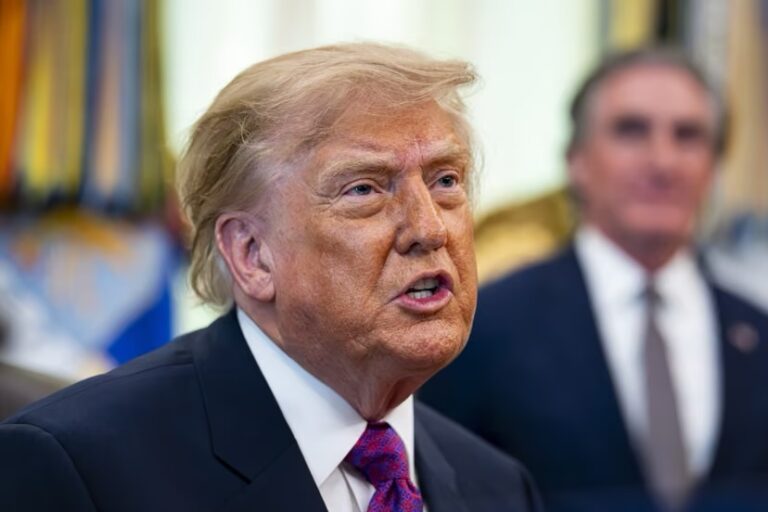

The Trump Administration seeks to refine Venezuela’s heavy crude


7:33 pm
The government of Donald Trump specified this Sunday its intentions regarding Venezuelan crude after capturing the president of the country, Nicolás Maduro, and announcing that it will lead Venezuela until there is a political transition.
It was the U.S. Secretary of State, Marco Rubio, who specified that one of the main interests of his Administration is to refine Venezuela’s heavy crude oil, the country with the largest oil reserves in the world, according to OPEC, in U.S. refineries.
The politician emphasized that the United States does not need Venezuelan oil: “We have plenty of oil,” he declared. However, he insisted that Washington does not want to allow “Venezuela’s oil industry to be controlled by the adversaries of the United States” such as China, Russia, and Iran.“Our refineries on the US Gulf Coast are the best for refining this heavy crude. In fact, there has been a shortage of heavy crude worldwide, so I think there would be enormous demand and interest from the private industry if they were given the opportunity to do so,” he explained on ABC News.
You may be interested in: Marco Rubio says the U.S. doesn’t need Venezuela’s oil
Rubio remarked that they will keep Venezuela’s oil “in quarantine” until “the conditions that are of national interest for the United States and for the Venezuelan people are met.” Although he assured that he has not yet spoken directly with the executives of the oil companies in his country, the Secretary of State said he had communicated with the Secretaries of the Interior and Energy to begin establishing contacts. “We are quite confident that there will be substantial interest from Western companies” in investing in the Venezuelan oil industry, Rubio said.Trump Announces Million-Dollar Investments
Rubio’s statements add to those Trump made on Saturday hours after capturing Maduro. The American president affirmed that the country’s oil companies will invest “billions of dollars” to repair the sector’s infrastructure in Venezuela. “We are going to get our great American oil companies, the biggest in the world, to go in, invest billions of dollars, repair the badly damaged oil infrastructure, and start making profits for the country,” Trump reported. The leader considered that the oil business in Venezuela has been a “total failure” for a long time: “They were extracting almost nothing, compared to what they could have been extracting,” he added. Furthermore, he accused the South American country of unilaterally confiscating and selling U.S. crude oil with the nationalizations of the oil industry by Chavismo.The country with the largest oil reserves in the world
Venezuela possesses the largest proven oil reserves in the world, 17% of all proven reserves according to the U.S. Energy Information Administration (EIA), concentrated mainly in the Orinoco Oil Belt. However, most of its crude oil is extra-heavy and requires diluents and specific technology for its production and sale. That’s where the United States wants to invest and introduce its technological and investment capacity. So far, the management of oil resources is entrusted to the state-owned company Petróleos de Venezuela, S.A. (PDVSA), attached to the Ministry of People’s Power for Energy and Petroleum. Although Venezuela was once one of the world’s largest producers, with capacities exceeding 3 million barrels per day, actual production has fallen to historic lows during the last decade due to structural deficiencies, lack of investment, and the impact of US sanctions. In 2025, according to data from OPEC, Venezuela’s oil production remained around or slightly above one million bpd in several months, including figures exceeding 1.05 million bpd during the first half and up to 1.1 million bpd in some subsequent months. This production is still far below the country’s historical levels, when Venezuela produced more than 2.8–3 million bpd at the beginning of the 21st century.
We are a multiplatform outlet offering news and television content. The fastest-growing news outlet in audience in the history of Caribbean communication.


#Most read
- 1.He shot her, mutilated her and put her body through a meat grinder: boyfriend kills businesswoman and her daughter in Russia
- 2.Dominican woman sentenced to 25 years for killing fellow Dominican friend in Orlando
- 3.Multiple cyberattacks expose the data of millions of people in Japan
- 4.5D Cinema in Japan surprises the world with an immersive experience that goes viral
- 5.Public Health inspects Dr. Fadul’s clinic, who claims to “cure” autism
- 6.They recognize the digital success of La Casa de Alofoke in Google Week Guatemala 2025
- 7.A Bolivian Air Force plane crashes
- 8.Dollar price in the Dominican Republic this Tuesday, September 22, 2026
- 9.ANPA warns DR is not prepared for full opening of the rice market
- 10.Guatemala investigates migrant death following attempted intervention by ICE patrols

Newsletter
Subscribe to our newsletter to receive our latest articles instantly!