


The reverse migratory flow passing through Panama continues to grow, although it maintains a monthly deceleration trend.
n” “nAs of June 21, 2026, authorities had recorded 4,912 migrants within the so-called north-south flow, that is, people returning from North America to South America after abandoning their plans to settle in the United States or after being affected by the tightening of migration policies in the region.
n” “nThe figure represents an increase of 588 people in just 35 days compared to the previous report released by the National Migration Service on May 17, when the cumulative total was 4,324 migrants. In percentage terms, the reverse flow grew 13.6% during that period.
n” “nDespite the cumulative increase, the data shows that the intensity of the phenomenon continues to decrease month by month. In January, 1,250 migrants were recorded returning south; in February there were 1,086; in March 916; in April 674; in May 537; and in the first 21 days of June, 449 were counted. If this trend continues, June would close again below the levels observed at the beginning of the year.

We recommend reading:Man sentenced to 15 years in prison after being found guilty of human trafficking in the form of sexual slavery
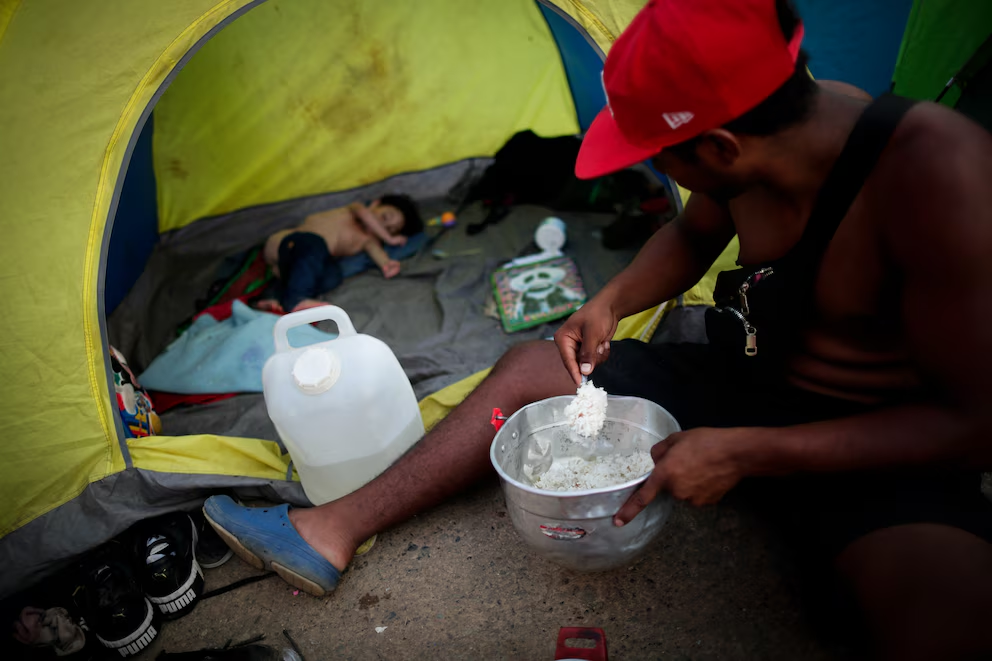
n” “nPanama continues to be a key point within the continent’s migratory routes, both for those moving forward and those returning. Illustrative image Infobae
n” “nStatistics from the Directorate of Operations and Migration Control confirm that return migration remains predominantly Venezuelan. Of the total of 4,912 people registered in the north-south flow, 4,481 are citizens of Venezuela, equivalent to more than 91% of the total.
n” “nThey are followed by citizens of Colombia with 181 cases, Ecuador with 58, people born in the United States with 53 records —mainly children of migrants— and 139 people of other nationalities.

Compared to the mid-May report, Venezuelans increased from 3,991 to 4,481 people, that is, 490 additional migrants in little more than a month. Colombians went from 149 to 181, while Ecuadorians increased from 39 to 58 cases.
n” “nThe logistics to address this phenomenon continue to be concentrated on the eastern border of the country. As of June 21, 30 migrants from the reverse flow remained at the Migratory Reception Temporary Station (ETRM) in Darién and another 17 in Puerto Obaldía, in the Guna Yala region. No people were reported housed at the center in Miramar.
n” “nHumanitarian and transport operations remain one of the most important components of the government’s strategy to manage the return to South America. Irregular transit through the Darien Gap remains well below the levels recorded during the 2023 migration crisis. Moncho Torres
n” “nThe report reveals that 445 air evacuations have been carried out to Puerto Obaldía, in addition to 786 maritime transfers on barges operated with the support of the National Aeronaval Service. There are also 11 SENAN flights recorded, seven barge operations and one private flight linked to these movements.
The weekly evolution of the flow shows significant variations. Between May 14 and 20, 97 people were registered; from May 21 to 27, there were 38; between May 28 and June 3, they increased to 193; from June 4 to 10, they decreased to 70; and between June 11 and 17, they rose again to 186 migrants.
n” “nWhile the return flow continues to accumulate thousands of people, the traditional irregular transit through the Darien jungle remains at historically low levels. The report records just 255 irregular entries during 2026, of which 219 correspond to adults and 36 to minors. Only one arrival was recorded during the day immediately preceding the report.
n” “nThe monthly distribution of these crossings also reflects reduced activity. In January, 34 irregular migrants entered; in February 19; in March 39; in April 43; in May 43; and in June, up to the 21st, 77 people were counted.
n” “nVenezuelans continue to lead entries through the Darien with 131 cases, followed by Ecuadorians with 38 and Colombians with 42. Authorities group another 44 people within the category of other nationalities.
n” “nPuerto Obaldía has become one of the main transit points for those continuing their return to Colombia by sea.
n” “nThe report also includes data on deportations and expulsions. As of June 21, Panama had executed 3,461 immigration measures of this type, of which 2,759 correspond to deportations and 702 to expulsions. Of the total, 2,960 were carried out through the cooperation agreement with the United States.
n” “nWithin that joint program, 2,546 correspond to men and 414 to women. The main countries of origin are Colombia with 1,773 people, Ecuador with 460, and India with 236. There are also 57 citizens from Vietnam registered, 39 from Cameroon, and 395 people of other nationalities.
n” “nYou can also read: Navy first lieutenant found lifeless near Tavera dam identified
n” “nStatistics also show the operational dimension of the program. 71 charter flights and 224 commercial flights associated with the migration memorandum of understanding have been carried out. In addition, the official schedule includes new flights to Venezuela and Finland between the end of June and mid-July.
n” “nAlthough the irregular migratory flow to the north remains well below the historical levels observed during the 2022 and 2023 migration crisis, the sustained growth of the reverse flow confirms that Panama continues to play a central role in the new regional migration dynamic: no longer just as a transit corridor to North America, but also as a return route for thousands of people who are embarking on the journey back to South America.
n”