

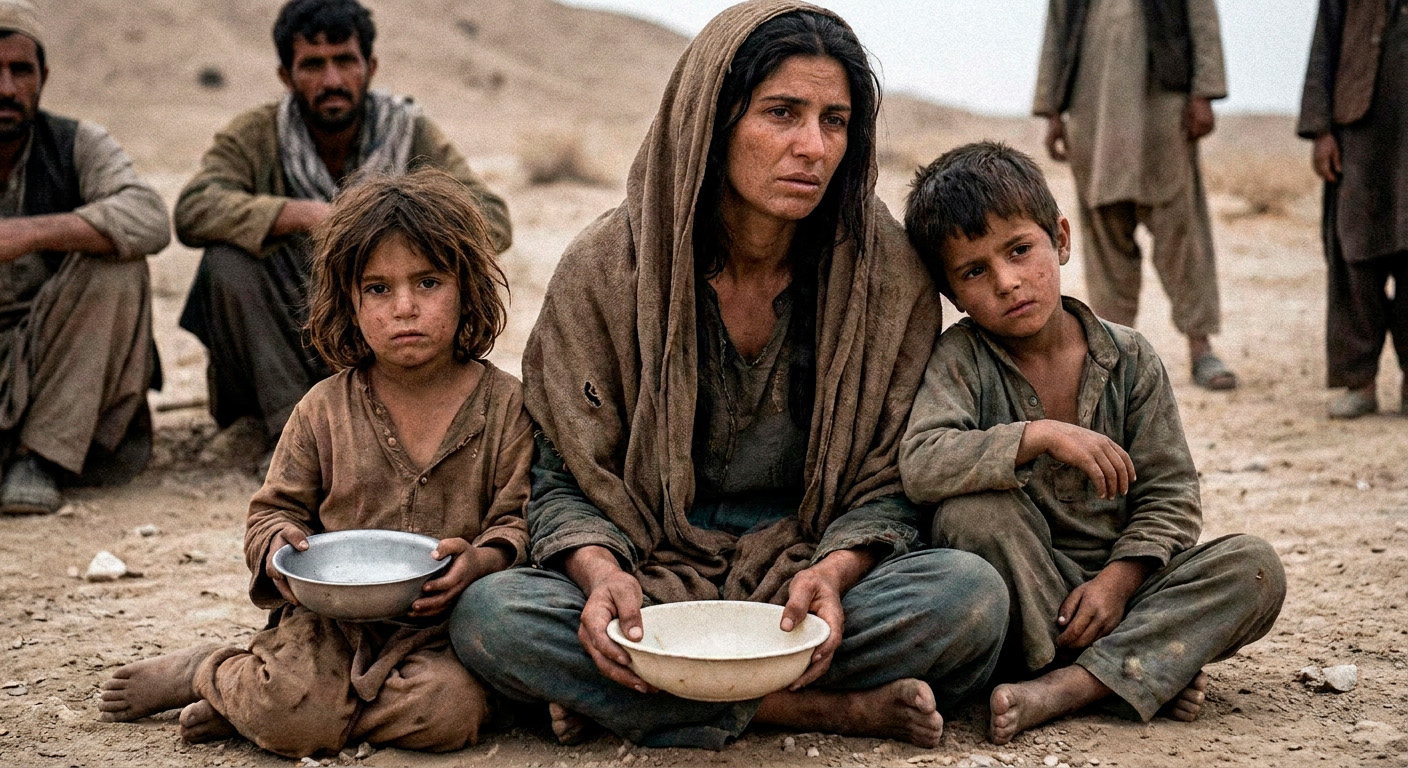

ROME.– Between 608 and 696 million people faced hunger during 2025, with a central estimate of around 650 million, according to the report The State of Food Security and Nutrition in the World 2026 (SOFI), prepared by the Food and Agriculture Organization of the United Nations (FAO), together with the International Fund for Agricultural Development (IFAD), the World Food Programme (WFP), UNICEF, and the World Health Organization (WHO).
The document indicates that the figure represents an approximate reduction of 14 million people compared to 2024, marking the third consecutive annual decline in undernourishment levels. However, the agencies warn that the pace of improvement continues to be insufficient to meet the Sustainable Development Goal of ending hunger by 2030.
The report’s projections estimate that more than 500 million people will continue to suffer from hunger by the end of this decade, even if current trends continue.
Africa has the highest number of people facing hunger
For the first time since this report has been produced, Africa surpassed Asia as the region with the highest number of undernourished people. The African continent records about 309 million people in this condition, while Asia concentrates nearly 292 million.

According to international organizations, this change is mainly due to Africa’s rapid population growth, although the proportion of people affected by hunger on that continent showed a slight decrease during the last year.
In contrast, Asia and Latin America recorded progress in reducing hunger, driven by improvements observed in countries such as India and several South American nations.
Challenges to accessing healthy food persist
The report also warns that 2.69 billion people, approximately one-third of the global population, cannot afford a healthy diet.
UN agencies point out that the high cost of nutritious food, armed conflicts, the effects of climate change, economic difficulties, and inequality continue to be some of the main factors limiting access to adequate food.

Likewise, they warn that the effects of recent conflicts and the reduction in international aid are not yet fully reflected in the 2025 statistics, so the evolution of global food security will continue to depend on economic stability, international cooperation, and investments in agrifood systems.