

Indonesia will punish extramarital sex with imprisonment

10:21 am
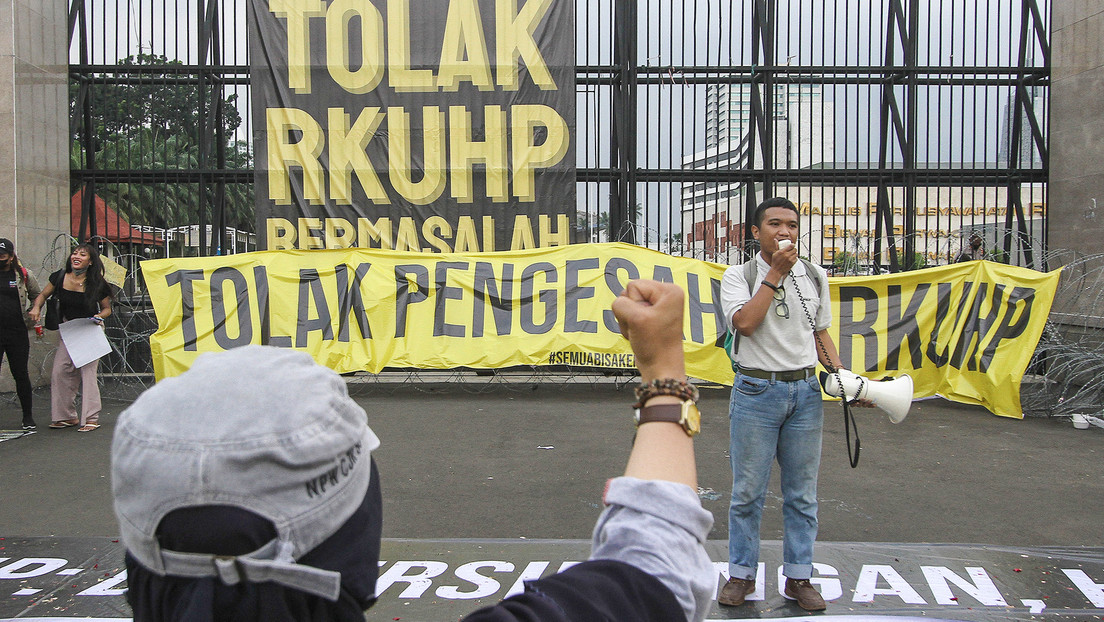
This Friday came into effect the new penal code in Indonesia, approved in December 2022. The initiative punishes, among other things, extramarital sexual relations, criticism of the authorities, and the dissemination of false news.
According to the legislation, people who have extramarital relations may receive a prison sentence of up to one year. Those who live together without being married may also be convicted. However, it is clarified that the penalties will only be applied if there is a complaint from one of the spouses, parents or children, and it is detailed that foreign tourists are excluded.You may be interested in: The death toll from the floods in Indonesia rises to 921
Furthermore, a maximum penalty of up to three years is established for demonstrating and “attacking the honor or dignity” of the highest state authorities, institutions, and the ideology, called Pancasila. In addition, those who spread false news intentionally, which result in “disturbances or disorder”, may be punished with a maximum of six years in prison. Another of the crimes listed in the new penal code is apostasy, which can be punished with up to four years in prison, while those who claim to have supernatural powers and use them to cause harm to others may be imprisoned for up to 18 months.Criticism and defense
The criminal regulations received several questions, including that of Usman Hamid, executive director of Amnesty International Indonesia, who defined it as a “significant blow” to civil liberties. In addition, he expressed that it has an “excessive scope” and that it will “strengthen obstacles to freedom of expression while criminalizing legitimate and peaceful dissent”. For his part, the Coordinating Minister for Law, Human Rights, Immigration and Penitentiary Services, Yusril Ihza Mahendra, assured that it is “a historic moment for the nation.” He also stated that Indonesia faces “the end of the era of colonial criminal law and the beginning of a more humane, modern and just legal system rooted in Indonesian culture,” leaving behind the norms that came from the Dutch colonial era, which ended with independence in 1945.
Redacción de De Último Minuto



#Most read
- 1.Armed men attack U.S.-flagged vessel in Haiti’s Port-au-Prince Bay
- 2.Solange Omon, from Cameroon, is chosen as the new Victoria’s Secret angel
- 3.Now in Italy! Riots erupt in Milan as protesters loot stores and clash with police
- 4.5D Cinema in Japan surprises the world with an immersive experience that goes viral
- 5.VIDEO: Witnesses say man prayed and bowed to tiger before fatal zoo attack in England
- 6.LATAM plane’s wing catches fire before takeoff at Peru airport
- 7.VIDEO: iPhones and luxury perfumes float in the Strait of Hormuz after cargo ship sinks
- 8.Iguazú Falls surge forces closure of Devil’s Throat walkway in Brazil
- 9.VIDEO: Tourists stranded with suitcases amid violent protests in Paris
- 10.The Panama Canal begins evaluation of companies interested in building two ports

Newsletter
Subscribe to our newsletter to receive our latest articles instantly!