Periodista egresada de la Universidad Autónoma de Santo Domingo (UASD). Le gusta escribir sobre política e historias humanas que puedan transformar vidas. Actualmente cursa un master...
Share
5 Min Read
SHARE
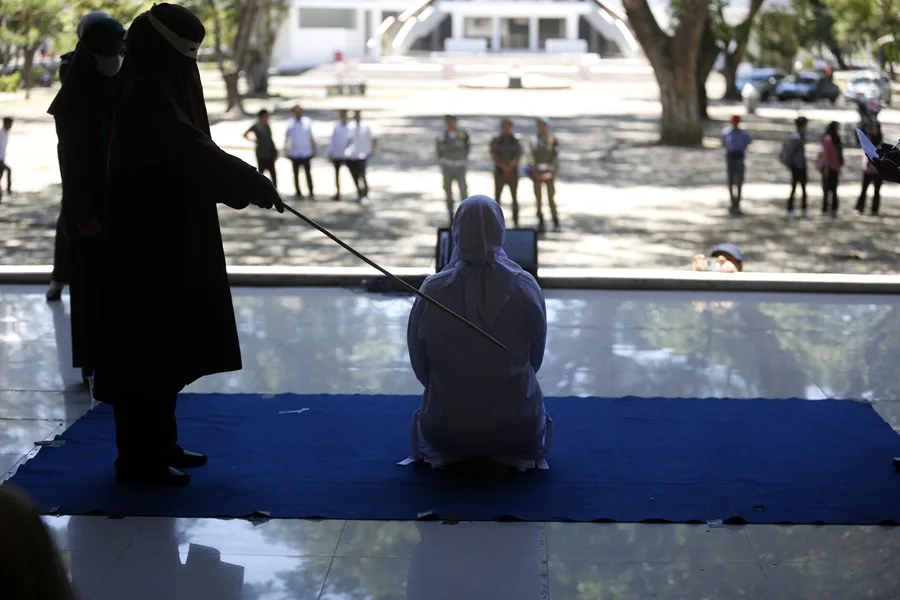
A new criminal code came into effect this Friday in Indonesia, where extramarital sex, the promotion of apostasy, and the dissemination of false news are now punishable by prison sentences, following an ultraconservative reform that has been criticized by experts and human rights organizations.
The new code, approved by Parliament in December 2022, establishes that anyone who has sexual relations with someone who is not their husband or wife “will be punished for adultery with imprisonment for up to one year,” while those who live together as a marriage without having been married will receive a sentence of six months imprisonment.
For these crimes, the Police cannot act unless those considered offenders of the law are reported by their parents, children, or legal partners, which excludes foreign tourists from this regulation in Indonesia, the nation with the most Muslims in the world and the third largest democracy on the planet.
Bali, the quintessential destination of the Indonesian archipelago, received seven million international visitors in 2025.
The new legal framework also stipulates penalties of up to six years in prison for those who spread false news, knowing that they are, if these “cause disturbances or disorder in society”, a section that allows the Police to detain people that the Government considers destabilizers in areas such as politics or the economy.
Likewise, public incitement to atheism or to abandon religion will entail punishments of up to four years in prison, for which it will be considered whether the promoter of apostasy used threats of violence or any type of force.
The system also contemplates a maximum penalty of three years for “attacking the honor” of the president or vice president, who would have to report the attack for the Police to be able to act.
Although the article states that criticism for reasons of public interest is not a crime, the text worries defenders of freedom of expression due to possible actions against the independent press.
The code ratifies punishments against the promotion of communism and creates a penalty of up to 18 months in prison against those who claim to possess supernatural powers and use them to cause harm to others.
A criticized reform
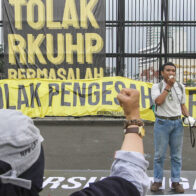
The new code was heavily criticized after being approved in 2022 by human rights organizations, such as Amnesty International (AI) and Human Right Watch (HRW), and its entry into force this Friday has unleashed a new scrutiny of the regulations.
Criminal Law expert Abdul Fikar Hadjar, a professor at Trisakti University, emphasized to EFE the importance of society “acting bravely to fight against law enforcement” when it considers that state representatives are abusing their powers.
In this regard, he recalled that citizens can file lawsuits before the Constitutional Court to request the annulment of certain regulations, provided that they contradict fundamental principles or human rights.
The country, with a secular and pluralistic tradition, as reflected in its founding ideology – called “Pancasila”, established after its independence from the Netherlands in 1945 – is facing a rise in religiosity and Islamist movements.
Numerous human rights organizations condemn the “Islamization” of the country, which had overcome the dark period of Suharto’s dictatorship (1967-1998).
You may be interested in:
Faced with criticism, the Minister of Home Affairs and Justice, Yusril Ihza Mahendra, highlighted in a statement that this new approach expands alternative penalties such as community service, “including an emphasis on medical and social rehabilitation for drug users in order to reduce overcrowding in penitentiary institutions.”
Regarding the punishment for extramarital sex, he emphasized that the need for a family member’s complaint to prosecute this type of crime has been established and with this, he said, “avoid excessive state intervention in the private sphere.”
Periodista egresada de la Universidad Autónoma de Santo Domingo (UASD). Le gusta escribir sobre política e historias humanas que puedan transformar vidas. Actualmente cursa un master en Comunicación Política y Marketing Digital.