“n
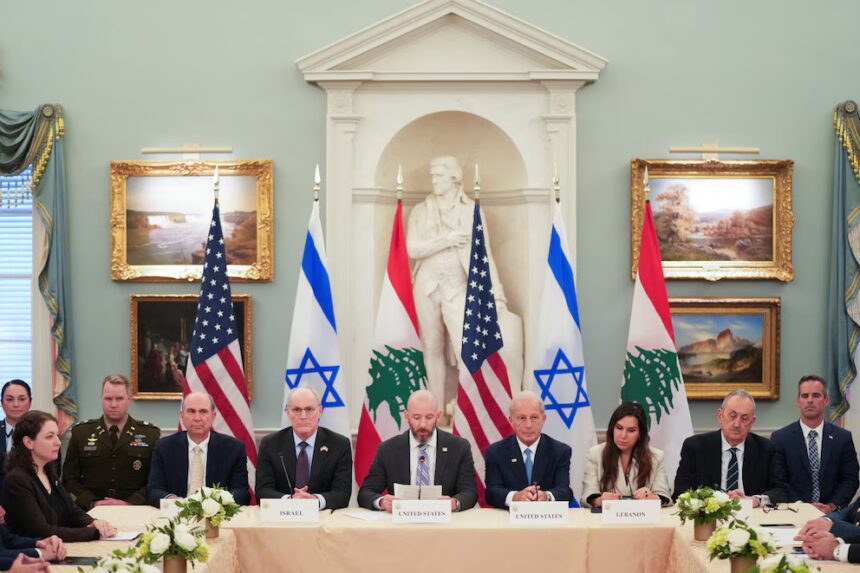
Israel and Lebanon began this Wednesday the second day of their fifth round of talks in Washington, in a process that the State Department described as advancing toward “comprehensive peace and security,” although sources close to the negotiations warned that the first day concluded without tangible progress.
n” “nA State Department official, who spoke on condition of anonymity, indicated to the agency EFE that talks “continue to advance” with the goal of “definitively ending the cycle of violence” between the two countries. The agenda for this round includes military issues first and then political matters, according to the same source. The delegations are led by the ambassadors of both countries to Washington: Yechiel Leiter for Israel and Nada Hamadeh Moawad for Lebanon. Dan Holler, a State Department counselor, is acting as mediator on behalf of the United States.
n” “nHowever, the picture painted by other sources was less encouraging. As reported by the portal Axios, the first day of talks concluded without progress and with the feeling, among those informed about the negotiations, that there were more setbacks than steps forward. Ambassador Leiter himself anticipated that difficulty even before the round began: “This is the fifth round of talks and I must say that we are heading for a train wreck… that train is in danger of derailing,” he declared at the start of Tuesday’s sessions, as reported by The Jerusalem Post.
n” “nFile image of an Israeli soldier aiming his rifle from his position near the border with Lebanon, in northern Israel.
More Read

We recommend reading:Iran announces the closure of the Strait of Hormuz due to Israeli attacks in southern Lebanon

The central point of disagreement remains the Israeli military presence in southern Lebanon. Israel conditions any withdrawal on the dismantling of Hezbollah and demands concrete guarantees before ceding ground. Prime Minister Benjamin Netanyahu reiterated on Tuesday that Israeli troops will remain in the southern Lebanese security zone “for as long as necessary.” Israeli Finance Minister Bezalel Smotrich was more categorical, stating that Israel will not withdraw its forces as long as Hezbollah continues to exist in Lebanon. For his part, Lebanese President Joseph Aoun declared that his government will not accept anything that does not include an end to the Israeli occupation in the south of the country.
n” “nTo understand the context of these conversations, it is necessary to go back to February 28, 2026, when the conflict between the United States and Iran broke out and Israeli forces attacked and occupied southern Lebanon to fight Hezbollah, the Shiite terrorist group allied with Tehran. Since then, four previous rounds of negotiations have been held in Washington, also without a definitive solution. In the fourth round, held on June 2 and 3, both parties agreed to establish pilot zones from which Israel would withdraw troops so that the Lebanese army could take control, and to declare Hezbollah an enemy of Lebanon, but those commitments have not yet been translated into concrete measures on the ground.
More Read

The most recent trigger was the memorandum of understanding signed last week between the United States and Iran, which went into effect on June 18 and includes a provision on the cessation of hostilities in Lebanon. Neither Israel nor Hezbollah are signatories to the agreement, which limits its ability to bind the parties directly. Secretary of State Marco Rubio, who oversaw the process from its inception and spoke with the leaders of both countries last Friday, noted this Wednesday from Kuwait that the threat posed by Hezbollah will be one of the central topics of the day. The Shiite terrorist group, for its part, denounced on Tuesday an alleged violation of the ceasefire by the Israeli army near Nabatieh, in which two civilians reportedly died, an accusation that Israel did not confirm.
n” “nTo reinforce the fragile ceasefire, Washington announced on Monday the creation of a monitoring mechanism under the command of the U.S. Central Command (CENTCOM), intended to provide immediate information on the fighting in southern Lebanon. The cumulative number of casualties from the start of the Israeli offensive on March 2 to June 22 amounts to 4,175 dead and more than 12,000 wounded, according to the Lebanese Ministry of Health. The fifth round is scheduled to be extended by one more day, although the gap between the positions of both parties suggests that Washington will have to take on a greater role of pressure if it wants to prevent the process from stalling before reaching any structural agreement.
n”