
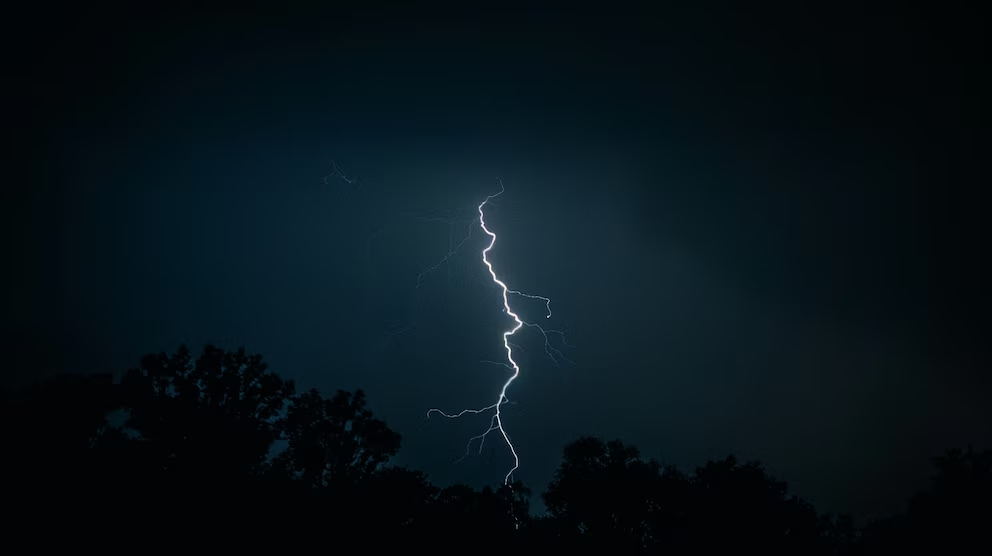

A lightning strike hit the Grafton Correctional Institution in Lorain County, near Cleveland, on Tuesday afternoon, leaving sixteen people hospitalized and mobilizing state emergency services. The incident affected inmates as they were moving between buildings after the evening meal, amidst a day marked by severe storms in the Midwest of the United States.
According to the Ohio Department of Rehabilitation and Correction (ODRC), no deaths have been recorded so far, although one of those affected required air transport due to the severity of their injuries. Authorities indicated that the situation remains under evaluation and that information will be updated as the investigation progresses. The agency UPI reported that the correctional institution activated its emergency protocols and is maintaining communication with the families of the affected inmates.
The meteorological event occurred in a context of intense thunderstorms that have impacted several states in the country, causing power outages and flood alerts, according to the National Weather Service. The phenomenon underscores the vulnerability of critical infrastructure such as prisons to extreme weather conditions.
We recommend reading:Afghanistan’s Taliban rulers detain two members of the UN political mission

Where did the lightning strike at the Grafton, Ohio prison occur?
The Grafton Correctional Institution is located in Lorain County, approximately 48 kilometers southwest of the city of Cleveland, in the state of Ohio. According to official ODRC data and ABC News reports, the incident occurred within the prison grounds, as inmates were moving between buildings after finishing dinner.
The prison houses more than 2,000 people in minimum and medium security, and has operated since 1988 as one of the most important penitentiary centers in the region. The lightning strike was recorded shortly after 5:00 p.m., the moment the storm reached its peak in the area, according to the weather radar consulted by the FOX Forecast Center.
The Ohio Department of Rehabilitation and Correction reported that there were no deaths, although one inmate was transported by helicopter due to the severity of their injuries.

How many people were injured by the lightning strike at the Ohio prison?
According to the Ohio Department of Rehabilitation and Correction, sixteen people were injured after the lightning strike. Of that total, one required air transport to a regional hospital due to the severity of the injuries, while the others were taken to medical centers by ground ambulances. The agency WKYC specified that emergency services from Lorain, Medina, and Cuyahoga counties participated in the care and evacuation operation for those affected.
“The original call reported five people struck by lightning, but the number increased after the initial assessment,” noted Kim Mason, director of operations for LifeCare Ambulance, in statements reported by The Chronicle. Hospitals in the University Hospitals network in Elyria and Westlake received the patients, some of whom were in critical condition at the time of admission.
What measures did the authorities take after the lightning strike?
Authorities activated emergency protocols for mass casualty incidents. Personnel from the Grafton Correctional Institution coordinated the evacuation and medical care of the injured inmates, in conjunction with regional emergency teams. According to the ODRC, a mass casualty incident was declared and public health and safety resources were mobilized.
Official spokesperson JoEllen Smith stated to national media that “the situation is being evaluated and monitored” at the prison, while information is being gathered regarding the condition of those affected. The UPI agency indicated that the families of the hospitalized inmates are being informed and that institutional communication will remain open as the case evolves.
What meteorological background explains the incident at Grafton prison?
The incident occurred in a context of severe thunderstorms and flood alerts that affected the Midwest and the Ohio Valley. According to the National Weather Service, more than 250,000 users suffered power outages in Ohio that afternoon, and risk warnings for lightning strikes and heavy rain were issued. The FOX Forecast Center weather radar showed a high concentration of lightning in the prison area during the course of the storm.
Storms of this magnitude usually occur in the summer months in the region, although the frequency of lightning strikes affecting correctional infrastructure is low. In recent years, no similar incidents had been reported at the Grafton Correctional Institution, which has contingency plans for weather emergencies, according to the ODRC.
The incident at the Grafton prison occurred when inmates were moving between buildings after dinner, near Cleveland.
What is known about the condition of the hospitalized inmates?
So far, the Ohio Department of Rehabilitation and Correction reported that no deaths have been recorded due to the incident. One of the inmates was transported by helicopter due to the severity of their injuries, while the others remain under medical observation. Media outlets such as WKYC and UPI highlighted that some patients were admitted in critical condition, although the exact type of injuries sustained is unknown.
ADVERTISEMENT
The ODRC indicated that the progress of the patients is being monitored from their respective hospitals and that the prison population and the families of the affected inmates will be kept informed. Medical authorities are evaluating the need for additional treatments based on the clinical response of each patient.
How does the incident affect prison operations and regional security?
The lightning strike triggered preventive and containment measures at the Grafton Correctional Institution, but no disruptions to the prison’s overall security or daily operations have been reported, according to official information gathered by ABC News. Prison staff continue to monitor activities and the condition of the facilities in coordination with the ODRC.
State authorities have strengthened communication with other correctional facilities to review protocols regarding thunderstorms and reduce the risk of new incidents. The National Weather Service recommended that vulnerable institutions and communities take extreme precautionary measures in light of the forecast for future storms in the region.
What future actions did authorities announce after the lightning strike at the Ohio prison?
The Ohio Department of Rehabilitation and Correction announced that it will keep communication channels open with state and federal authorities, and will review internal procedures for weather emergencies. The investigation into the causes of the incident and the institutional response is expected to continue over the coming days, with the goal of identifying opportunities for improvement in risk prevention and management.
Families of hospitalized inmates will have access to updated information through official ODRC channels as the health status of those affected evolves. The entity reiterated its commitment to the safety and well-being of the prison population during extreme events, according to statements reported by UPI and WKYC.
The case at Grafton prison exposed the vulnerability of critical infrastructure such as correctional facilities to extreme weather events.
How can thunderstorms impact Ohio’s critical infrastructure?
Thunderstorms pose a significant risk to infrastructure such as prisons, hospitals, and power grids. In this case, a lightning strike at the Grafton Correctional Institution highlighted the vulnerability of correctional facilities to severe weather phenomena. The incident prompted a review of contingency plans and coordination between state and local authorities to strengthen the protection of critical facilities.
The National Weather Service reminded that summer is the season with the highest frequency of thunderstorms in the American Midwest, so it recommended that public institutions keep their emergency protocols updated and conduct periodic drills to minimize risks.