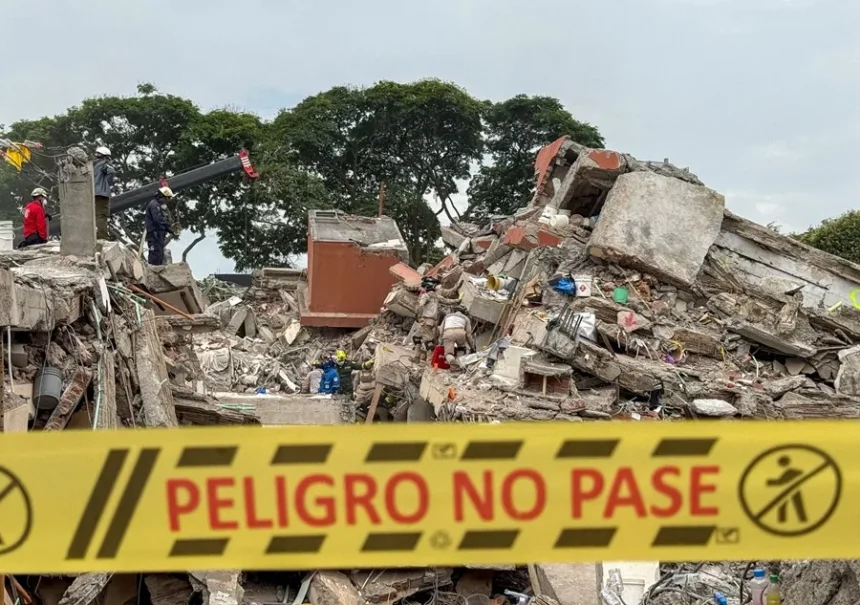
Cali.- The reconstruction of the Colombian city of Cali following last week’s 7.4 magnitude earthquake could take about three years, Mayor Alejandro Eder assured.
“We are experiencing (…) an emergency that will last about three years. We are in the phase of attending to the victims, but then we have to rebuild Cali: a resilient Cali, an inclusive Cali, a Cali with a future, a Cali for the youth. Cali will come out stronger, we will move forward,” Eder told EFE.
The local leader assured that the emergency is entering a new phase focused on providing aid to those affected and the recovery of the city following the initial search and rescue efforts.
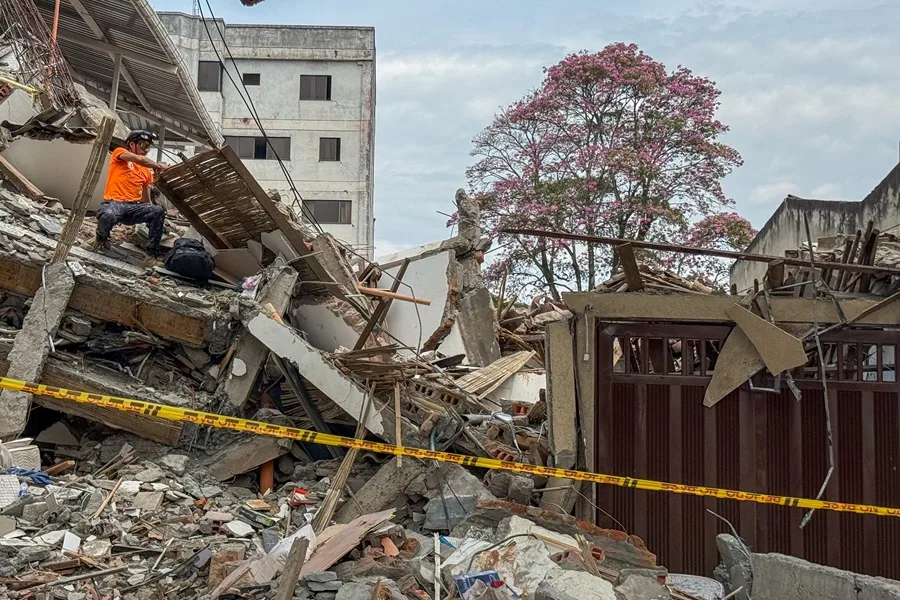
“At the beginning, a single mission: to save lives,” pointed out the mayor, who explained that in the places where buildings collapsed, the authorities moved, after the first week, from search efforts to the extraction of fatalities.
We recommend reading:Colombia confirms 312 victims of the earthquake
Attention is now also focused on the thousands of people affected by the earthquake.
More than thirty Mayor’s Office departments have been enabled to address the emergency, and the Infrastructure Secretariat has removed 25,032 tons of debris so far.
Public services restored in Cali
One of the main challenges after the earthquake was restoring public services, especially electricity.
More Read

The earthquake left 350,000 users without electricity, equivalent to more than 50%, and took 44 electrical circuits out of service.
According to the manager of Municipal Enterprises of Cali (Emcali), Roger Mina, the response from the technical teams allowed 99% of users in Cali to have their electrical power service normalized again in less than two days.
Connectivity also became a key tool during the emergency.
“From Emcali, we installed twelve mobile satellite internet connection points in different sectors of Cali to facilitate communications for rescuers and affected families. When Cali needs it, we are there,” Mina stated to EFE.

The restoration of these services allowed for progress in assisting communities while rescue, debris removal, and assessment of affected structures continued.
Solidarity from everyone
The mayor also highlighted the international and national aid received during the emergency.

“Cali has received aid and support from El Salvador, Peru, Mexico, and the United States through the Government; also from Bogota, from other cities, but above all from the people of Cali, who have been very generous,” he stated.
The Mayor’s Office enabled coordination spaces to organize the reception of food, humanitarian aid, and other items intended for the affected families.
You can also read:New earthquake shakes Venezuela during the early hours of this Tuesday
The scale of the tragedy has also emotionally affected those leading the response. Eder acknowledged that, although his priority as a leader has been to remain focused on saving lives, there are moments when the emotional burden weighs heavily.
“One cannot lose sight of the main objective, which is to save lives. There is nothing more important for a ruler than to safeguard life. Now, obviously there are moments when one breaks down,” he acknowledged.
For the mayor, the emergency is just beginning and the challenge will be to rebuild a city that not only recovers what was lost, but also takes advantage of the process to transform itself.
For the mayor, the emergency is just beginning and the challenge will be to rebuild a city that not only recovers what was lost, but also takes advantage of this process to transform itself and strengthen its capacity to respond to future disasters. Eder pointed out that the recovery must be focused on addressing the needs of the affected families, rehabilitating the damaged infrastructure, and ensuring the restoration of essential services.
Likewise, he stated that the reconstruction represents an opportunity to promote a more resilient, safe, and inclusive Cali, with better conditions for its inhabitants and greater opportunities for young people. The process will require coordination between local and national authorities, emergency agencies, communities, and international organizations, in addition to the support of the citizenry.
The president insisted that the recovery will be a long-term process that will require resources, planning, and joint work. The priority will be to support the affected people as the tasks of damage assessment, debris removal, and reconstruction of the areas hardest hit by the earthquake progress.