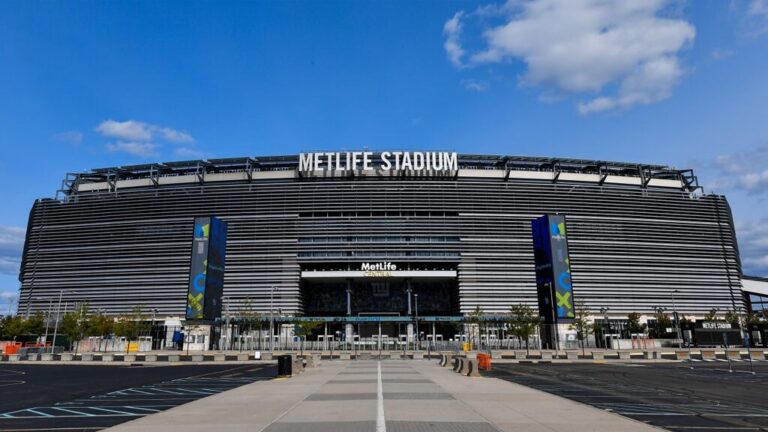


New Jersey, USA — The decision to market fragments of the turf that will be used in the 2026 FIFA World Cup final has opened a new front of tension between New Jersey authorities and the world football governing body, after state officials demanded a share of the revenue generated by the initiative.
The program, promoted ahead of the title match between Argentina and Spain at MetLife Stadium, offers fans pieces of the pitch preserved in resin as collector’s items. The memorabilia are priced from 450 to 3,000 dollars, depending on the format purchased.
Governor Mikie Sherrill‘s administration maintains that the state funded the stadium’s adaptation to meet FIFA requirements, including the installation of natural grass over the venue’s usual surface. According to authorities, the public investment exceeded 13 million dollars, which is why they believe taxpayers should benefit from any revenue derived from the sale of the playing field.
The claim has also been backed by state lawmakers, who question the legality of selling an asset installed in a complex managed by a New Jersey public authority. Some have even requested to analyze legal measures to prevent the commercialization if the corresponding authorization does not exist.

For its part, FIFA rejected the criticism and stated that the sale is part of an initiative developed together with the New York–New Jersey host committee. The organization explained that it will only receive a reduced royalty for the use of its brand and that most of the funds will be managed by the host committee.
The collection will be available only after the final is played, and each piece will include a certificate of authenticity along with information about the match. In total, several limited editions have been put on sale which, if sold out, could generate revenue exceeding 11 million dollars, according to estimates released by specialized media.
The controversy arises amidst the conclusion of the 2026 World Cup and reignites the debate over the use of public resources for organizing major sporting events and the distribution of the economic benefits derived from them. While New Jersey insists that taxpayers should receive a portion of those revenues, FIFA maintains that the tournament has already generated a significant economic impact for the host region.