
New military force for Haiti has the challenge of not foundering as happened with other missions

9:06 pm
The decision of the Security Council of the United Nations to create a new international force to combat the gangs that terrorize Haiti, is supposed to prosper and leave behind a trail of similar missions that have failed to guarantee security in the poorest country on the continent.
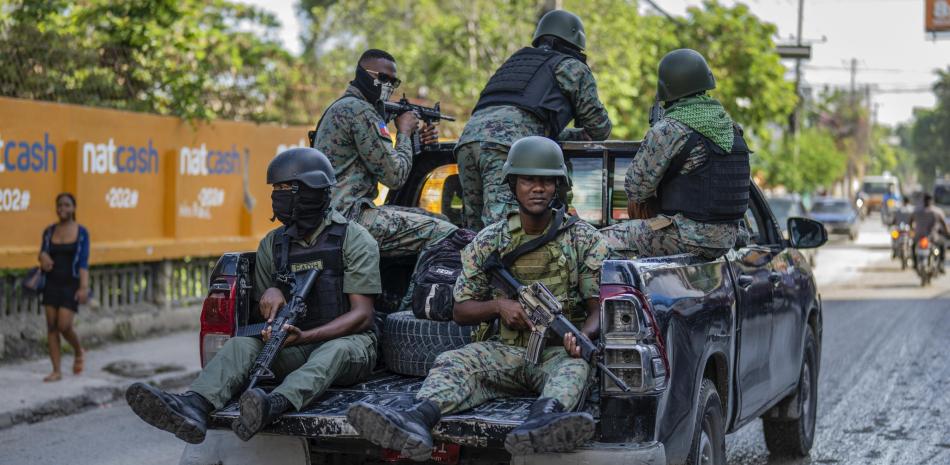
The UN Security Council approved on Tuesday a resolution promoted by the United States and Panama for the deployment in the Caribbean country of the Gang Suppression Force (GSF) that will replace the Multinational Security Support Mission (MSS), deployed last year under the leadership of Kenya without achieving outstanding results.
You may be interested in: Haiti celebrates UN approval to combat armed gangs
The Multinational Security Support Mission (MSS), led by Kenya, will leave the country in the coming days without having achieved the expected results.- Very different from what was expected, the armed gangs Haitian have taken new territories in cities, in addition to controlling 90% of the metropolitan area of Port-au-Prince.
Will this be the opportunity?
The Gang Elimination Force is supposed to have 5,500 members military or police. The MSS should have been made up of about 2,500 troops, but only reached 1,000, because several countries did not send the members they had announced and it did not have the expected economic support. The mission that ends lacked logistical support, therefore, this new force announced runs the risk of facing the same difficulties, if there is no real will on the part of the international community. Although, as announced, this new force will have the authority to carry out active operations against gangs and make selective detentions and arrests. A task to which the outgoing mission did not really dedicate itself. With this new force, gangs should expect attacks and even violent reprisals. It must instill fear in the gangs that terrorize the civilian population. It must act concretely and must be able to win. Upon arrival, with a date yet to be defined, this force must send a resounding signal, such as the arrest of gang leaders or their death in military operations.“He has known no peace”
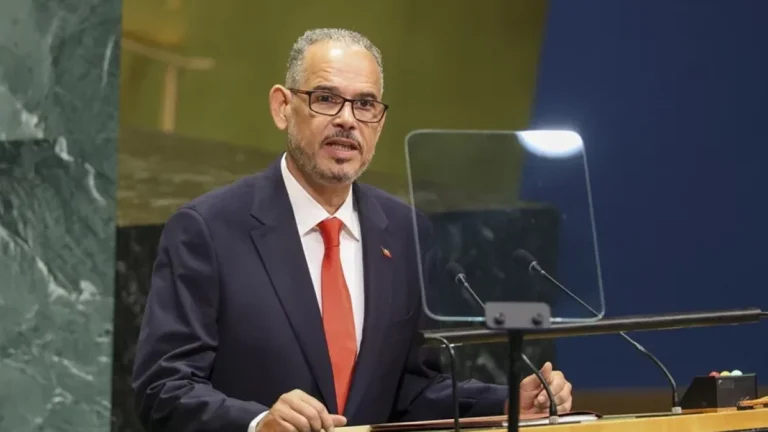
Since at least 2018, this Caribbean country has not known peace. An insecurity reinforced by an unprecedented political instability. The United States Secretary of State, Marco Rubio, declared this Wednesday that he is betting on a “rapid deployment” of the new international mission to combat the armed gangs in Haiti and called for other countries to join this effort. On his part, the current president of the Caribbean Community (Caricom), Andrew Holness, called this Wednesday a “significant step” the decision of the Security Council of the United Nations, to establish a force to eliminate the armed gangs that sow terror in Haiti. On Tuesday, the president of Haiti’s Presidential Transition Council, Laurent Saint-Cyr, expressed his “gratitude to the members of the Council” who have supported this initiative and, in particular, to the United States and Panama.
We are a multiplatform outlet offering news and television content. The fastest-growing news outlet in audience in the history of Caribbean communication.



#Most read
- 1.Armed men attack U.S.-flagged vessel in Haiti’s Port-au-Prince Bay
- 2.VIDEO: Guatemalan teenager wakes up inside her coffin after being presumed dead
- 3.VIDEO: Witnesses say man prayed and bowed to tiger before fatal zoo attack in England
- 4.5D Cinema in Japan surprises the world with an immersive experience that goes viral
- 5.Biography of Juan Ramón Gómez Díaz: The Media Mogul in the Dominican Republic
- 6.VIDEO: Father throws chair at judge after driver gets 120 hours of community service for killing his daughter
- 7.The Panama Canal begins evaluation of companies interested in building two ports
- 8.Pamela Infante clarifies situation with Wander Franco
- 9.Dominican man shot by ICE in the Bronx had robbery conviction and pending drug charges
- 10.Magnitude 8.0 earthquake reported off Panama’s Pacific coast

Newsletter
Subscribe to our newsletter to receive our latest articles instantly!