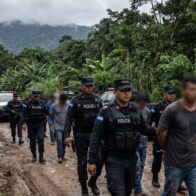
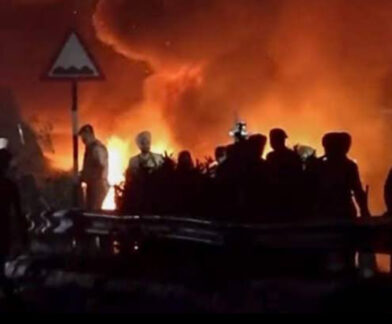
Port-au-Prince.- The Gang Suppression Force (GSF) of Haiti attacked this Monday the territory under the control of gang leader ‘Manno’, a neighborhood in the center of Port-au-Prince controlled by armed groups, as part of the “start of its operations” in that country engulfed in a spiral of violence.
“It is the beginning of a gradual effort to degrade armed groups and restore conditions that allow Haitian authorities to ensure public safety,” the GSF said in a post on its Facebook page.
The GSF members were accompanied by units of the Haitian National Police (PNH) and the ‘Task Force’, an armed group under the control of the Haitian Government led by the American businessman Erik Prince.
According to local press, those law enforcement forces took control of the residence of gang leader ‘Manno’ in the capital’s neighborhood of Village de Dieu, while the police reported on their social media that a “major operation” is being carried out in that area, where units had not operated for five years.

Troops from Chad
Last April, the first troops from Chad arrived in Haiti, forming part of that Gang Suppression Force, approved by the United Nations to confront armed gangs, which stipulates a maximum of 5,500 personnel from various nations.
More Read

This operation takes place after at least three police officers and one civilian -who was accompanying the police- died last Saturday during clashes with armed groups in Verette, in the Artibonite department (province) (center).
We recommend reading: The Haitian government states that elections will be held once they finish with the armed gangs
In the first three months of this year alone, at least 1,642 people were killed and 745 injured, according to data from the United Nations Integrated Office in Haiti (BINUH), which states that gangs were responsible for 27% of the victims, while security force operations caused 69% of the deaths and injuries, with dozens of civilians among them, including children.
Added to this is that some 5.8 million Haitians, approximately 52% of the population, suffer from food insecurity (in category 3 out of 5), while the number of displaced people reached 1.4 million last year, an unprecedented level, according to data from international organizations.