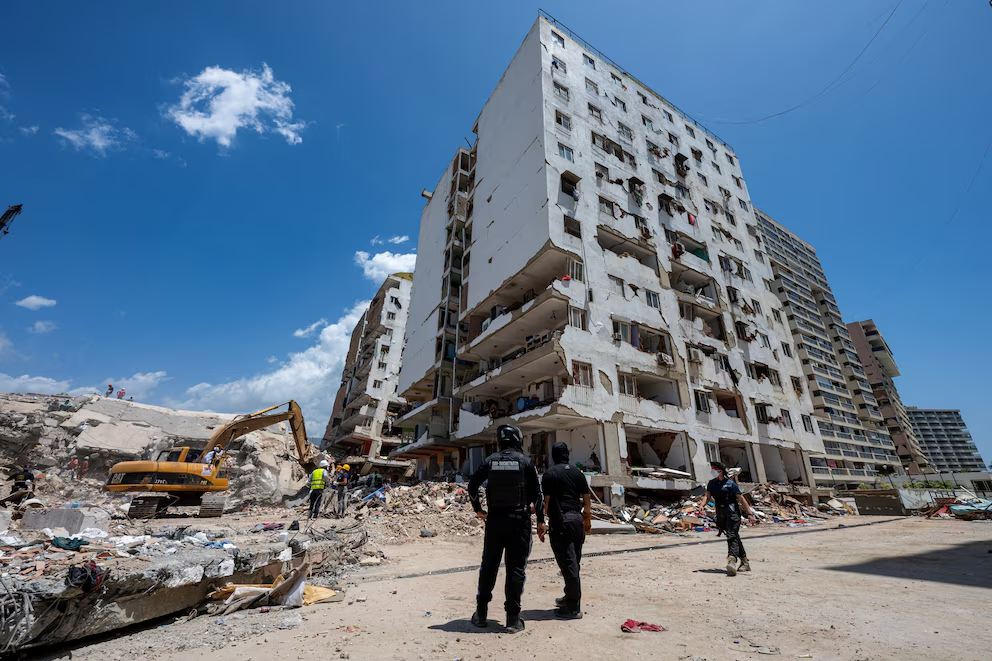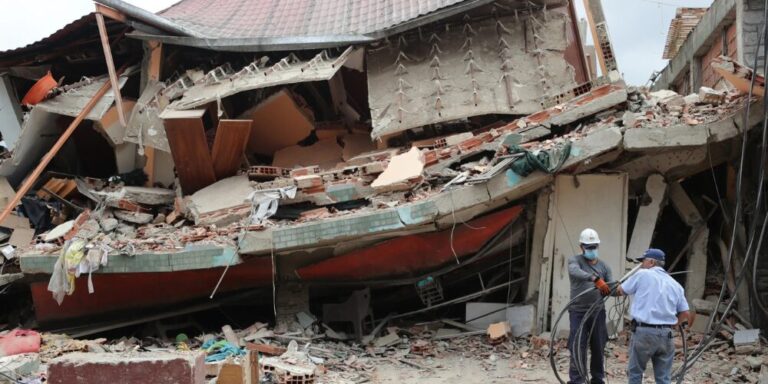


Caraballeda (Venezuela).- Dozens of yellow machines have arrived in the streets of La Guaira, the area devastated by Venezuela’s double earthquake, in the last few hours to remove debris and help accelerate the recovery efforts of corpses.
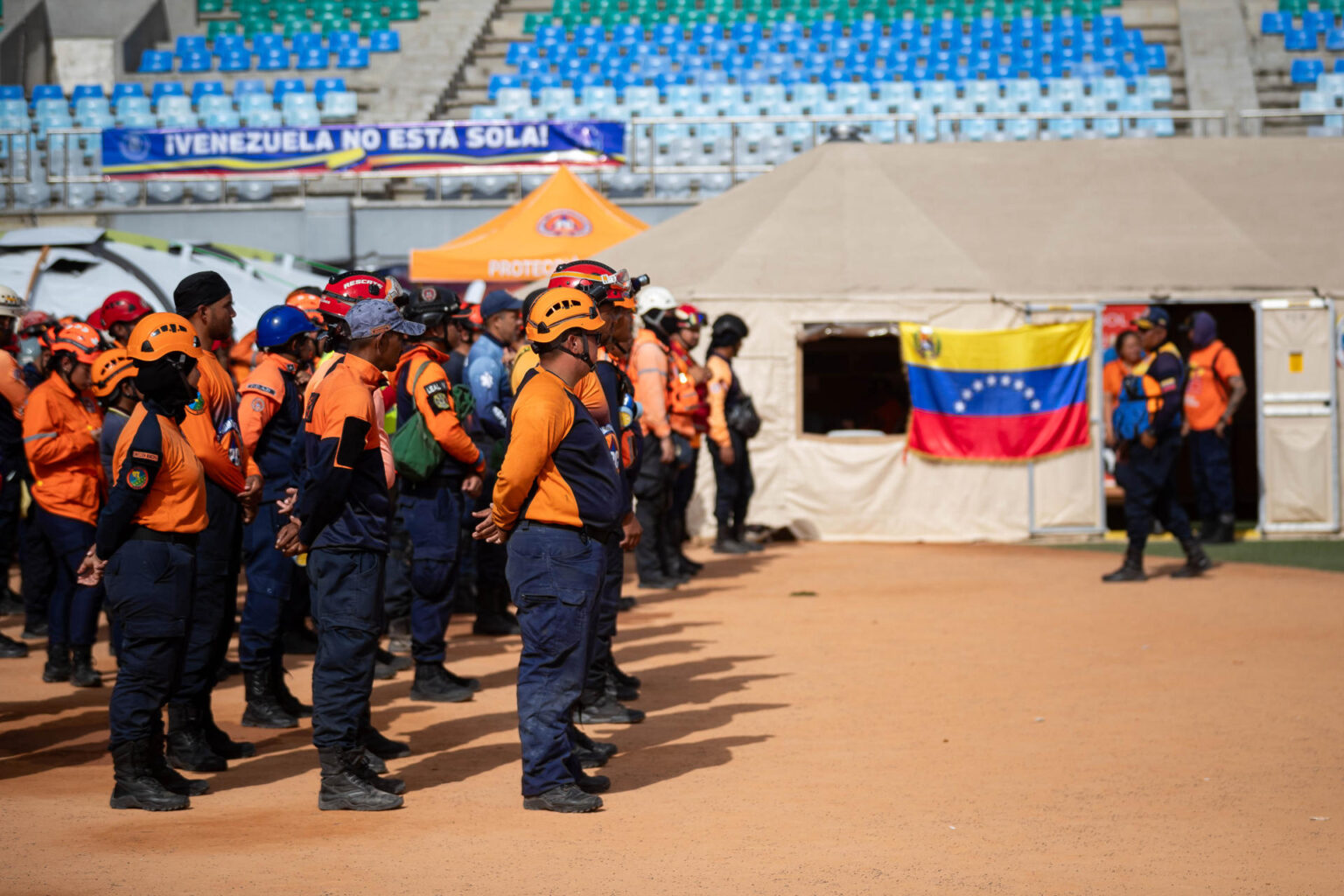
Meanwhile, almost all international rescue groups have already withdrawn, and only Venezuelan volunteers, firefighters, national civil defense, and neighbors remain in the collapsed buildings, continuing to clear debris.
Read more: Venezuela activates defense plan in four western states in the face of a U.S. “threat”
“Starting on day seven, the teams began to demobilize, although there are still teams that arrived later that are continuing, especially from Latin America. They are still working in places where there are reports of life, but the majority are working with local teams on the recovery of bodies,” explained Sebastián Mocarquer, representative of the United Nations Disaster Assessment and Coordination (UNDAC) team, to EFE.

At the moment, 25 teams out of the 77 -from 31 countries (almost 3,000 in total)- remain, but many are already withdrawing, and this UN coordinating body already handed over the baton last Friday to the Venezuelan Civil Protection, which will now be in charge of the 7.2 and 7.5 magnitude earthquakes of June 24, which have caused 2,954 deaths and more than 16,500 injuries.
The acting president of Venezuela, Delcy Rodríguez, has bid farewell to and decorated rescuers from nearly 30 countries as of yesterday, including Spain, Germany, Bolivia, Chile, Colombia, Costa Rica, Cuba, El Salvador, Slovakia, Jordan, Lithuania, Mexico, Panama, Portugal, the Czech Republic, the Dominican Republic, Turkey, and Vietnam.
Fewer people and displaced persons
In Caraballeda, one of the two most affected areas, the streets were emptier early in the morning, although there are still tents in parks or even on the sidewalks, and many relatives still do not want to leave the ruined buildings where the bodies of their loved ones still remain.
“What we are seeing now is that there are more and more displacements to states that have not been affected,” Veronique Durroux, spokesperson for OCHA Latin America and the Caribbean (United Nations Office for the Coordination of Humanitarian Affairs), told EFE, noting that movements have been recorded to the states of Táchira and Zulia, both in the west of the country and bordering Colombia, as well as to Delta Amacuro (east).

Mariana Hernández has spent 11 days in the vicinity of a 12-story building in Playa Grande, in the other earthquake zone, crying out for help to get her sister, her husband, and her two nephews out.
“The people you see working here are all people who have family members here and support that has arrived from other states (in the country),” this woman explained to EFE.
Among the rubble there are already several excavators and a large crane, but they belong to a man who lived in that building and is trying to get his family out. With his own hands and those of the Venezuelan volunteers, they have managed to pull out 120 deceased people from this building alone, and they know that many more remain. International rescuers passed by the site days ago and found no signs of life.
The challenge of debris
On the main streets, empty trucks line up waiting, but for the moment the excavators are picking up the rubble and piling it up around the buildings or in empty lots.
The Venezuelan government estimated on July 1st that 1.25 million tons of debris were generated in the town of Caraballeda alone. According to official figures, the tremors affected 856 buildings, of which 190 have collapsed.
“The magnitude of the destruction is impressive and we have to see what can be done. There is also an issue of debris management, what is going to be done with that. We are also supporting the evaluation there,” noted the OCHA spokesperson.