
8:25 am
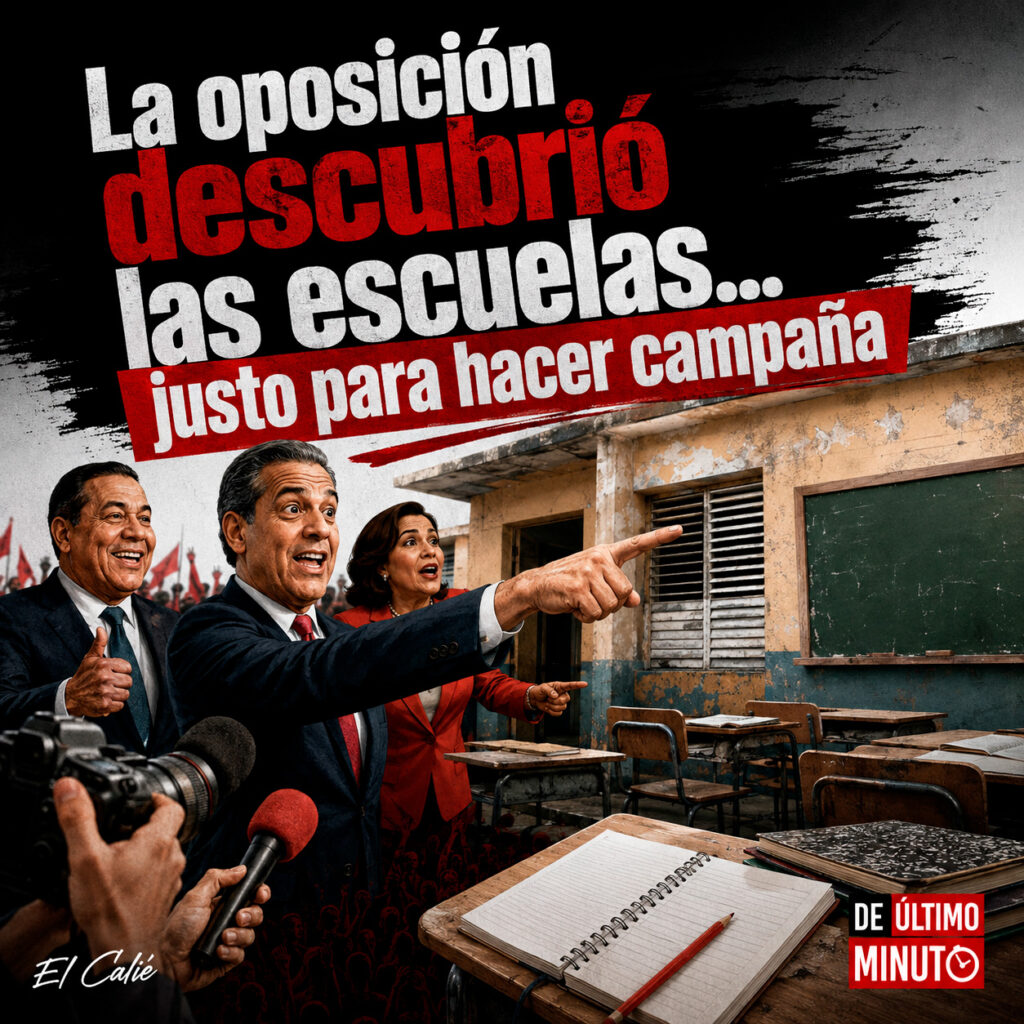
In Dominican politics, there is a custom that never fails: as the electoral calendar approaches, some leaders suddenly discover problems that have been on the table for years. Henry Merán asserts that Dominican education has “devolved,” while Omar Fernández focuses on the number of Haitian students within the system. Both topics deserve discussion, but presenting them as if all the ills of the public school system had begun in 2020 requires forgetting too quickly that the lack of classrooms, the quality of learning, and planning weaknesses have been accumulating for decades.
The system is facing difficulties, and denying them would be absurd. There is a shortage of spots in certain areas, and there is still much to improve regarding infrastructure, nutrition, and educational quality. But there are also responses that must be put on the table: the Ministry of Education reports 157,000 requests for new spots addressed through various alternatives, some 1,509 classrooms available by the end of August, eight million books and workbooks distributed, and thousands of students temporarily enrolled in private schools paid for by the State. If a child is left out, the Government is criticized; but if a provisional solution is sought so they do not lose the school year, that does not seem to be enough either.
The same applies to the migration debate. The Dominican Republic has every right to seriously discuss the pressure that irregular migration exerts on its public services and to establish a firm migration policy. But making the foreign student automatically responsible for the lack of spots simplifies a much older and more complex problem. Minister Luis Miguel De Camps has assured that no Dominican student will be left out and, while he is required to keep that word, it is also appropriate to recognize measures such as the 1,871 school transport buses, the expansion of polytechnics, and the plans to strengthen technical and digital education.
The opposition does well when it oversees, denounces, and forces the Government to be held accountable. What loses strength is the narrative that everything is worse while conveniently erasing inherited problems and the actions currently underway. The Government should not be given a blank check: in a few months, we will have to verify how many classrooms were finished, how many students were actually left out, and how much the system improved. But to talk about education, memory is also needed, because it is curious to see politicians who for years sat at the desk of power return now as inspectors asking, indignantly, who was it that left the school like this.
We are a multiplatform outlet offering news and television content. The fastest-growing news outlet in audience in the history of Caribbean communication.


#Most read
- 1.The new crisis doesn’t start in the media, it starts on WhatsApp
- 2.¿To govern or campaign? Abinader made it difficult
- 3.We have a permanent constitutional back and forth
- 4.When the slander is coordinated and clumsy
- 5.Modernization of the Cooperative Law in the Dominican Republic: A Pillar for Sustainable Development
- 6.Santo Domingo Under Threat: How to Prepare for the Hurricane Season
- 7.The TV changed in DR
- 8.Food security begins in the Dominican countryside
- 9.Banreservas, an example of what the State can achieve
- 10.Notes on the new Penal Code

Newsletter
Subscribe to our newsletter to receive our latest articles instantly!