
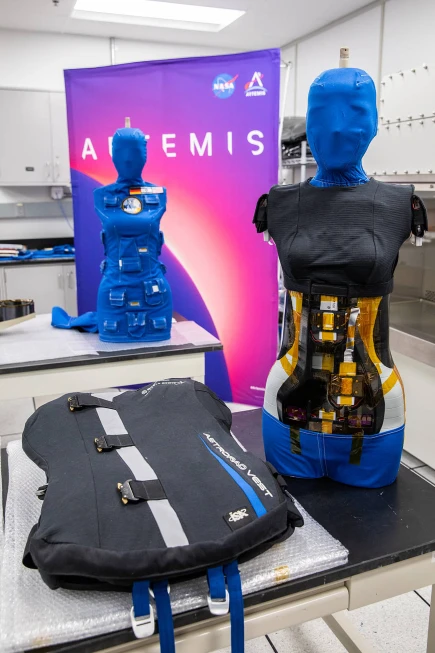
A new study suggests that a radiation-shielding vest tested during NASA’s Artemis I mission could significantly reduce astronauts’ exposure to radiation during severe solar storms.
The vest was worn by a female test dummy aboard the uncrewed Artemis I mission in 2022. The spacecraft traveled around the Moon and back, allowing scientists to study how the garment could protect astronauts from potentially dangerous radiation during future lunar missions.
Radiation remains one of the major risks facing astronauts as NASA prepares for longer stays on the Moon and the development of a future lunar base. Researchers from the United States, Germany and Israel reported that the vest could help protect crews during powerful solar events and potentially allow astronauts to leave their shelters when radiation levels rise.

The garment is designed to be worn specifically during periods of high radiation, covering some of the body’s most vulnerable organs and tissues, including the lungs, stomach, bone marrow, breasts and ovaries.
Artemis I carried two female manikins, Zohar and Helga, which spent nearly a month traveling to the Moon and back inside NASA’s Orion spacecraft. A version of the vest had previously been tested aboard the International Space Station.