
MIVHED will intervene in the Pedro Henríquez Ureña National Library to restore its infrastructure
With an investment of RD$264 million, MIVHED will intervene in the National Library
Santo Domingo. – Within the framework of its “Public Procurement Explained” program, the Ministry of Housing, Habitat and Buildings (MIVHED) announced that it will carry out a general remodeling of the Pedro Henríquez Ureña National Library, an infrastructure that has shown deterioration in its facilities in recent years, with an investment of RD$264 million, destined for the comprehensive recovery of the main bibliographic institution of the Dominican Republic.
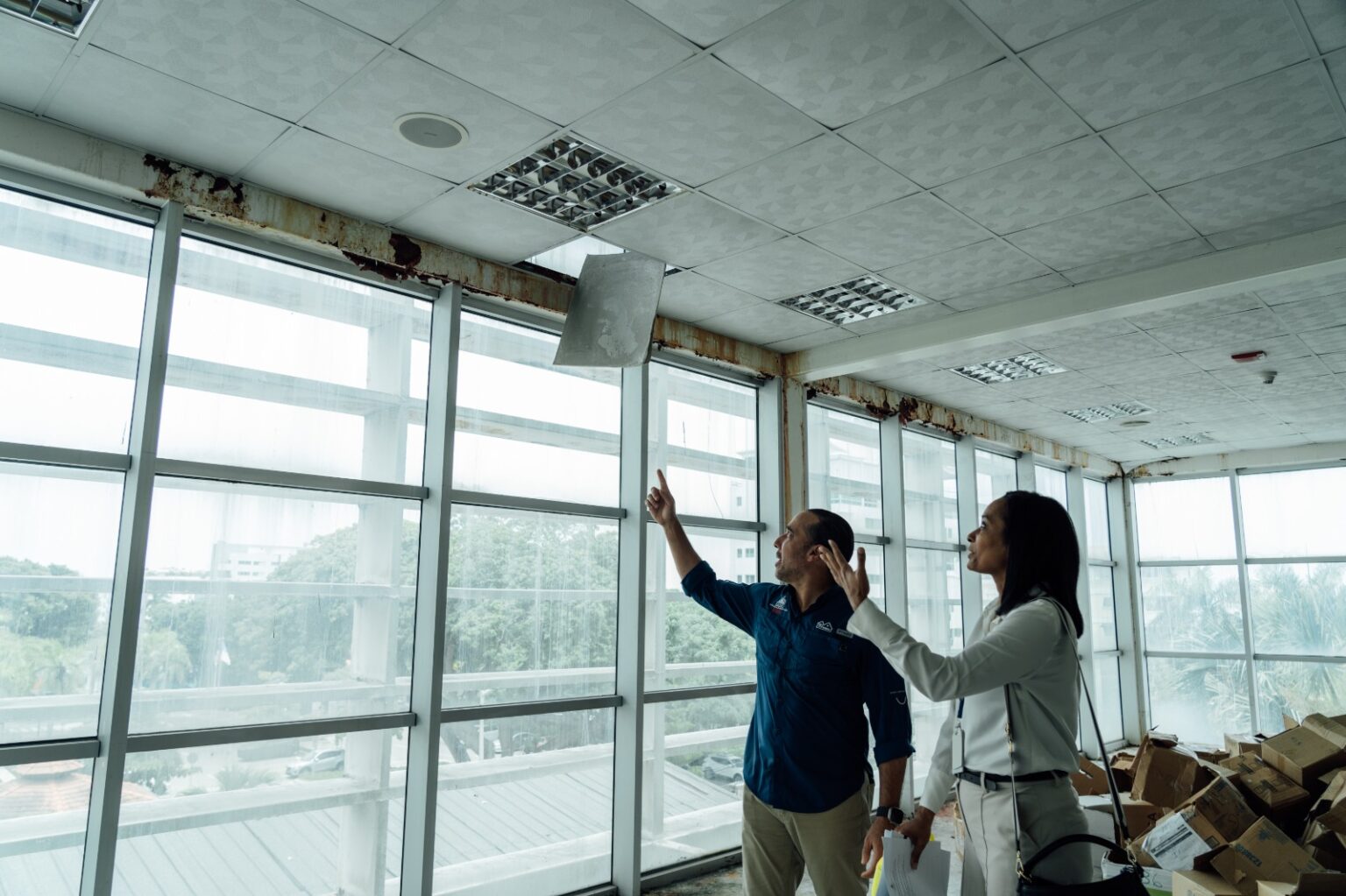
The Vice Minister of Policies and Planning of the MIVHED, Ernesto Mejía, explained that more than 70% of the building is in poor condition as a result of leaks accumulated over years, which have affected the air conditioning system, carpets, windows, and other structural elements.

For his part, the director of the Pedro Henríquez Ureña National Library, Rafael Peralta, pointed out that the deterioration of the infrastructure has worsened, causing damage to the bibliographic material and affecting the health of the staff.
“In recent years, the Library has suffered from a regrettable state of deterioration. This humidity has damaged part of the bibliographic material and the health of the collaborators. But now, with the correction of this structure, the National Library will move forward as it should,” he expressed.
The planned works include preliminary items, landscaping, gray work readjustment and general finishes, as well as the upgrading of plumbing, electrical, HVAC and mechanical ventilation installations.
You can also read:
This intervention seeks to adapt the physical infrastructure of this historic bibliographic center, guaranteeing better conditions for the conservation of its collections, research, and citizen access to its cultural services.

The building that houses the Pedro Henríquez Ureña National Library was inaugurated in 1971 and, over the years, underwent expansions in its lateral areas as part of its growth and adaptation to the institution’s needs. These interventions allowed for the extension of its spaces, although over time, vulnerable points emerged in the building’s structural joints.
Over the years, those areas experienced leaks and deterioration associated with constant exposure to weather conditions, especially due to rain. The accumulation of these effects caused progressive damage to the infrastructure, making a comprehensive intervention necessary to restore and strengthen the physical conditions of the building.