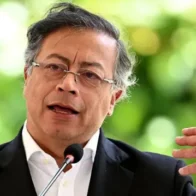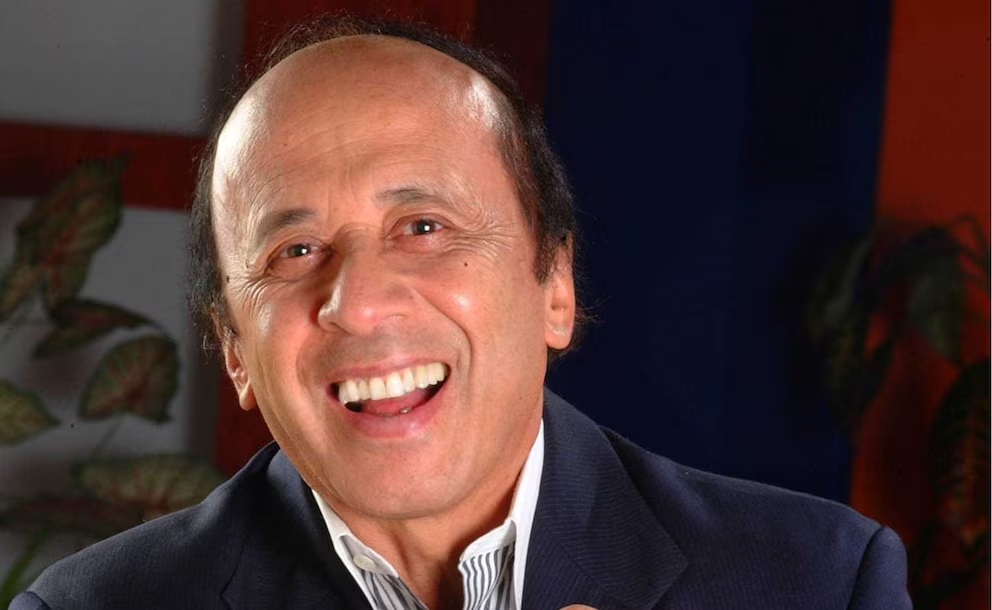
At the age of 85, presenter Alfonso Lizarazo passed away, recognized for his career in Colombian television and for being the creator of the comedy talent show Sábados Felices.
The news was released by Caracol Radio, through sources cited directly by the station. Lizarazo had been dealing with health problems for several years. Red+ Noticias reported that Lizarazo had been dealing with heart problems lately.
One of his last public appearances took place in December 2025, precisely during the celebration of his last birthday.
The recording was published by comedian Marco Antonio Amaya on his Instagram account: a brief video of the program founder’s celebration, recorded during the festivities on December 29th. The post spread rapidly across different platforms and sparked all kinds of messages from his followers. “The country has still not lived up to the recognition that Don Alfonso deserves,” wrote one of them. “Master, thank you for giving us so much joy,” added another.
The reappearance of the Santander native carries greater weight if one considers that, since 2002, Lizarazo had remained on the sidelines of public life. His last visible phase was political: in 1998 he ran for the Senate for the National Democratic Reconstruction Movement and held his seat until that year, after which he only reappeared at specific tributes.
More Read
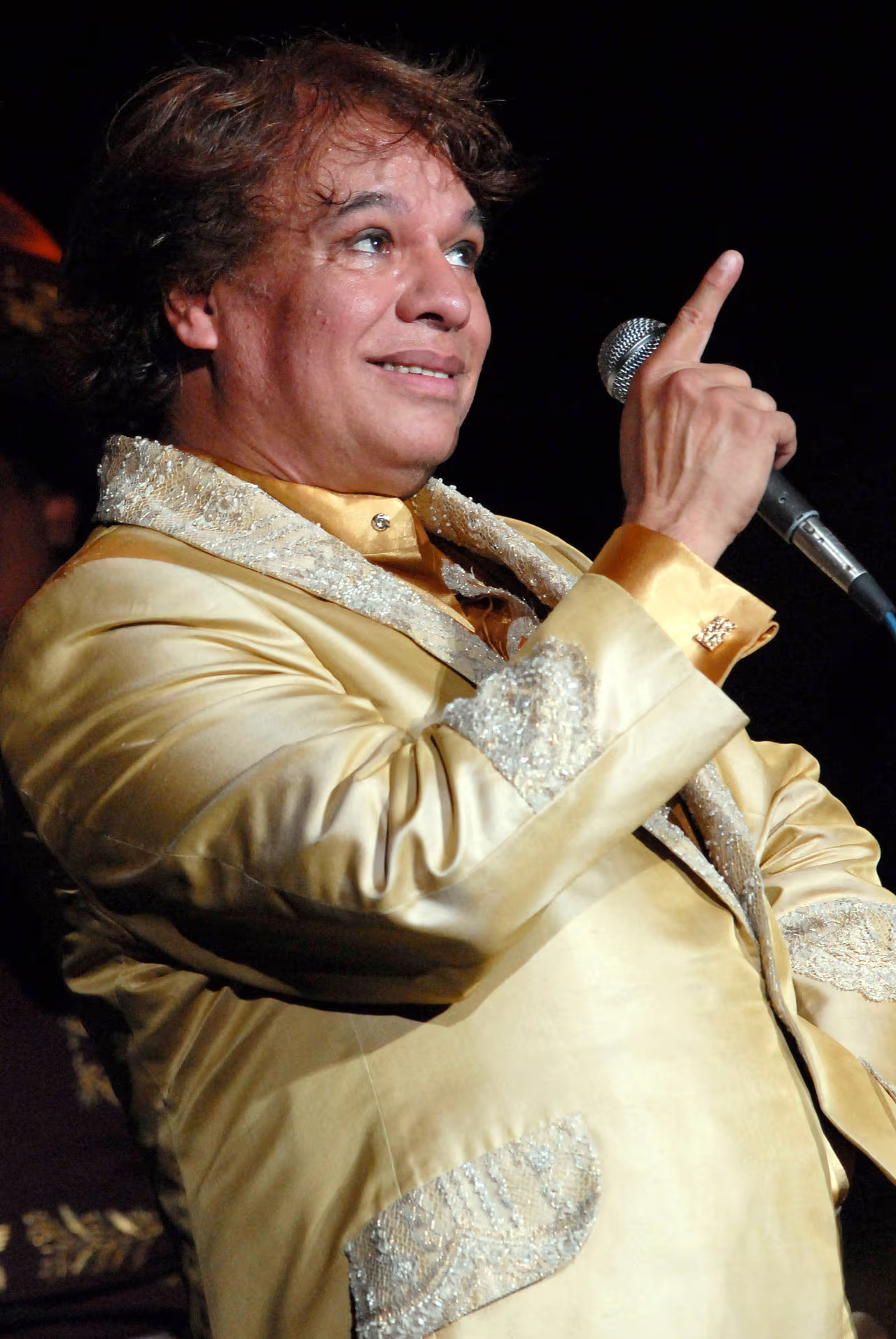
Alfonso Lizarazo stayed away from public life since 2002, after his political period as a senator for the National Democratic Reconstruction Movement – credit Colprensa
Born in Bucaramanga in 1940, Lizarazo arrived in Bogotá at the age of 18 and made his way into radio thanks to the then-manager of Caracol Radio, Julio Nieto Bernal, who hired him to work in the control room. He rose to become an announcer and later director of Radio 15, a station that geared its programming toward a youth audience and was one of the first in Colombia to broadcast bands like The Beatles and The Rolling Stones, in addition to boosting the careers of Óscar Golden, Lyda Zamora, and Harold, figures of the so-called “Colombian New Wave.”
More Read

The leap to television came in 1972 with Campeones de la Risa, a format that in 1976 adopted the name Sábados Felices. Lizarazo established the dynamic that persists to this day: joke-tellers who compete each week for a cash prize, alternated with a fixed cast of comedians who perform jokes sent in by the audience.
‘Sábados Felices’ was born in 1976 from ‘Campeones de la Risa’ and consolidated a humor format that remains current on Colombian television – credit Colprensa
Broadcast without interruption since then, the program overcame decades of transformations in the Colombian television system—the bidding models of its beginnings, the privatization of the sector in the late 90s, and the emergence of streaming—without losing its place on the screen.
His recognition earned him the creation of a social initiative, Carry a little school in your heart, carried out during Lizarazo’s years at the helm of Sábados Felices and in which both he and the comedians toured more than 500 towns in the country for 25 years, playing charity soccer matches whose proceeds sought to build and improve 320 rural schools.
The program Sábados Felices remained on the air for decades and survived the privatization of television and the arrival of ‘streaming’ without leaving the screen – credit Colprensa
Figures who defined the country’s popular humor passed through its stages: ‘‘la Gorda’ Fabiola Posada, Lucero Gómez, Jaime Agudelo, Pacho sin fortuna, Don Jediondo, Alerta, Enrique Colavizza, Álvaro Lemmon, El Mocho Sánchez, César Corredor, and Mandíbula, among others. Several of them have already passed away or left the cast, but the program remains on the air.
More Read

In 1984, Lizarazo expanded his project with the International Humor Festival, an annual gathering that brings together comedians, impressionists, and magicians from Hispanic America and which, like Sábados Felices, remains relevant today. His role as host and director of the program extended until 1998, the year he left hosting duties to dedicate himself to politics. Subsequently, his place was filled by Jota Mario Valencia, Hernán Orjuela, and Humberto “El Gato” Rodríguez.