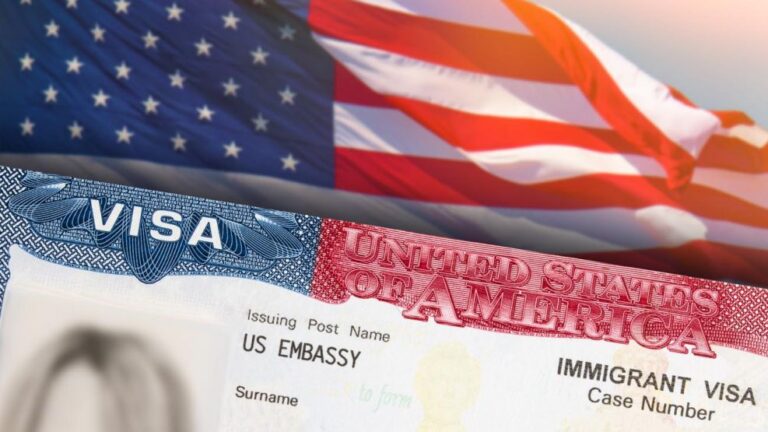

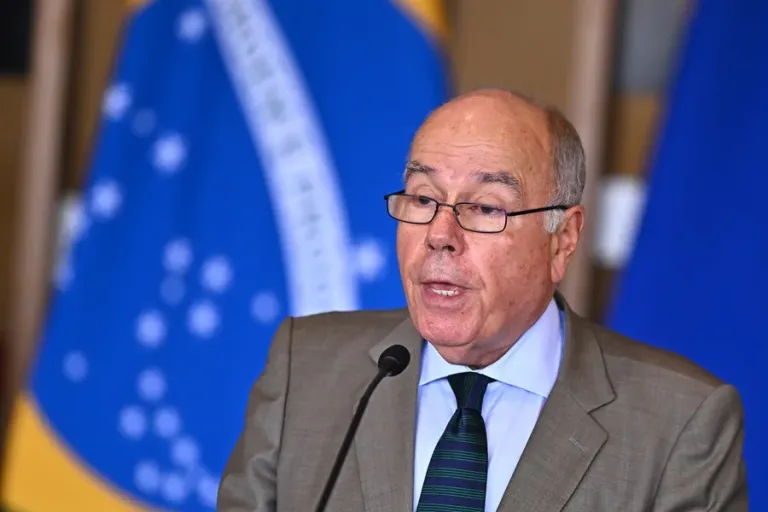

Rio de Janeiro.- The Brazilian government denied the visas requested by two officials from the U.S. Department of State who intended to travel to the country to meet with electoral authorities and discuss matters related to the presidential elections in October, official sources reported this Saturday.
The measure was adopted by the Ministry of Foreign Affairs, which rejected the requests of Riley Barnes, Assistant Secretary for Democracy, Human Rights, and Labor, and Samuel Samson, Deputy Assistant Secretary of that same department, as reported by the state news agency Agência Brasil.
According to the Foreign Ministry, U.S. officials intended to address issues related to freedom of expression during the electoral process, but the Government considered the mission inappropriate due to the context in which it was proposed.
The controversy over Flávio Bolsonaro’s statements
The request was filed shortly after Senator and presidential candidate Flávio Bolsonaro claimed, without providing evidence, that the Brazilian electronic voting machines were manufactured by the Venezuelan company Smartmatic, during a meeting with representatives from nearly 40 countries held this week in Brasília.

The Superior Electoral Court (TSE) denied that claim and asserted that the company never supplied electronic voting machines or software used in the Brazilian electoral system.
The meeting took place under the shadow of the precedent set by the senator’s father four years earlier.
We recommend reading:
On July 18, 2022, then-President Jair Bolsonaro—now imprisoned for coup-mongering—used the official residence of the Alvorada Palace and state media outlets to summon dozens of foreign ambassadors. At that meeting, the former president attacked the security of the electronic voting system and sowed suspicions of fraud.

That episode had severe judicial consequences: in June 2023, the TSE convicted Jair Bolsonaro of abuse of political power and misuse of public media, and declared him ineligible until 2030.
Although Flávio Bolsonaro denied having questioned the reliability of the electoral system, he defended the presence of international observers to monitor the presidential elections scheduled for next October 4.
Brazil fears an instrumentalization of the electoral process
According to the Foreign Ministry, the fact that the visa application occurred immediately after that meeting led the Government to consider that the visit could represent a political instrumentalization of the electoral process, which is why it decided to deny the entry of the U.S. officials.
Diplomatic sources cited by local media indicated that Brazil has a tradition of receiving international observers in its elections, but maintained that the U.S. representatives would not attend in that capacity, but rather to perform “another role”.
The decision was adopted on Friday, before The Washington Post published a report in which it identified Barnes and Samson as responsible for a State Department strategy to question the integrity of the Brazilian electoral system.
Flávio Bolsonaro is emerging as the main rival to President Luiz Inácio Lula da Silva, who is seeking a fourth non-consecutive term in the October 4th elections.