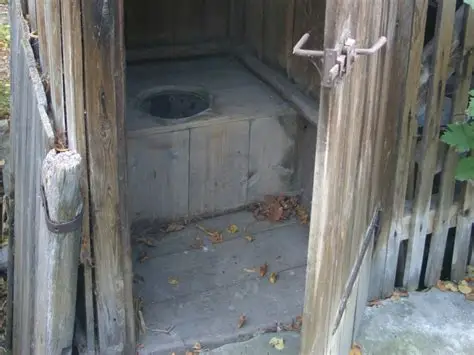
Santo Domingo.– Despite progress in access to basic services, 216,000 households in the Dominican Republic still use a latrine as a sanitary facility, which represents 6.7%, a situation that highlights the gaps that persist in terms of sanitation, according to the ENHOGAR-MICS 2025 Basic Report from the National Statistics Office (ONE).
The study indicates that, while the majority of homes have toilets, in rural areas 16.7% of households depend on a latrine, a percentage that far exceeds the national average and reflects the inequalities in access to sanitary infrastructure.
Differences are also observed between regions. In Enriquillo, barely 68.2% of households have a flush toilet, while 27.1% use a latrine, the highest proportion recorded in the report. Conversely, in the Ozama or Metropolitan region, only 2.1% of households lack adequate sanitary service or use one other than a flush toilet or latrine.

You can also read: Internet access: 56.2% of households have a connection
The ONE explains that access to adequate sanitary facilities is an essential component for ensuring decent living conditions and reducing the risk of diseases associated with a lack of sanitation. In that sense, the survey also distinguishes between improved and unimproved sanitation facilities, noting that the former are those that hygienically separate excreta from human contact, such as toilets connected to sewers, septic tanks, or sanitary pits.
The results are part of the 2025 ENHOGAR-MICS Basic Report, conducted by the ONE with the technical and financial support of UNICEF and SISALRIL, which offers an X-ray of the living conditions of Dominican households in areas such as housing, health, education, access to basic services, and child well-being.