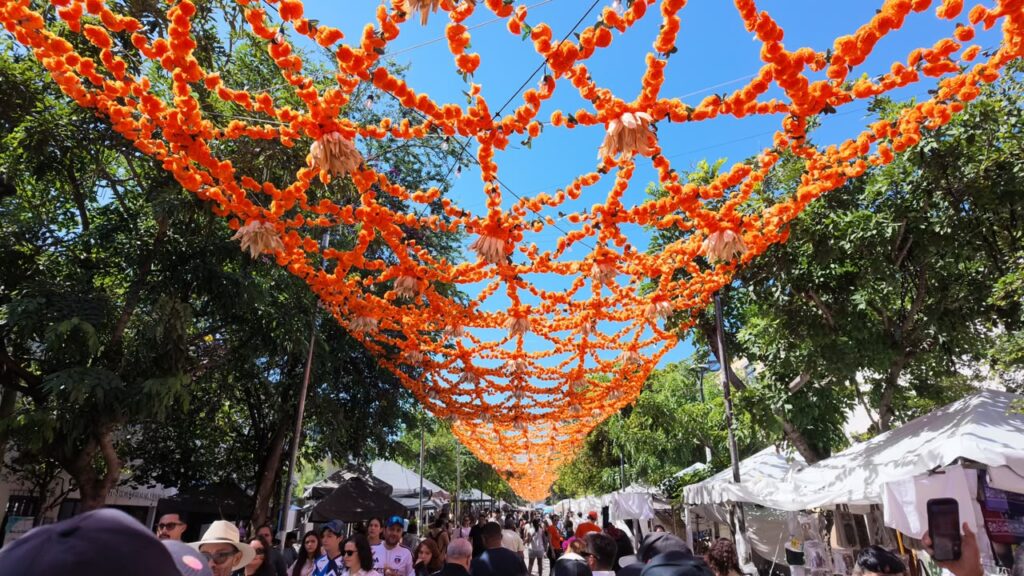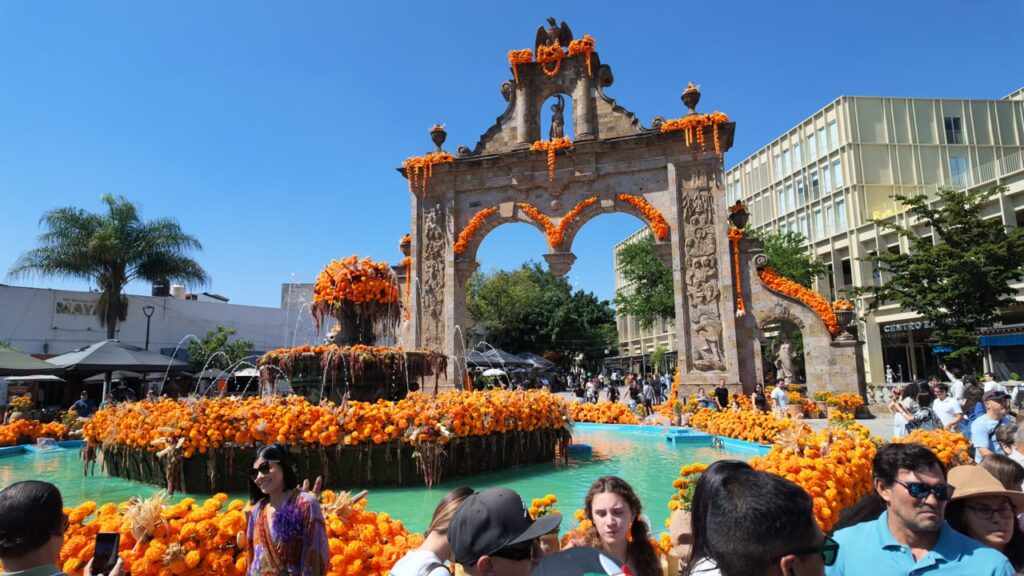


Amidst cempasúchil flowers, candles, papel picado, photographs, and offerings, the inhabitants of Guadalajara prepare this Saturday, October 31st, to celebrate the Day of the Dead, one of the most representative festivities of Mexican culture, dedicated to remembering and honoring family and friends who have passed away.
For days now, preparations have been part of the atmosphere in different areas of the city, where families organize their altars, decorate their homes, and place the traditional elements that, according to popular belief, serve to symbolically welcome the souls of their loved ones during these dates.
This celebration has its main days on November 1st and 2nd, although activities and preparations begin several days earlier. November 1st is traditionally dedicated to deceased children, while on the 2nd, adults are remembered, in a tradition that combines indigenous practices with elements of the Catholic religion.
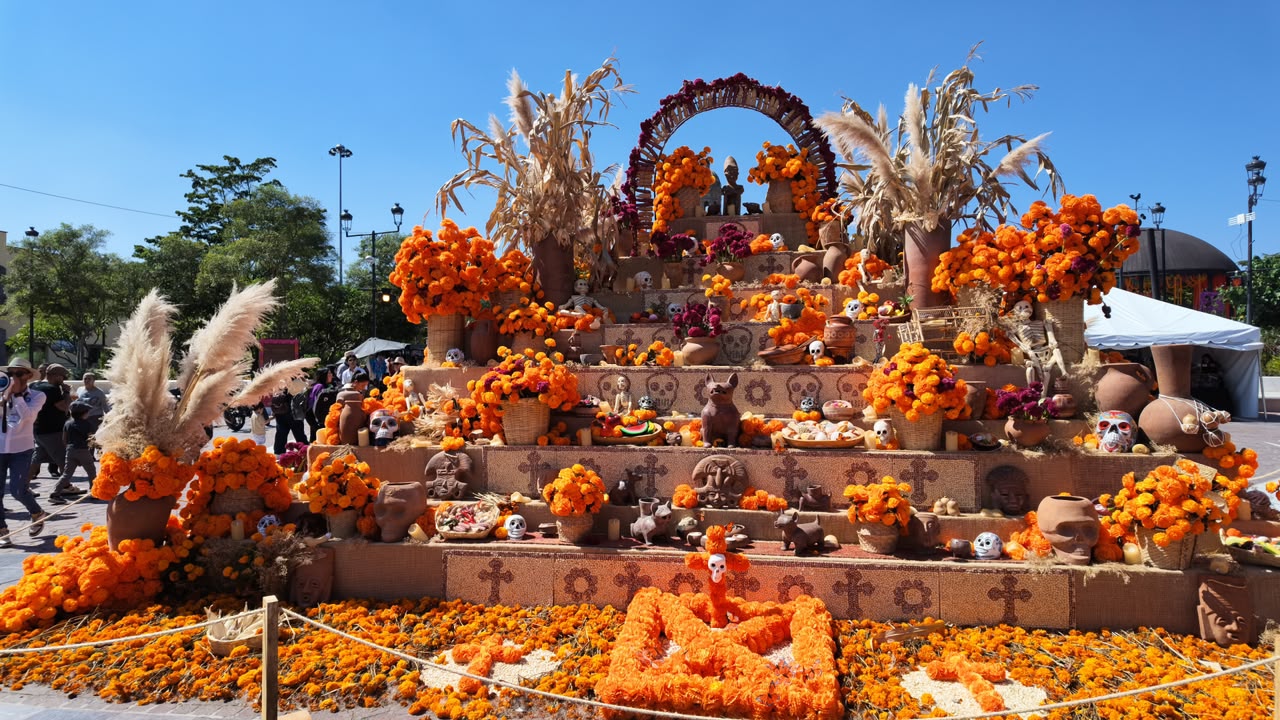
One of the main symbols of this holiday are the altars of the dead, which families prepare in different levels and decorate with photographs of their deceased, food, drinks, and personal objects that allow them to remember their tastes and keep their memory alive.

Each element has a particular meaning. Cempasúchil flowers, recognizable by their intense orange color and aroma, are used to decorate altars and form paths of petals that, according to tradition, guide souls toward the offerings.
Candles represent the light that guides the deceased; water is placed to quench their thirst after their journey; salt symbolizes purification; while copal and incense are used to scent the space and accompany the welcoming of the souls.
The traditional pan de muerto is also placed, whose circular shape represents the cycle of life and death, while its decorations refer to bones. Added to this are sugar skulls, perforated paper, fruits, and the favorite dishes of the people to whom the altar is dedicated.
A tradition that is regaining strength
During the Heat Awards Week activities, we had the opportunity to talk in the center of Zapopan with Francisco García, a tour guide, who explained to us how this festivity is experienced and the preparations that Mexicans make to keep this tradition alive.
García commented that the Day of the Dead has regained strength in popular culture, after, in his opinion, it had lost presence among some generations. In that process, he highlighted the influence of the film Coco, produced by Disney Pixar, which contributed to reawakening the interest of many people in knowing, valuing, and preserving this Mexican celebration.
The guide also explained that the preparations are not limited to placing flowers and decorations, but rather represent a way to maintain the bond with those who have passed away. For this reason, each family tries to incorporate photographs, food, and objects that allow them to remember their loved ones, turning the altars into spaces filled with feelings, memories, and meaning.
The festivities also extend to the streets, squares, and public spaces. In Guadalajara, municipal authorities reported that more than 21,000 cempasúchil flowers were placed in different parts of the city, including squares, roundabouts, medians, and cemeteries. In addition, monumental altars were installed and cultural activities were organized so that residents and visitors can enjoy the celebration.
The Day of the Dead is a cultural expression that has transcended Mexico’s borders and was recognized by UNESCO as an Intangible Cultural Heritage of Humanity. Its importance lies in the preservation of customs, the transmission of knowledge between generations, and the particular way in which the Mexican people understand and honor death.
Thus, this October 31st, Guadalajara prepares to host one of the most significant celebrations in the country, where flowers, colors, gastronomy, and altars become the protagonists of a tradition that seeks to remember that those who have departed remain present in the memory of their families.