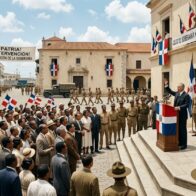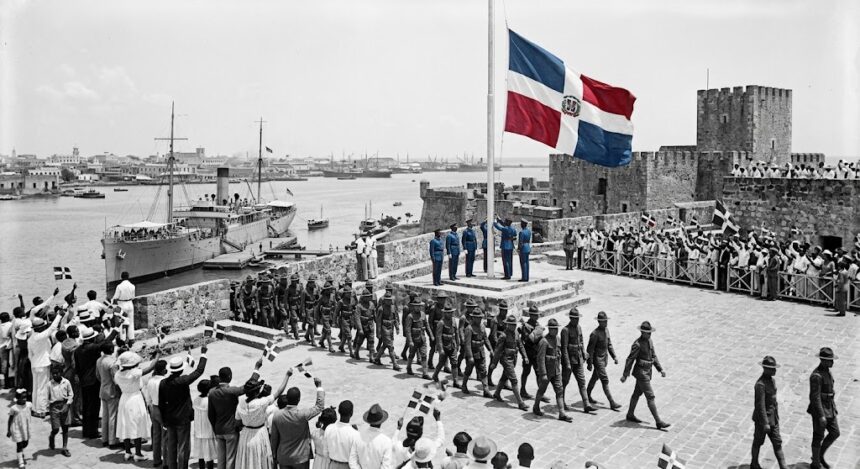
Santo Domingo.– July 12, 1924, was marked as one of the most transcendental dates in the history of the Dominican Republic. On that day, the last United States troops left the national territory, officially ending the military occupation that had begun on November 29, 1916, and which lasted for almost eight years.
With the definitive departure of the occupying forces, the Dominican people once again fully exercised their sovereignty and the national flag was hoisted on public buildings, fortresses, and squares throughout the country, in an atmosphere charged with hope and patriotism. For numerous historians, this event marked the beginning of the so-called Third Republic, a new stage of Dominican institutional life characterized by the restoration of constitutional government and the return of national authorities to the control of the State.
The beginning of the occupation
The United States military occupation began on November 29, 1916, when marines landed in the country claiming the need to restore political order, guarantee the payment of foreign debt, and protect American interests in the Caribbean. At that time, the Dominican Republic was going through a period of political instability, marked by constant clashes between caudillos, economic crises, and frequent changes of government.
After occupying the territory, the U.S. military authorities dissolved the National Congress, assumed control of the public administration, and established a Military Government that concentrated the main functions of the State.
We recommend t
More Read

During those years, the United States reorganized public finances, promoted infrastructure projects, improved roads, ports, and communication systems, and professionalized the Dominican armed forces through the creation of a National Guard. However, these measures were accompanied by restrictions on civil liberties, censorship, political persecution, and strong opposition from broad sectors of society.
The Dominican resistance
The occupation met with firm resistance from various sectors. Intellectuals, journalists, students, political leaders, and civic organizations developed an intense national and international campaign to demand the withdrawal of foreign troops.
In different regions of the country, armed movements also emerged that confronted the occupying forces, especially in the East, where the so-called gavilleros led resistance actions against the U.S. Marines.
More Read
Likewise, diplomatic pressure and growing international rejection of military occupations contributed to Washington beginning to seek a negotiated exit to the conflict.

The Hughes-Peynado Plan and the transition
The process that led to the withdrawal of the troops took shape with the Hughes-Peynado Plan, signed in 1922 between Dominican representatives and the U.S. government.
The agreement established a provisional government headed by Juan Bautista Vicini Burgos, whose mission consisted of organizing free elections, restoring democratic institutions, and preparing for the definitive withdrawal of U.S. military forces.
The national elections held in March 1924 resulted in the victory of Horacio Vásquez, who assumed the Presidency of the Republic on July 12 of that same year.
That same day, as the new government began its functions, the last American troops officially left Dominican territory, putting an end to one of the most complex stages in national history.
The beginning of the Third Republic
The withdrawal of the troops represented much more than a military change. It signified the recovery of political independence, the restoration of constitutional order, and the return of national control over State institutions.
More Read

For that reason, numerous historians consider that July 12, 1924, marks the beginning of the Third Dominican Republic, a period characterized by the restoration of the democratic system after the foreign occupation.
Although that stage subsequently faced new political challenges, including the rise of the dictatorship of Rafael Leónidas Trujillo in 1930, the date symbolizes the triumph of the struggle for national sovereignty and the self-determination of the Dominican people.
A legacy that remains
Every July 12th is remembered as a date of profound patriotic significance for the Dominican Republic. The departure of the last American troop represented the culmination of years of political, diplomatic, and popular resistance, reaffirming the country’s right to govern itself independently.
The raising of the Dominican flag throughout the national territory that day symbolized the full recovery of sovereignty and remains one of the most important moments in republican history, as it represents the victory of the independence ideal and the strengthening of national identity.