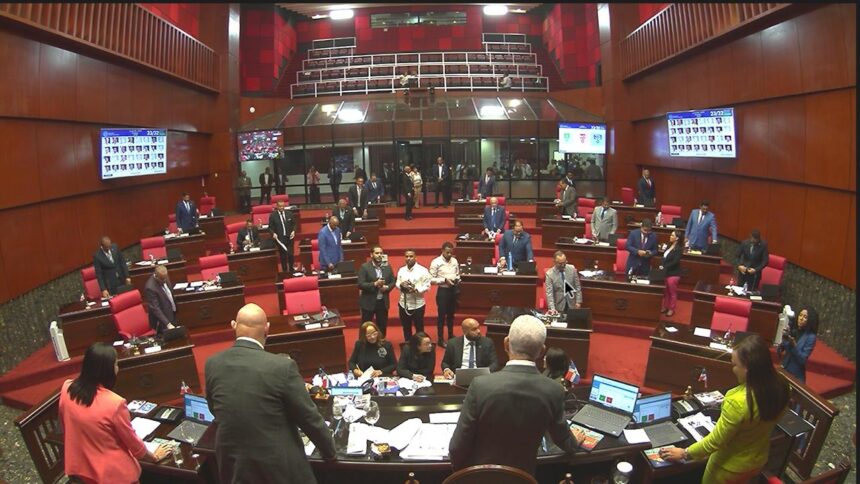
Santo Domingo.– Legislators from different benches defended this Monday the approval of the new Penal Code and agreed on the need for the piece to come into force as soon as possible, while highlighting the work carried out by the commission that studied the modifications proposed by various sectors of society.
Deputy Ramón Bueno stated that the Chamber of Deputies has fulfilled its responsibility by reviewing all the observations presented during the discussion process.
In that sense, he highlighted as an unprecedented fact the announcement by the President of the Chamber, Alfredo Pacheco, that each proponent will be notified if their suggestion was accepted or rejected, explaining the reasons when these conflict with the Constitution.
Along the same lines, the senator for Independencia province, Dagoberto Rodríguez, maintained that it is “essential” for the new Penal Code to come into force, considering that it incorporates more than 70 new criminal offenses that respond to citizens’ demands and establish consequences for conduct that was not previously covered.

Rodríguez also expressed his support for the work carried out by the bicameral commission in charge of studying the bill, indicating that he trusts the considerations and changes agreed upon by the legislators who represented the Senate during the process.

Police reform
On the other hand, Deputy Carlos Sánchez reported that the special commission continues to study the reform of the Organic Law of the National Police, which increases from 315 to 342 articles following the modifications introduced in the Senate.
Sánchez explained that the proposal seeks to significantly transform the structure of the police institution, strengthening oversight and control mechanisms.
Among the main changes, he mentioned the transfer of Internal Affairs to the Ministry of Interior and Police and a new composition of the Superior Police Council, which will incorporate greater representation from civil institutions and the Public Prosecutor’s Office, with the aim of ensuring greater balance in decision-making and contributing to reducing the excesses and human rights violations reported in recent years.