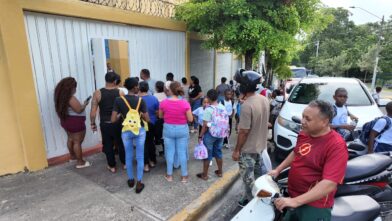
Mexico City .- Migrant children and adolescents living in informal camps in Mexico suffer from social stigmas that make them distrust the country’s authorities due to their fear of experiencing violence or being detained, according to research presented this Tuesday by the global organization Plan International.
The study, titled ‘Experiences and perceptions from the voices of children and adolescents in mobility situations in Mexico’, was the result of the organization’s work with 136 migrant children and adolescents in camps in the states of Chiapas (south), Chihuahua (north), and Mexico City.
Among the main conclusions, the fact that Mexico has gone from being a transit country to a place of “prolonged stay” for migrant minors stands out, stated Laura Mora, a researcher at the Ibero-American University, during the presentation of the results.
We recommend reading:Sheinbaum denies that there is a campaign from Mexico “against Argentina” following Milei’s accusations regarding the World Cup
The situation of migrant children in Mexico
Regarding the nationalities of migrant minors, the majority come from Venezuela (more than 36%), while Cuba and Honduras are, respectively, the second and third countries from which the most children originate.
More Read
The researcher added that, as they were able to verify in the interviews, “barriers” persist among migrants to regularize their situation, while they are also “affected” by stigmas or stereotypes that “authority is bad.”
These circumstances occur above all in informal settlements, where “there may be a greater risk of violence,” lamented Mora, who assured that the fear of “detention” due to their irregular status persists among minors, as well as the fear of “child labor.”

“Above all, Venezuelan children and Colombian children were the ones who reported the most (…) issues of discrimination based on national origin, so I think there is important work to be done,” he warned.

The research also highlights “good practices” in Mexico regarding the integration of migrants, such as shelters in the capital, education programs in Chiapas, or initiatives in Chihuahua that address the nutrition of minors.
“Very long” process full of obstacles
In addition to the report, Plan International screened several testimonies from migrant minors, such as that of Ulises (a fictitious name), 11 years old, who defined the journey he made from Honduras with his family as a “very long process,” in which they crossed “bridges and rivers.”
“It was a lot of money that they took from us to come here,” explained this young Honduran man, while clarifying that they had to change their initial plan and stay in Mexico instead of migrating to the United States.
Regarding this research, Gonzalo Rivera, representative of Plan International Mexico, expressed his confidence that it will serve to “strengthen dialogue” in favor of minors.
“The findings we have shared remind us that behind every public decision (…) there are girls, boys, and adolescents who need timely, comprehensive, and rights-centered responses,” he/she noted.
Mexico is one of the main focal points of migratory processes on the American continent, connecting Latin America with the United States and acting as a bridge between both regions.