

The historical records of electricity demand registered consecutively over the last few days not only reflect a sustained increase in energy consumption in the Dominican Republic; they also constitute the most recent proof that the expansion of the National Interconnected Electric System (SENI) has allowed the country to respond with stability to a growth in demand that just a few years ago would have represented considerable pressure on the grid.
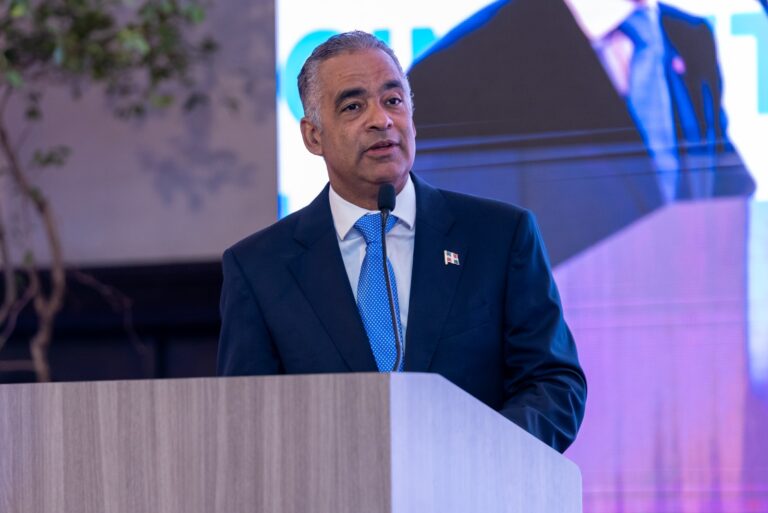
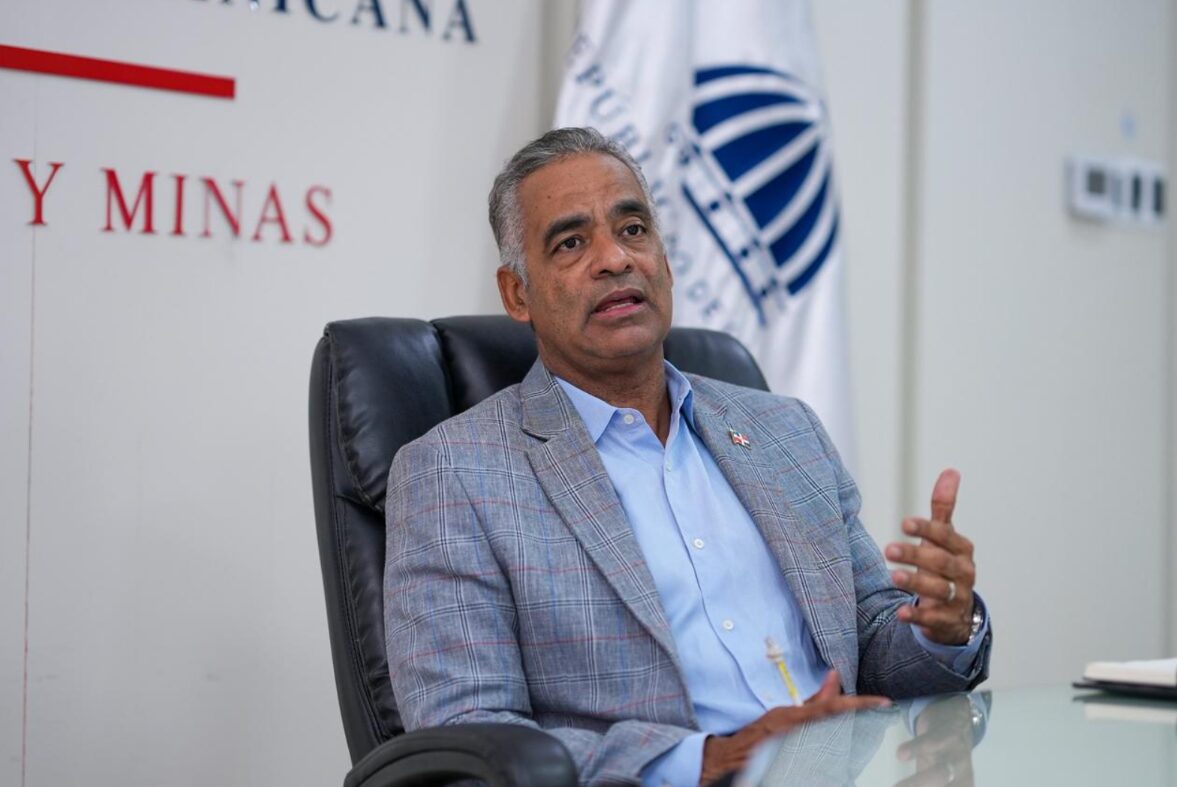
This was stated by the Minister of Energy and Mines, Joel Santos, when analyzing that this Wednesday night the system reached an instantaneous demand of 4,330.80 megawatts (MW), at 9:03 p.m., establishing the third consecutive historical maximum in just three days and the sixth this month.
For Minister Santos, this behavior confirms the resilience that the national electrical system has developed, but also the challenges of supplying increasingly higher levels of consumption in the coming weeks.
That growth in demand is especially relevant during the summer months, Santos stated, when high temperatures cause a considerable increase in the use of air conditioning equipment and raise demand, particularly during nighttime hours.

“More than a new record, the third consecutive all-time high in electricity demand and the sixth this month confirms a structural change in the country’s energy consumption. With a peak of 4,330.80 MW, reached at 9:03 at night, the system once again demonstrates its capacity to meet increasingly demanding loads,” stated Minister Joel Santos.
The head of Energy and Mines maintained that the succession of historical highs highlights the transformation that the Dominican electricity sector has undergone in recent years, driven by the incorporation of new generation capacity, the diversification of the energy matrix, and the strengthening of the system’s infrastructure.
Santos stated that currently the installed capacity of the SENI exceeds 7,600 MW, almost double the maximum demand recorded this week, a result of an expansion process that has allowed for a significant increase in generation supply and the availability of a sufficient margin to respond to periods of peak consumption.
“Although the installed capacity exceeds 7,600 MW, the effective availability varies according to the system’s operating conditions. In general terms, the generation fleet has between 6,600 and 6,700 MW available, while during nighttime hours availability usually stands between 4,400 and 4,700 MW, mainly because about 1,780 MW of solar generation stop producing energy once solar radiation ends,” he explained.

Even under that scenario, the minister highlighted that the system maintains an operating margin higher than the recorded demand, which has allowed for a stable response to consumption peaks. However, he specified that those margins are under increasing pressure due to the sustained growth in demand, a trend that confirms the need to continue expanding electrical infrastructure to preserve service reliability in the coming years.
Santos specified that the projections prepared by the SENI Coordinating Body estimated that the maximum monthly demand between August and October would range between 4,100 and 4,300 MW. However, the behavior observed during July shows that this forecast could fall short, as the system reached 4,330.80 MW, even before the start of the historically hottest months of the year, so it is to be expected that demand peaks will be even higher.
For the Minister of Energy and Mines, this evolution confirms that economic growth, the expansion of productive activities, and greater access to electrical equipment continue to increase national consumption, a scenario for which the country has been preparing through significant investments in the electricity sector.
Santos highlighted that the system’s ability to continuously meet these new peak demands serves as an indicator of confidence in the planning followed by the energy sector, demonstrating that the investments made over recent years have not only expanded installed capacity but have also strengthened the operational reliability of the electrical system.
The minister stated that this process will continue to deepen with the incorporation of new conventional and renewable generation projects, as well as battery storage systems, which are called upon to provide greater flexibility to the SENI and to support the growing participation of renewable energies in the national electricity matrix.