We recommend reading:NASA begins assembling Artemis II for “historic” manned launch to the Moon
The Challenger Space Shuttle Disaster
The enormous shuttle was carrying seven people on board, including a teacher who was going to give classes from space to demonstrate that space travel had become routine. But it disintegrated just a minute after takeoff – scheduled for an unusually cold morning – due to the failure of a part responsible for sealing the rocket sections, which allowed hot gases and flames to access the fuel tank. The accident was especially tragic because it was being broadcast live for the entire country, unlike other missions that also failed – like Apollo 1 -, in which three astronauts died due to a cabin fire on the ground. On board the Space Shuttle Challenger were astronauts Francis ‘Dick’ Scobee, Michael J. Smith, Judith Resnik, Ronald McNair, Ellison Onizuka, Gregory Jarvis, and teacher Christa McAuliffe.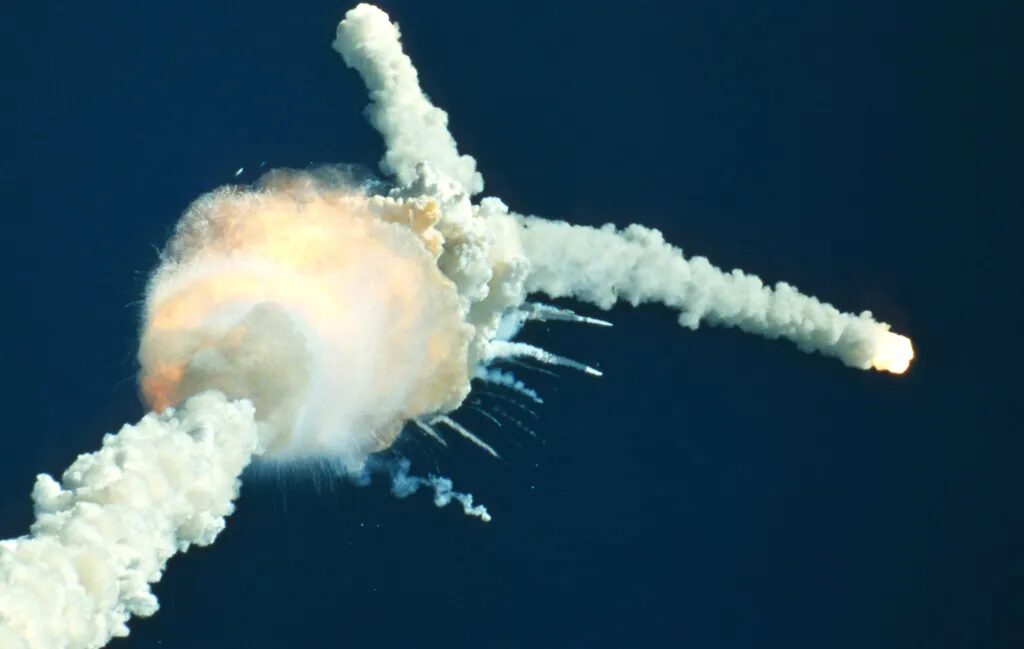
An accident that distanced civilians from space
The Challenger disaster marked a turning point for space missions, which did not transport civilians into space again until several decades later.“The crew of the space shuttle Challenger honored us by the manner in which they lived their lives. We will never forget them … as they … ‘slipped the surly bonds of earth’ to ‘touch the face of God.'”
Ronald Reagan spoke these words to the Nation in an address delivered 40… pic.twitter.com/wlCbjSrJ96— NASA History Office (@NASAhistory) January 28, 2026