The multinational military exercise Panamax 2026 kicked off this Monday with the deployment of 1,700 soldiers from 21 countries in Panama to strengthen the protection of the interoceanic Canal. The maneuvers will last 11 days and include simultaneous operations in the Pacific and the Caribbean, as reported by EFE.
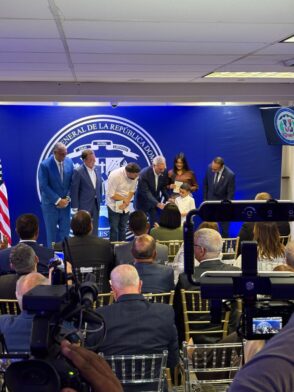
The official opening was attended by the Minister of Public Security of Panama, Frank Ábrego, who highlighted the need for permanent international cooperation to guarantee the security of the canal. “The security of the Panama Canal is not improvised; it is built through planning, training, and permanent international cooperation,” Ábrego stated during the inaugural press conference, according to information released by EFE.
On behalf of the United States, the ambassador to Panama, Kevin Cabrera, highlighted that the canal is “a strategic infrastructure that connects markets, sustains supply chains, and contributes directly to the prosperity of our countries.” According to Cabrera, its security and continuous operation represent a priority for both Panama and the United States and the international community.
The Panamax 2026 maneuvers involve specialized equipment, advanced weaponry, and the participation of contingents from Argentina, Colombia, Ecuador, Guatemala, Honduras, Peru, Dominican Republic, Germany, Belize, Brazil, Chile, Costa Rica, El Salvador, the United Kingdom, Jamaica, Mexico, the Netherlands, and Paraguay, in addition to the hosts, reported EFE.
Recommended reading:
More Read

Special forces personnel walk next to a Douglas DC-3 propeller aircraft while participating in a joint training exercise during Panamax 2026, a multinational exercise led by Panama and sponsored by the United States Southern Command (SOUTHCOM) to strengthen the defense of the Panama Canal, interoperability among allied forces, and regional maritime security, in Panama Pacifico, Panama, on August 3, 2026.
How the maneuvers are developed
The exercises are developed in several stages, starting with the planning phase and advancing towards tactical execution in maritime, air, land, and cyber scenarios.
According to official information gathered by EFE, each of these phases integrates the operational capabilities of Panamanian security agencies with international teams, with the goal of strengthening continental security and the protection of one of the most relevant infrastructures for global transport.
More Read


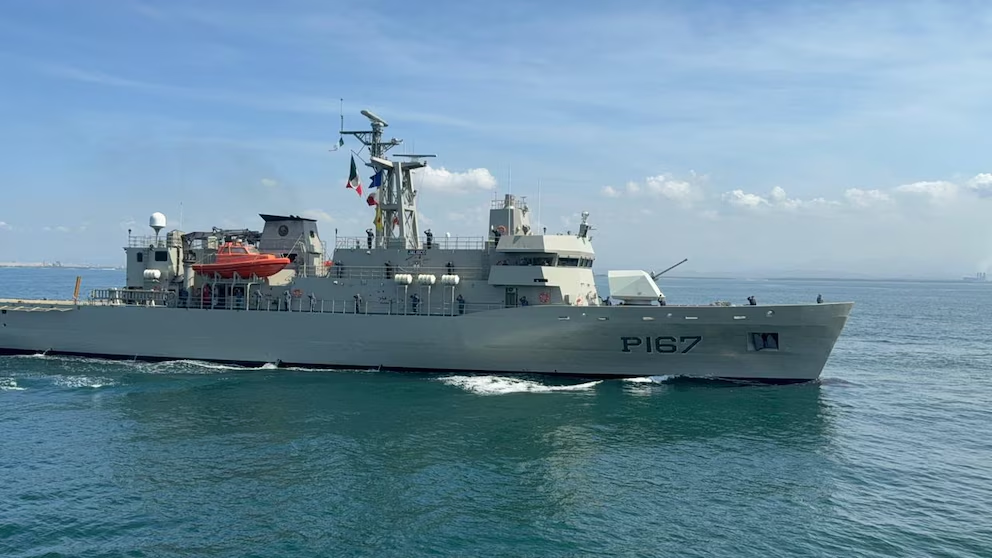
At least seven countries have mobilized vessels to execute joint naval operations in the Pacific and the Caribbean. In the Pacific, units from the United States, Panama, Colombia, Mexico, and Ecuador are carrying out maritime control maneuvers with their respective ships, focused on responding to transnational threats.
In parallel, in the Caribbean, forces from the Netherlands, the Dominican Republic, Panama, and Colombia are patrolling routes classified as strategic for trade and regional security, according to reports from EFE.
The strategic value of the channel
The Panama Canal, with an approximate length of 80 kilometers (50 miles), connects the Atlantic to the Pacific through a system of locks. Since 1999, after nearly a century of U.S. control, the administration of the waterway passed into Panamanian hands. EFE recalls that in the last year, the canal has been a source of diplomatic tensions between Panama and the United States, in the context of debates over its management, security, and geopolitical relevance.
More than twelve nations, including Panama, Argentina, Chile, Colombia, Peru, and the United States, are preparing for the Panamax 2026 military exercises near the Panama Canal, seeking to strengthen regional security. (Illustrative Image Infobae)
PANAMAX was born in 2003 and expanded its scope beyond the defense of the Canal
Panamax was created in 2003 with the initial participation of Chile, Panama, and the United States, following the September 11, 2001 attacks and the increase in concerns regarding the vulnerability of strategic infrastructure. In its first editions, it focused on the defense of the Canal against possible terrorist attacks or acts of sabotage.
Over the years, the exercise evolved into a broader training. Today it incorporates land, maritime, and air operations, hybrid threats, emergencies, protection of critical infrastructure, logistical support, and coordination between command centers.

The simulations seek to evaluate the capacity to mobilize personnel and equipment, share intelligence in real time, coordinate decisions, and establish common response mechanisms. They also rehearse interventions in the face of attacks against infrastructure, special operations, maritime incidents, air emergencies, and situations related to terrorism or organized crime.
The 2026 edition takes on an additional dimension due to the geopolitical context surrounding the interoceanic waterway. Its location and its weight in global logistics chains make it a strategic infrastructure whose security has effects that go beyond Panamanian territory.