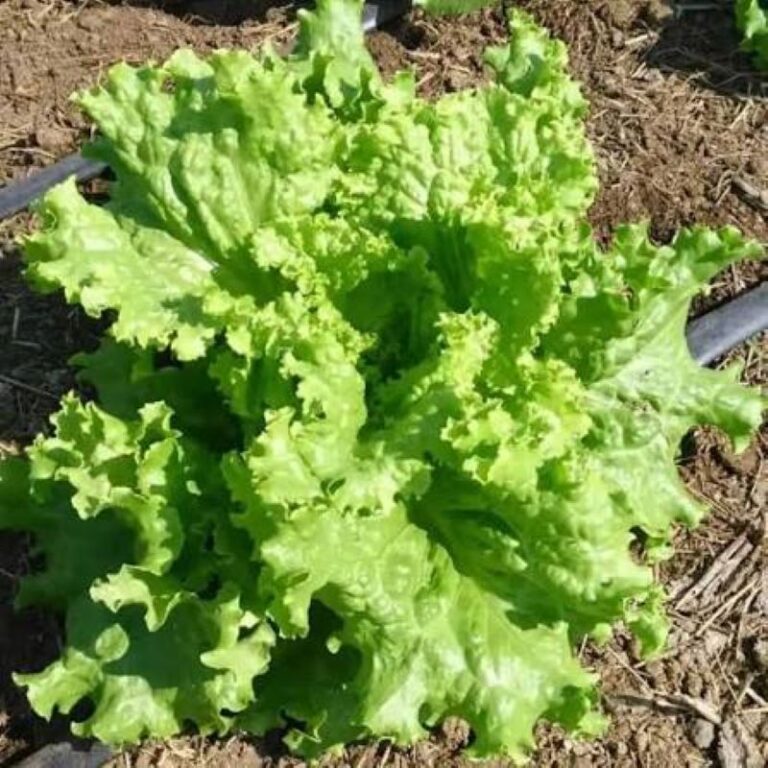

Scientists discover that plants break their epidermis to expel excess salt and survive

6:46 am
Plants break their epidermis with precision under extreme conditions to expel excess salt and survive, according to a novel investigation led by Harvard with the collaboration of Juan M. Losada, from the Institute of Subtropical and Mediterranean Horticulture (IHSM) ‘La Mayora’, in Malaga, southern Spain.
According to the study, certain plants in the Atacama Desert (Chile) use tiny structures called salt glands, which function as authentic “micro-pressure chambers”, creating a closed space where they accumulate liquid and generate pressure, the Spanish National Research Council reported this Friday in a statement.
Thanks to them, plants actively pump salts outwards through the thin film that covers their leaves (called the cuticle) and expel them through holes a thousand times smaller than the thickness of a hair (nanopores).
You can also read: More than 47,000 people are hospitalized in Cuba for dengue or chikungunya
Precise regulation of nanopore size is crucial to maintain the balance between removing salt and retaining moisture, since, if the pores open too much, the plant dries out, and if they close, salt accumulates and the plant dies. According to Losada, this work “lays the groundwork for understanding how plants adapted to extreme environments can inspire new strategies to recover salinized agricultural soils or even to design more efficient desalination systems.” The study combines anatomical, physiological, and theoretical analyses, and represents an important step towards regenerative agriculture in a context of climate change and increasing freshwater scarcity. The protagonist of the study is Nolana mollis, a shrubby plant from the Solanaceae family (the same as tomatoes, potatoes or eggplants) that grows in the Pan de Azúcar National Park, in the Atacama Desert, in northern Chile. Its fleshy leaves are covered by a film of salt visible to the naked eye, while other neighboring species remain dry. This saline layer is the result of a sophisticated elimination system that allows the plant to maintain its internal balance of water and salts, even when the soil contains salt concentrations that would kill most plants. The microscopic salt glands of Nolana mollis are housed in small depressions of the foliar epidermis. Inside, researchers have identified the subcuticular chamber that inflates like a balloon when the plant pumps water and salt into it. This chamber generates enough pressure to expel the saline solution to the outside through cracks in the cuticle, which act as escape valves. One of the most surprising findings of the work is that the cuticle of these glands must fracture to function, but not in any way. If the cracks are too small, the salt gets trapped, and if they are too big, the plant loses water catastrophically. The model developed by the team indicates that the optimal size of the cracks is between 10 and 400 nanometers, about a thousand times thinner than a human hair. To confirm this prediction, scientists used cryo-electron microscopy and observed actual cracks in active plants, with widths ranging from 30 to 200 nanometers. This fine-tuning depends on the mechanical properties of the cuticle, which must be flexible enough to open, but strong enough to prevent uncontrolled fracture propagation. The research also reveals that the subcuticular chamber is not only a mechanical solution, but an energetic one. Without this intermediate chamber, the concentration difference between the cell and the surface brine would be so great that the ion transporters (the engine that drives the salt pump) would not have enough energy to keep working and would be blocked. Soil salinization is one of the major challenges for agriculture, as it affects more than 800 million hectares worldwide and drastically reduces productivity. Understanding how certain plants manage excess salt can open new avenues for developing more resistant crops or biomimetic systems that take advantage of physical, not just biological, principles.
We are a multiplatform outlet offering news and television content. The fastest-growing news outlet in audience in the history of Caribbean communication.



#Most read
- 1.NASA launches three missions to map the heliosphere and study the solar wind
- 2.Apple equips its AirPods with translation in English, Spanish, Portuguese, French, and German
- 3.Nvidia: From Video Games to the World’s Summit as a Colossus of Artificial Intelligence
- 4.Roberto Ángel Salcedo heads the first preparatory meeting for the 2026 carnivals
- 5.84% of teenage girls in Spain fear that AI will use their photos to create fake sexual content
- 6.Lula leads Flávio Bolsonaro in first results of the 2026 Brazil elections
- 7.Mexican student creates sound-based fire extinguisher and wins gold medal
- 8.Man confesses to murder of lawyer and former political activist in Puerto Rico and then takes his own life
- 9.Flash floods and landslides hit Thailand’s Phuket island after heavy rainfall
- 10.Suspected Haitian gang leader known as “Galaxie” reportedly killed in police operation

Newsletter
Subscribe to our newsletter to receive our latest articles instantly!