

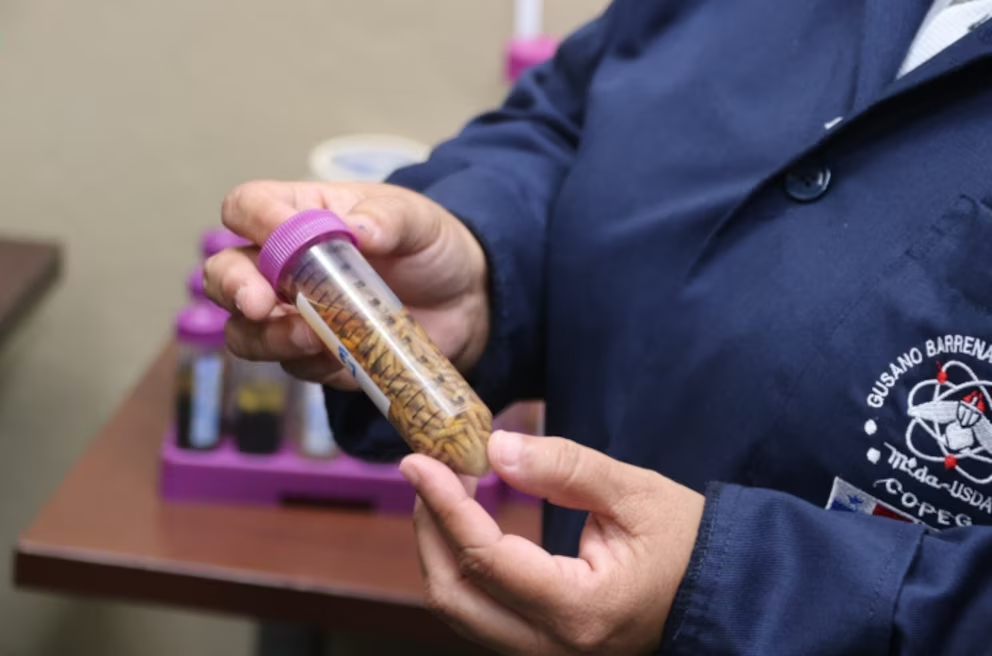

At least 55 people in Panama have been affected by screwworm larvae so far in 2026, according to recent reports from health authorities and scientific organizations.
The outbreak has reignited concern in the Central American region over a plague that, traditionally associated with the livestock sector, also impacts human health and requires urgent responses from public health systems.
The figure places Panama at the center of regional attention due to its high incidence, both in animals and people.
According to collected data, myiasis caused by the screwworm originates when the parasitic fly deposits its eggs in open wounds of animals or humans.

The larvae emerge and penetrate living tissue, feeding on the flesh and causing lesions that can lead to severe infections if not treated in time.
In humans, symptoms such as intense pain, local inflammation, purulent discharge, and, in advanced cases, necrosis of the affected tissue have been detected.
The screwworm epidemic is present throughout Central America. According to the latest estimates, Panama records between 1,300 and 2,000 cases of human infestation each year, with an incidence of 40 to 65 cases per 100,000 inhabitants.
In neighboring countries such as Costa Rica, annual cases range between 500 and 600, with an incidence of 11 to 15 per 100,000 inhabitants. The figures reflect the persistent and expansive nature of the plague in the region.

The New World screwworm fly (Cochliomyia hominivorax) represents a priority biological risk for the region, both due to the economic damage it causes in livestock and its impact on public health.
The larva does not transmit diseases through food or from person to person, but it can cause severe damage to open wounds, which requires timely medical attention, reported Clarín. Myiasis caused by the New World screwworm originates when the parasitic fly deposits its eggs in open wounds of animals or humans.
In Mexico, as far as the plague has reached, the situation is equally worrying. Hidalgo, for example, has accumulated more than 900 cases in livestock and 14 in humans, as reported by Excélsior. In Guanajuato, Milenio confirmed more than 400 cases in animals. On a national scale, it is estimated that there are more than 30,000 cases, with the states of Chiapas, Oaxaca, and Veracruz among the most affected.
Mexican authorities have intensified epidemiological surveillance and the training of healthcare personnel, in addition to promoting the use of biological barriers, such as the release of sterile flies to control the pest population.
In the Panamanian context, the Ministry of Health maintains an active prevention and control campaign. The emphasis is placed on the early detection of skin lesions in humans and animals, as well as prompt medical attention.
The authorities urge the population to avoid self-medication and to go to health centers at any suspicion of infestation, especially after the report of the 55 recent cases in the country.
The screwworm outbreak has not caused human deaths in Panama, although it has caused severe complications in patients with chronic wounds or pre-existing conditions. Spokespersons for the Ministry of Health stressed the need to strengthen health education and surveillance in rural areas, where contact with livestock favors transmission. Healing of wounds caused by the Cochliomyia hominivorax fly, carrier of the screwworm.
The expansion of the screwworm in Central America has reactivated regional cooperation to combat the plague.
Although information from the Panama – United States Commission for the Eradication and Prevention of the Screwworm (COPEG) is scarce, Panama is leading initiatives to ensure access to serums and treatments, as well as coordination with international organizations to contain the spread of the larvae in neighboring countries.