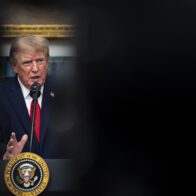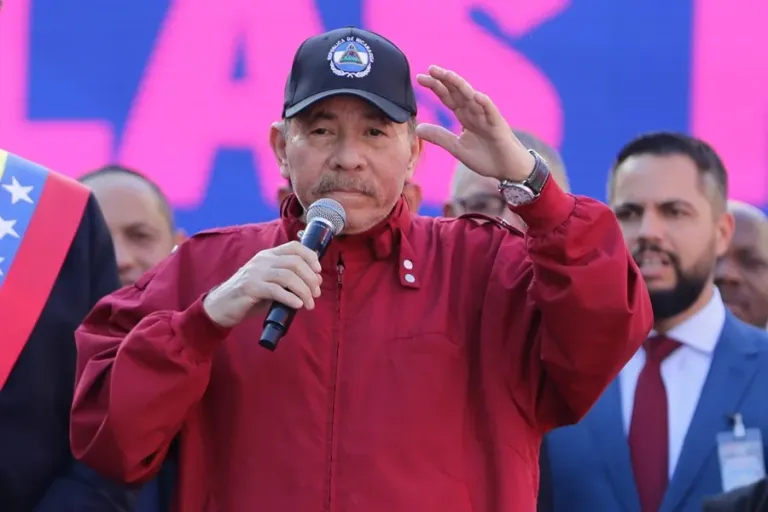
Washington .- The Organization of American States (OAS) hosted a proposal this Wednesday, pending a vote, to convene its foreign ministers to evaluate the situation in Nicaragua. The request, made by the United States, seeks to “take measures” in light of the intentions of its president, Daniel Ortega, to suspend the elections.
“The time for talk is over, it is time for a formal, institutional and collective response,” argued the Assistant Secretary of State for Western Hemisphere Affairs, Michael Kozak, in the initiative presented to the OAS Permanent Council, and sponsored by Argentina, Panama, Paraguay, Uruguay, Costa Rica and Ecuador.
“We are facing an authoritarian monarchy that has no intention of leaving power,” declared the United States delegation in the extraordinary session in which it requested support for “not being able to be the only country to take serious measures,” added Kozak.
The proposal condemns the damages caused by Daniel Ortega’s government and proposes a consultative meeting of foreign ministers to determine “what to do,” but the initiative “does not authorize the use of the Armed Forces,” the undersecretary clarified.
“Deep concern”
The session began with the intervention of the rapporteur of the Inter-American Commission on Human Rights (IACHR), Rosa María Payá, who warned of religious persecution and political repression in the country with which “they have instilled fear in the citizenry” by attempting to “systematically” silence Nicaraguans.
More Read

“The State of Nicaragua withdrew from this organization (in 2023), Nicaraguans did not,” he said.
Payá warned about Ortega’s statements on July 19th, when he affirmed that in Nicaragua “there will never be elections again.” He also warned about the constitutional reform initiative presented on July 28th to extend the term of the co-presidency.

Peru expressed its “deep concern” and called on the Ortega government to “desist from taking actions that undermine” democratic institutionality.
More Read

Ecuador assessed that “the power to appoint a vice president without a popular consultation corresponds to the design of a controlled succession,” while Costa Rica called for acting with responsibility and Argentina rejected Ortega’s pretensions.
Ortega’s controversial statements
Nicaragua has been governed since 2007 by Ortega, an 80-year-old former Sandinista guerrilla who, since 2017, has led the country alongside his wife, Rosario Murillo, first as vice president and, with the 2025 constitutional reform, as co-president.
The United States then accused Murillo of having invented the position of co-president without elections, without a mandate, and without legitimacy.
The Central American country was scheduled to hold general elections in November 2026, but constitutional amendments extended the presidential term, so they are now expected to take place in November 2027.
However, on July 19, Ortega declared during a mass rally to commemorate the 47th anniversary of the Sandinista revolution, held in Managua: “There will be no more elections here so that they (the opposition) can try to seize the Government, seize power through them.”