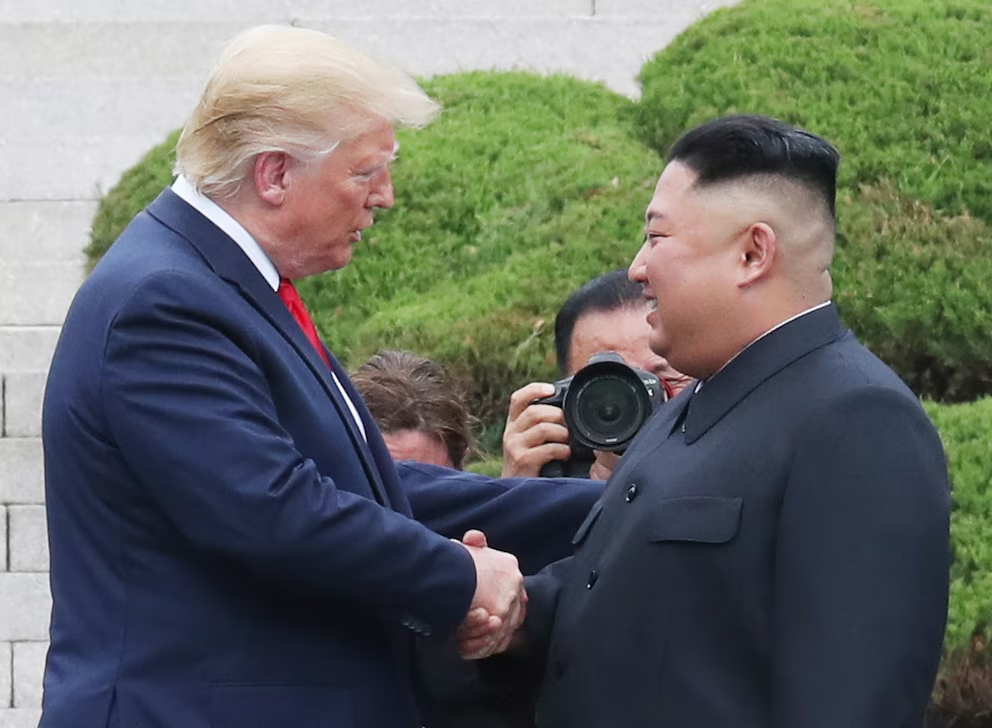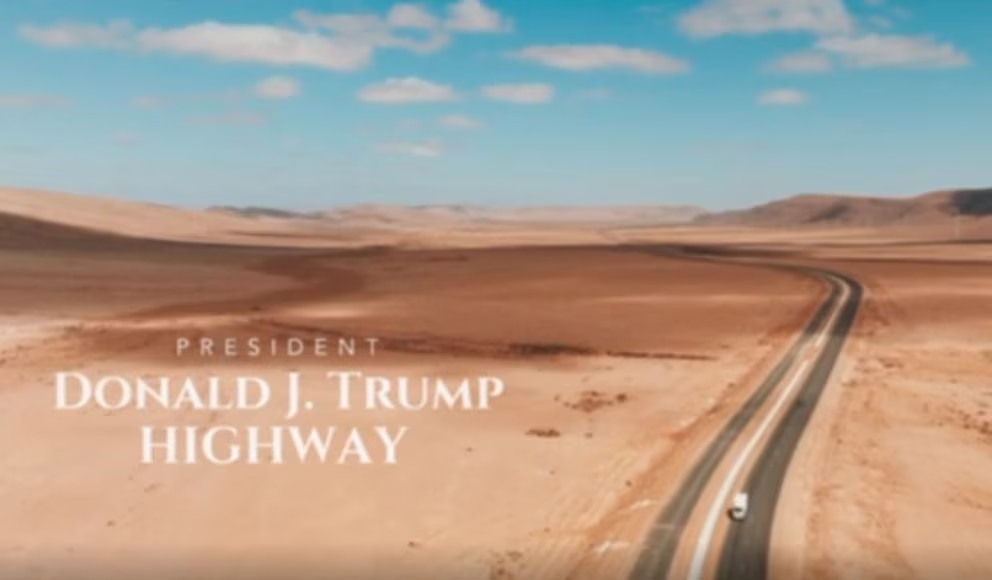
The president of the United States, Donald Trump, has announced the construction of the Donald J. Trump Highway, a 1,000-kilometer infrastructure that will link the Moroccan city of Tiznit with Dakhla, located in the occupied zone of Western Sahara. The project, presented this Sunday, is valued at 880 million euros and plans to connect various coastal towns, including Laayoune, to the future Dakhla Atlantic Port, whose completion is scheduled for 2028.
The former Spanish colony of Western Sahara was occupied by Morocco in 1975 following the Spanish withdrawal, despite opposition from the Polisario Front. The conflict led to a war that lasted until 1991, when a ceasefire was signed with the goal of holding a self-determination referendum. However, discrepancies in the preparation of the census, especially regarding the inclusion of Moroccan settlers, have prevented it from taking place to this day.
In his message, Trump expressed his gratitude to King Mohammed VI, underscoring the honor the project represents for him and expressing his desire to travel the highway in the future. This collaboration is part of a historical relationship: Morocco was the first country to officially recognize the independence of the United States in 1786. This precedent helps explain the favorable U.S. diplomacy toward Rabat and the deepening of the bilateral strategic alliance.
Since the 1980s, Morocco has been promoting a strategy of territorial integration in Western Sahara with roads, ports, hospitals, and schools.

Moroccan territorial integration strategy and international support
Since the 1980s, Morocco has committed to massive investment in infrastructure as a method of territorial integration and demographic settlement in Western Sahara. The development of roads, ports, hospitals, and schools in the region seeks to consolidate the Moroccan presence and blur the border between the country and the disputed territory. The Tiznit-Dakhla highway represents the culmination of this policy, by reinforcing connectivity and facilitating access to the areas under Rabat’s control.
Trump thanked King Mohammed VI for the construction of the highway and linked the project to the historical relationship between the United States and Morocco.
International support for the Moroccan position has been reinforced following the official recognition by Trump of Morocco’s sovereignty over Western Sahara at the end of 2020, shortly before the conclusion of his first presidential term. This support was expanded by the recent pronouncements of the governments of Spain and France in favor of the Moroccan autonomy plan, a stance described as a “betrayal” by the Polisario Front, which points out that Spain remains “de jure” the administering power of the territory.