



In the Dominican Republic, receiving a cancer diagnosis can become a race against time. From the first suspicion of the disease to its confirmation, patients face delays in specialized consultations, biopsies, and other essential studies that can drag on for months, compromising the opportunities to begin timely treatment.
The situation worries oncology specialists, who warn that a considerable proportion of patients arrive at health centers when the disease is in advanced stages, particularly in stages III and IV, when therapeutic alternatives are usually more complex, expensive, and have lower probabilities of success.
Up to three months to confirm a cancer diagnosis
Doctor José Ernesto Ramírez, president of the Board of Directors of the Dominican Association of Oncological Centers, identifies the waiting time to access specialized studies as one of the main obstacles of the healthcare system.
As explained, fundamental procedures such as breast and lung biopsies, as well as colonoscopies, can considerably delay the confirmation of the disease.

In the private sector or through direct consultations with specialists, the process can take approximately two months. However, in public hospitals and general care centers, the saturation of appointments can extend the wait to three months or more.
These delays, he warns, contribute to numerous patients arriving at oncology consultations in advanced stages, when treatment requires greater medical and economic resources.
“The challenge in this country, in the area of cancer, is to have the possibility of making an earlier diagnosis. That time is being very long; in the time that the patient goes around to get a diagnosis, a breast biopsy, a lung biopsy, a colonoscopy, it can take approximately two months. And above all, if the patient is treated in a private center, the diagnosis is faster,” the specialist explained.
The oncologist Claudia Patricia de los Santos agrees with the concern and points out that up to 70% of breast cancer patients treated continue to present with locally advanced tumors, both in public and private facilities.

The specialist believes that reducing investment in prevention represents a false economy, because the resources that the State fails to allocate to early detection end up being insufficient compared to the high cost of treating advanced diseases.
In that sense, it raises the need to maintain permanent prevention and timely detection programs, especially for breast, prostate, colon, and lung cancers.
The gap between national and international waiting times
The estimates provided by Dominican specialists reflect significant differences compared to the diagnosis times reported in other healthcare systems.
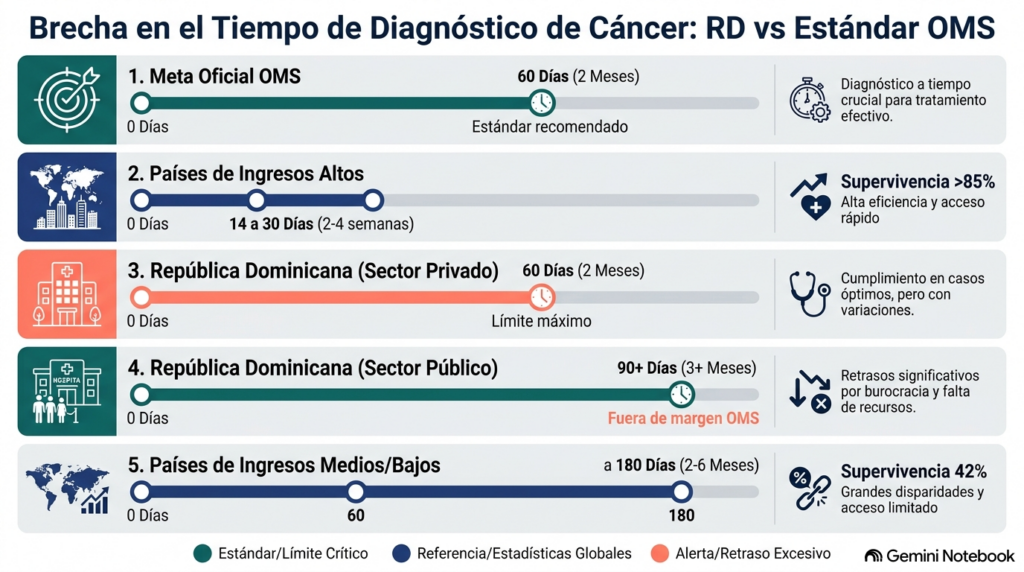
Although early diagnosis is a priority promoted by the World Health Organization (WHO), it is important to distinguish between the timeframes for confirming the disease and the times for starting treatment.
The WHO establishes a maximum period of 60 days from the first medical assessment or suspicion to obtaining a definitive diagnosis and starting treatment, particularly in high-incidence tumors such as breast cancer
Differences in access to studies and treatments are also reflected in survival outcomes. In certain high-income countries, five-year survival for breast cancer exceeds 85%, while in some lower-resource settings, considerably lower percentages have been documented.
These differences are due to multiple factors, including the stage at the time of diagnosis, the availability of treatments, and the continuity of medical care.
More than 5,500 cancer deaths in the Dominican Republic
Official statistics allow us to gauge the burden of oncological diseases in the country.
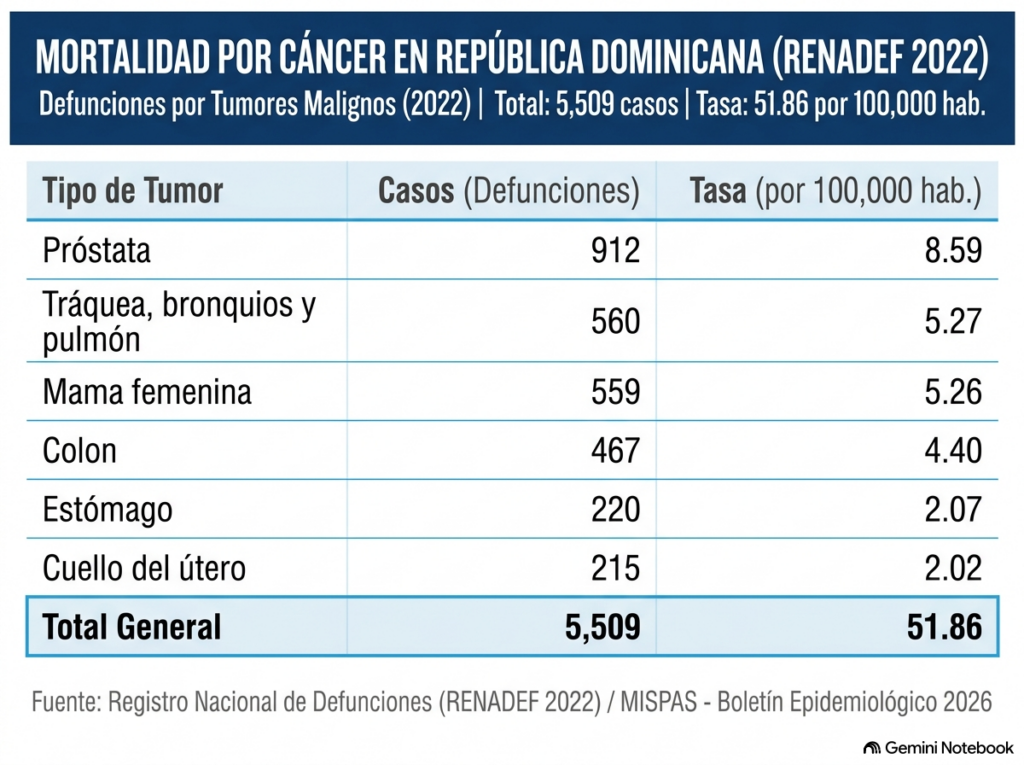
According to the data from the National Death Registry (RENADEF) for 2022, collected in the Weekly Epidemiological Bulletin 03-2026 of the Ministry of Public Health, 5,509 deaths from malignant tumors were recorded, equivalent to a rate of 51.86 deaths per 100,000 inhabitants.
Among the types of cancer with the highest mortality are:
More than 7,300 cases reported between 2019 and 2025
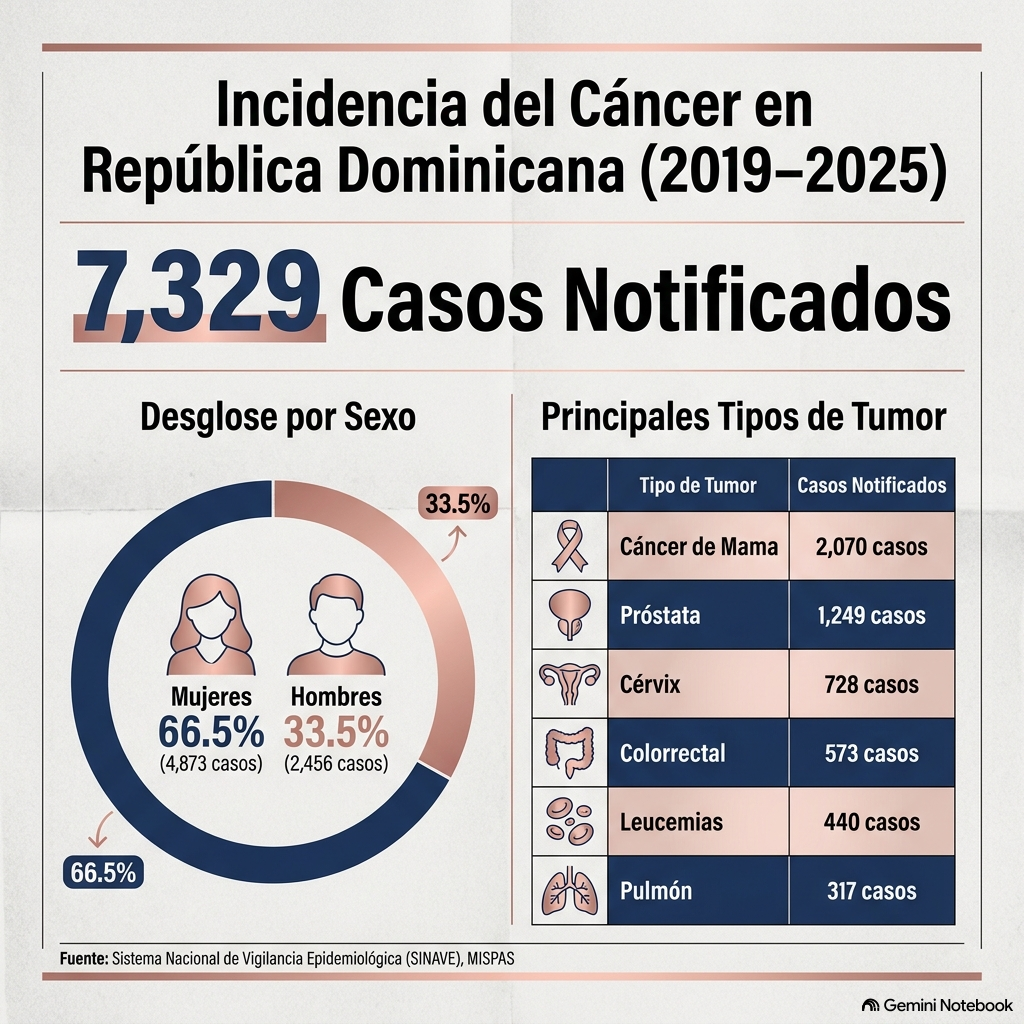
The records of the National Epidemiological Surveillance System (SINAVE) indicate that during the 2019-2025 period, 7,329 incident cases of cancer were reported.
Of this figure, 4,873 cases correspond to women, equivalent to 66.5%, while men recorded 2,456 cases, for 33.5%. These statistics reflect a higher proportion of cases reported in the female population during the analyzed period.
Regarding the most frequent types of cancer, breast cancer leads the records with 2,070 cases, followed by prostate cancer, with 1,249; cervical cancer, with 728; and colorectal cancer, with 573. Leukemias also appear, with 440 cases, and lung cancer, with 317. These six categories account for 5,377 reported cases, which represents approximately 73.4% of the total recorded between 2019 and 2025.
Congresswoman warns that bureaucracy and lack of prevention delay cancer diagnosis in the DR
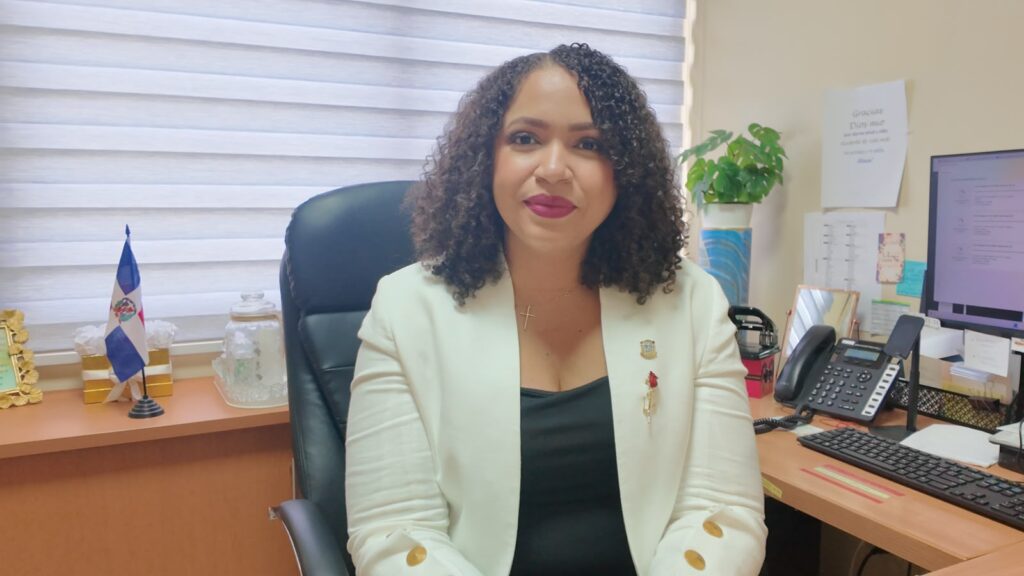
In addition to the difficulties pointed out by specialists, there are the concerns of deputy Ycelmary Brito (Juliana O’Neal), who warned that the lack of a culture of prevention, administrative hurdles, and deficiencies in hospital services contribute to delaying the timely diagnosis of catastrophic diseases, including cancer.
The legislator maintained that many Dominicans go to the doctor only when they already present symptoms, due to the lack of guidance regarding risk factors and the importance of preventive check-ups. She explained that, once inside the healthcare system, patients face a chain of obstacles that includes appointments scheduled for one or two months later, tests not covered by health insurance, hospital equipment out of service, and a lack of specialized personnel, situations that can lead to the abandonment of the diagnostic process.
“You can already see how a chain of events is unfolding for the person to simply drop out,” Brito expressed, warning that some patients return to medical centers when their condition has worsened.
Faced with this reality, the congresswoman demanded a reduction in bureaucratic hurdles and the guarantee of comprehensive care, which should not be limited to confirming the disease, but also facilitate access to treatment, proper nutrition, and psychological support.
“In this country there is money for everything, so we must find a way to provide patients not only with a diagnosis, but also with what follows,” he stated, noting that facing a catastrophic illness also represents a strong emotional impact for those affected.