

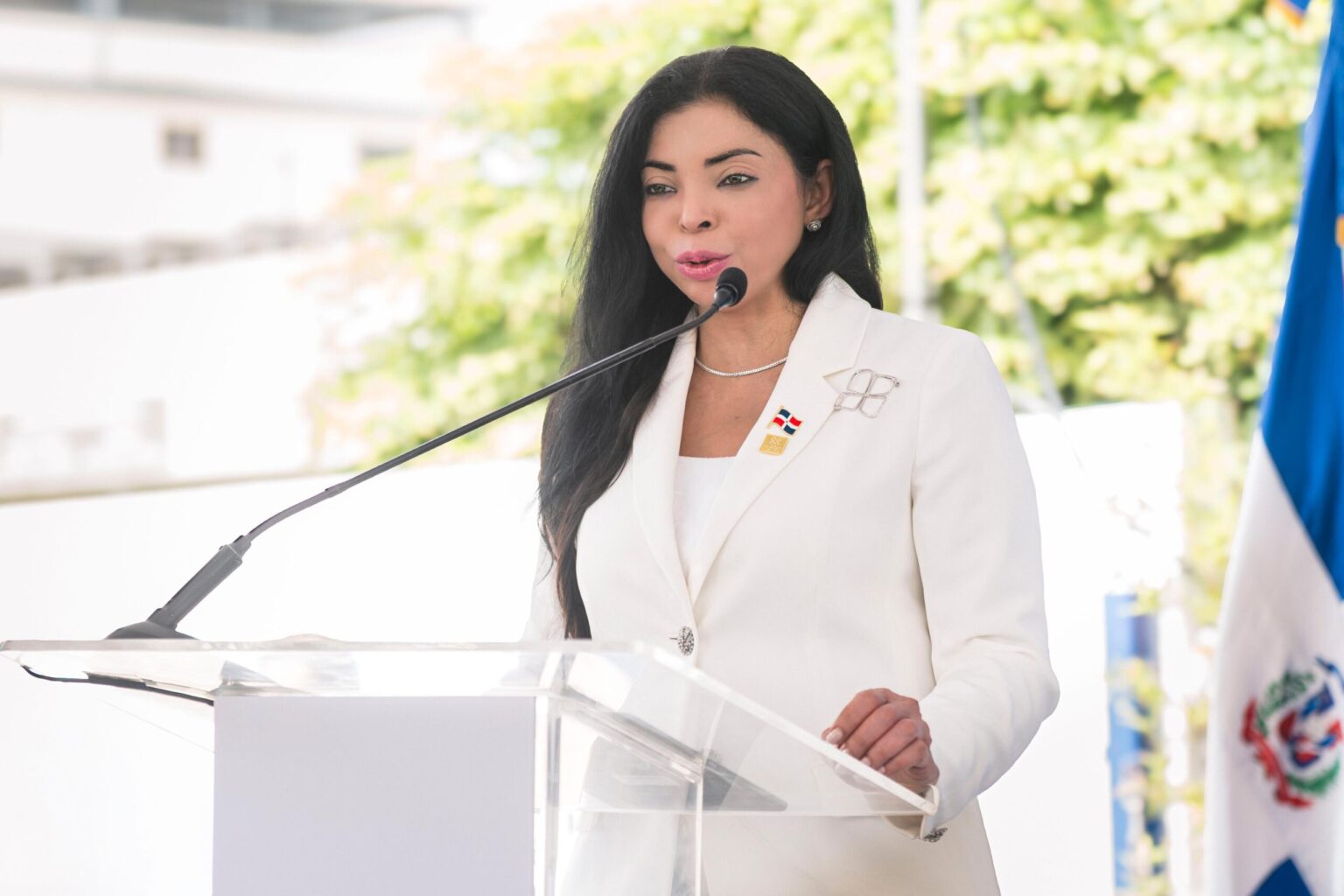

Santo Domingo.– The Attorney General of the Republic, Yeni Berenice Reynoso, issued a warning to officials and public servants who contemplate using State resources irregularly, noting that the new Dominican legal framework contemplates severe consequences for those who engage in acts of corruption.
During the conference “Towards an integral public management: a commitment to the present and future of the Dominican Republic”, held within the framework of the II Public Procurement Forum, Reynoso called on State servants to act with responsibility, especially those who have procurement and contracting processes under their responsibility.
You might be interested in: Yeni Berenice attributes more than 70% of recent homicides to social conflict
Before dozens of officials and employees linked to the purchasing and contracting departments, the attorney general maintained that those who participate in the management of public resources must understand that their decisions can have consequences not only administrative, but also criminal.

“If you do not want to have trouble, respect the code, because the application is absolutely severe,” stated Reynoso when referring to the new Penal Code, which, as he explained, establishes new tools to prosecute and punish crimes related to corruption.
The head of the Public Ministry recalled that the Dominican Republic currently has a legal framework integrated, among other regulations, by the new Penal Code, the Asset Forfeiture Law, and the new legislation on public procurement and contracting.
Warns about accumulated penalties
Reynoso highlighted that the new Penal Code includes a disqualification regime that can prevent people convicted of acts of corruption from returning to hold positions within the State.
The attorney general also warned that the commission of several crimes can generate cumulative consequences and that acts of corruption can be combined with other offenses, including those related to money laundering.

“An act of corruption followed by other acts of corruption, plus the anti-money laundering law, can lead to a conviction in which you spend decades without seeing freedom,” maintained Yeni Berenice.
With an emphatic tone, Reynoso summarized his message with a warning directed at those who intend to take advantage of public resources: “It is not a good time for the corrupt”.
Yeni Berenice; “Public servants do not receive gifts”
One of the most forceful moments of his speech occurred when he addressed the practice of some officials receiving alleged gifts or benefits from people interested in obtaining some favor from the public administration.
Reynoso rejected that these benefits be considered simple gifts when they are related to the exercise of a public function.
“Public servants do not receive gifts. That which some say, and when we are investigating it: ‘Magistrate, I received a gift’. No, you received a bribe”, stated Yeni Berenice.
The prosecutor explained that receiving money or any other benefit in exchange for failing to perform a duty constitutes an act of bribery and reminded that corruption should not be understood as a victimless crime.
To illustrate his point, he mentioned the hypothetical case of customs officials who receive money to allow the entry into the country of weapons that could subsequently be used to commit crimes.
In that sense, he maintained that corruption can have direct effects on the population and on national development.
“Corruption disrupts the development of nations, because corruption generates millions of victims,” expressed Yeni Berenice.
Call not to sign documents without reviewing them
The attorney general also addressed a special message to the members of the purchasing and contracting committees, whom she reminded that their responsibility does not end with placing a signature on a document.
Reynoso asked these public servants to read and carefully verify processes before approving them and rejected the practice of signing documents simply because a superior or colleague requests it.
“Sometimes: ‘do me a favor, sign this for me’. Do not sign just for the sake of signing, because later you will have to sit at the Attorney General’s Office to give explanations,” warned Yeni Berenice.
According to the attorney general, every signature placed on a procurement process represents a responsibility to the State and to the citizenry.
“You are not just putting a signature, in that signature lies the development of the country and it is in your hands,” stated Yeni Berenice.
Public decisions have an impact on citizens
Reynoso maintained that those who work in public administration must understand that their decisions can directly impact the quality of life of millions of Dominicans.
Yeni Berenice explained that a decision made within a procurement process can determine everything from the supply of medicines in a hospital to the execution of infrastructure works and the provision of essential services.
“In your hands, you often have the possibility of stopping a death, of someone going to a hospital and having medication,” expressed Yeni Berenice.
The attorney general insisted that public office must be exercised under principles of responsibility, transparency, and commitment to the collective interest.
Likewise, he recalled that accountability constitutes a fundamental principle of public administration and that citizens have the right to know how the State’s resources and assets are managed.
Reynoso’s message came in a context where Dominican authorities are seeking to strengthen mechanisms for the prevention and prosecution of corruption, with new legal tools and greater controls over the use of public funds.
Before the purchasing and contracting managers, the attorney general made it clear that ignorance of a signed document does not constitute protection against a potential investigation and that each official must fully assume the consequences of their decisions.
His call was, in essence, to exercise public office with responsibility and to understand that behind every peso managed by the State there are services, works, and needs of citizens that can be affected by an irregular decision.