
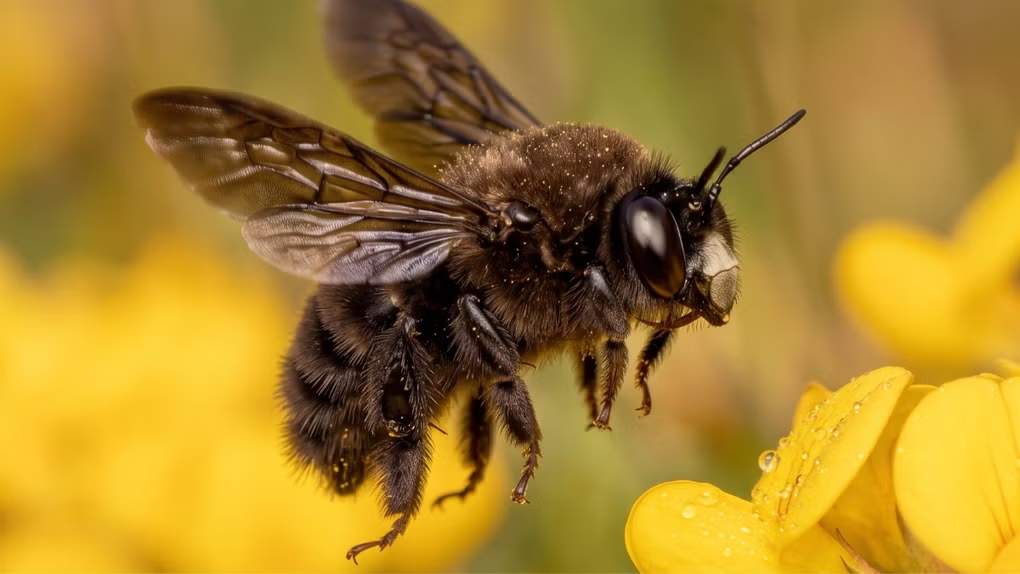

Ecuador.- Researchers in Ecuador documented Andean bumblebees feeding on condor feces and carrion, a finding that also represents the first record of this behavior in South America, according to a study released by the Ecuadorian National Institute of Biodiversity (Inabio).
During monitoring activities of an active Andean condor nest carried out in 2024 in the province of Pichincha, whose capital is Quito, researchers observed three ‘Bombus funebris’ bumblebees, a species unique to the country’s Andean ecosystems, repeatedly entering and exiting the nest.
The bees moved between feathers and sand particles until they reached the dry and moist feces of the condor, where they remained in contact with them for approximately two to three minutes, sucking the liquids with their mouthparts.
A second finding occurred in September 2025, in the moorlands of a nature reserve also located in Pichincha, where specialists observed two ‘Bombus funebris’ specimens foraging on different parts of a dried calf carcass.

“One of the individuals repeatedly entered the abdominal cavity of the corpse and remained for approximately 30 minutes interacting with tissues and bones,” explained Inabio.
Bees are primarily recognized for their role as pollinators and for collecting nectar and pollen. However, the Institute pointed out that some species can occasionally take advantage of non-floral resources, such as decomposing fruit, fungi, exudates, feces, and carrion.
You can also read: Ecuador’s Presidency confirms the death of the CNI director
The study details that this type of behavior could be related to the search for nutrients that are not always available in floral resources, and that carrion and feces can constitute sources of nitrogenous substances and, potentially, provide proteins, amino acids, or other nutrients.
However, the researchers emphasized that further studies are required to determine exactly which nutrients this species obtains from these resources and what their importance is for its metabolism.
The authors of the research belong to Inabio, the Andean Condor Foundation Ecuador, the Uru Foundation, the Superior Polytechnic School of Chimborazo, and the National Institute of Amazonian Research, in Brazil.