

Bogota.- The National Registry of Colombia rejected this Tuesday the allegations by President Gustavo Petro regarding an alleged fraud in the first round of the presidential elections, in which the far-right candidate Abelardo de la Espriella obtained the most votes and will compete in the second round against the leftist Iván Cepeda.
In a statement, the entity that organizes the country’s elections asserted that “the electoral census, the number of polling stations, and the process’s computer systems were defined and disclosed in advance, in addition to being subject to verification mechanisms by political campaigns.”
Faced with one of Petro’s main questions, who claimed that the census was modified five days before the elections to incorporate more than 885,000 ID cards, the entity maintained that “the potential voters per polling station and the distribution of polling places were published through resolutions issued on May 4 and delivered that same day to political organizations.”
We recommend reading: Trump endorses far-right Abelardo de la Espriella for the Presidency of Colombia
According to the entity, “March 31st only marked the end of the citizen registration period for voting,” while the final census for the presidential elections, consisting of 41,421,973 people eligible to vote in Colombia and abroad, was closed and shared with political parties on April 30th.

Furthermore, he indicated that on May 22 he delivered a query application with the electoral census to the campaigns so that they could verify the citizens’ polling stations.
Preparation for election day
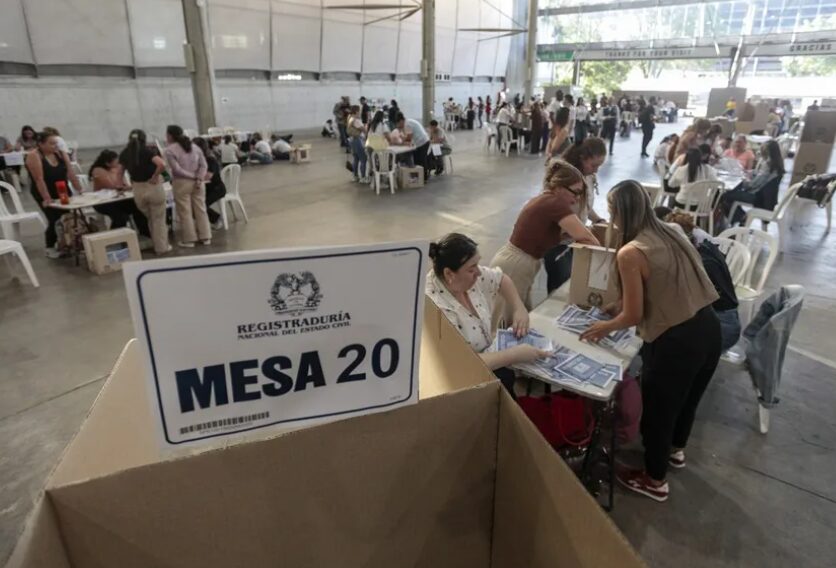
The National Registry added that for the first presidential round, 122,020 polling stations were installed, of which 120,527 operated in Colombia, 1,489 abroad, and four additional ones due to special provisions.
Regarding the allegations of alleged modifications to the electoral software on May 26, the electoral authority assured that “no modification whatsoever” was made that day to the systems used in the elections.
As he explained, the timestamps pointed out by Petro correspond to the delivery of technical information to the political parties’ auditors, as part of the transparency exercises prior to election day.

The entity also stated that all information related to the elections was made available to the campaigns so they could carry out their own verification and validation processes, and it called on the auditors of the political organizations to rigorously interpret the technical data to avoid “erroneous conclusions or inaccurate interpretations”.