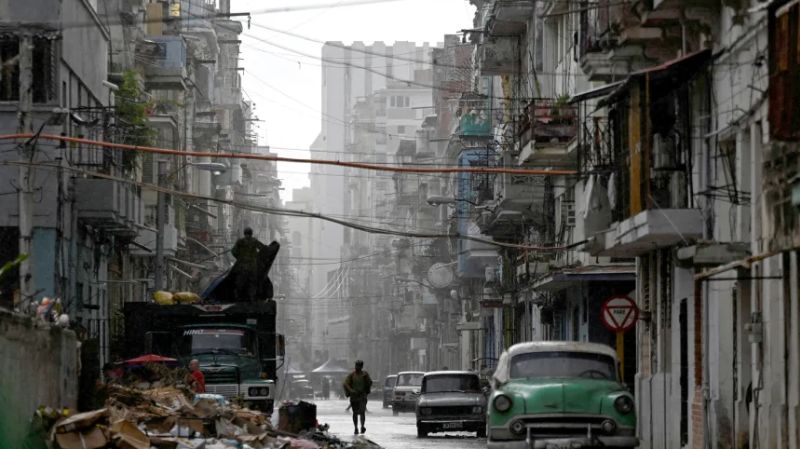
Havana.- Cuban universities adjust classes due to energy crisis for the 2026-2027 academic year, which will begin on September 1st with a combination of blended and remote activities in light of the difficulties facing the island’s electrical system and fuel supply.
The Ministry of Higher Education (MES) reported that institutions will maintain an academic organization similar to that used during the previous semester, with modifications aimed at reducing the impact of the energy situation on students, professors, and workers.
The institution attributed the fuel shortage scenario to the policies and sanctions of the United States government. Washington maintains economic measures against Cuba and, since 2026, has reinforced restrictions related to the supply of oil to the island.
Classes will combine several modalities
In accordance with the announced provisions, academic activities will be organized through a decentralized and territorial scheme.
Although blended and distance learning modalities will play a central role during the period, stages of physical attendance will also be established, mainly for students enrolled in the daytime course.
More Read
In-person classes may be held at university central campuses, Municipal University Centers (CUM), Municipal University Branches (FUM), and production or service entities located in the different territories.
You can also read: Cuba will have blackouts this Saturday and they will affect up to 68%
With this distribution, the authorities seek to maintain the development of academic programs while difficulties related to electricity, transportation, and connectivity persist.
In-person meetings at least once a month
For students enrolled in the face-to-face meeting course modality, both in Higher Technician programs and university degrees, in-person activities are contemplated at least once every month.
Those meetings will be used to guide academic tasks and carry out the evaluations corresponding to the learning process.
In this way, Universities in Cuba adjust classes due to the energy crisis without completely eliminating in-person attendance during the upcoming academic period.

Blackouts affect transport and internet
Cuba has been experiencing energy difficulties since mid-2024, a situation that has intensified during 2026 due to problems with fuel supply and the limitations of its electrical system.
In Havana, periods of power outages of up to 20 hours or more have been recorded, while in other provinces, interruptions exceeding two consecutive days have been reported.
The situation directly affects universities because the electricity supply also conditions the operation of the internet, transport, and other activities necessary to maintain in-person teaching.
University of Havana had already modified its classes
The measures for the 2026-2027 academic year are based on the adjustments made during the previous academic period.
More Read

In February, the University of Havana suspended in-person classes for the 2025-2026 academic year for 30 days and extended the blended learning modality to its undergraduate and Higher University Technician programs.
Educational authorities also adopted other measures to maintain teaching in the face of fuel shortages.
Among them were the identification of the contents considered essential for each degree program, the relocation of subjects to other academic periods, and the reduction of assessments.
The implementation of integrative exams that would allow for the evaluation of content corresponding to more than one subject was also considered.
For the new period beginning September 1st, Cuban universities are adjusting classes due to the energy crisis through a scheme that will combine distance learning, hybrid attendance, and in-person meetings according to the characteristics of each program.