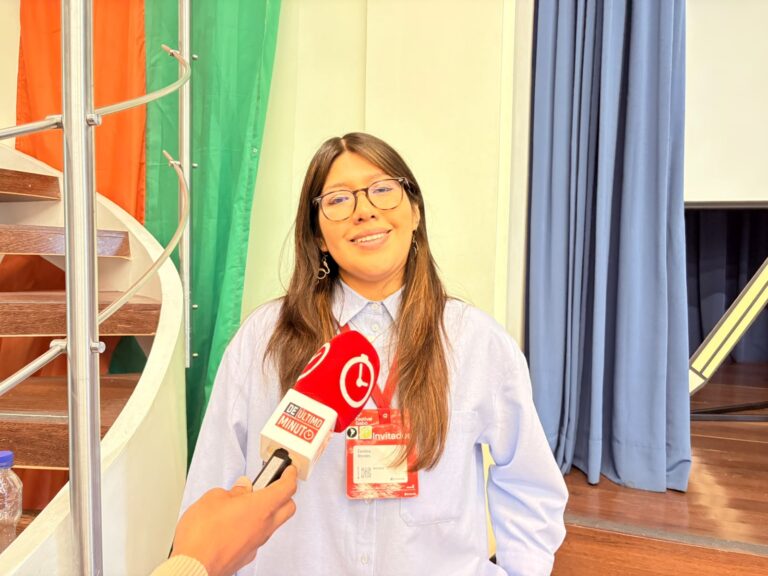



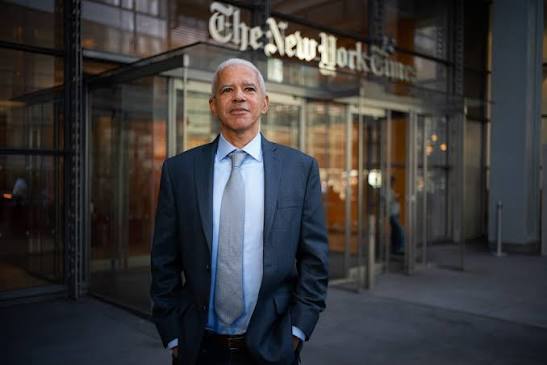
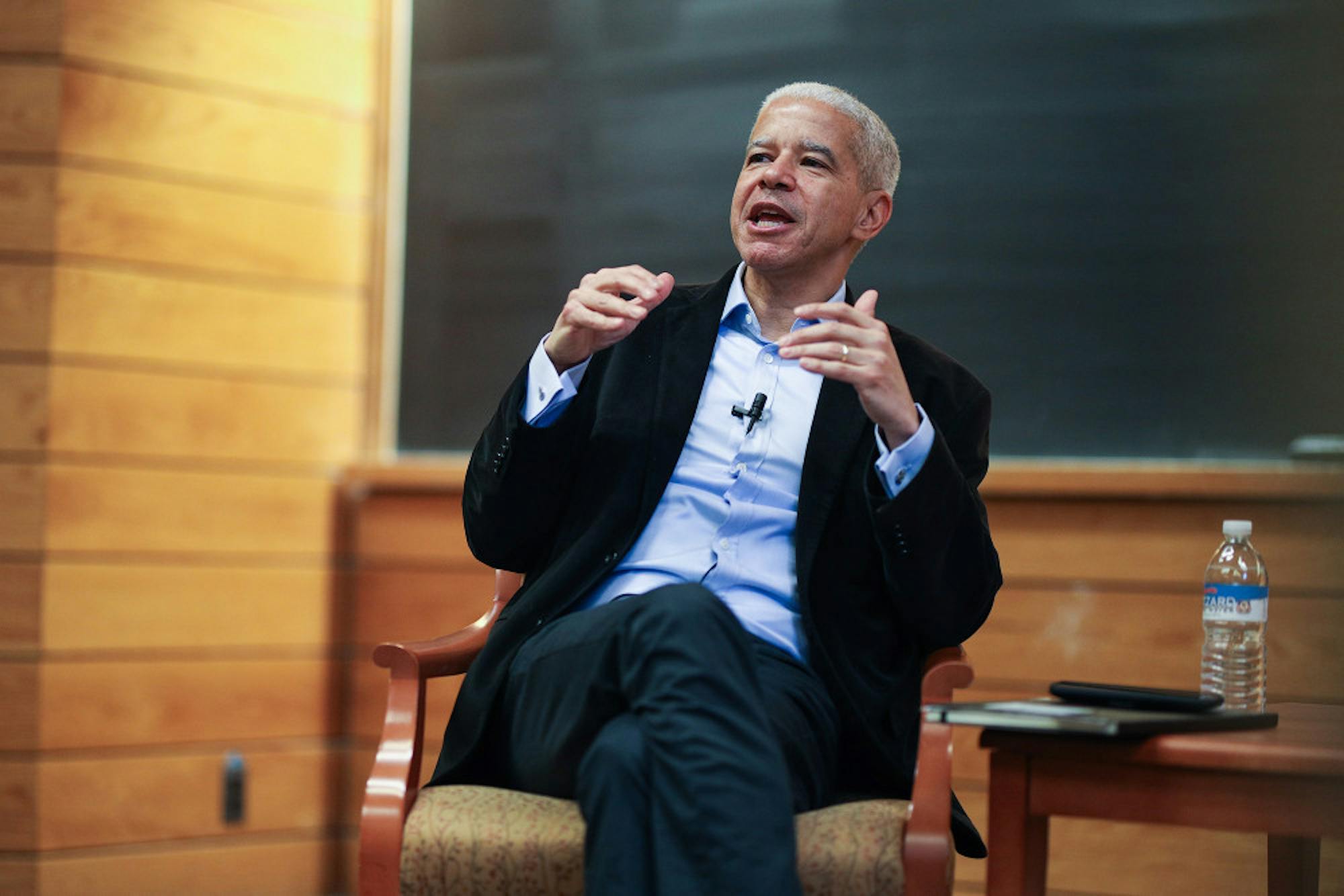
During the 82nd General Assembly of the Inter American Press Association (IAPA), held this week in Bogotá, Marc Lacey, managing editor of The New York Times, defended the importance of independent journalism in the face of growing political pressure on the media and warned about the challenges posed by artificial intelligence to the sustainability of newsrooms.
The keynote conversation, titled “The United States heading to the elections: power, the press, and polarization”, featured Lacey and was moderated by Martha Ramos, editorial director of Organización Editorial Mexicana (OEM) and president of the IAPA’s Committee on Freedom of the Press and Information.
The meeting took place in a context of tensions between the press and political power in the United States. According to Lacey, this situation forces the media to rethink their work routines, strengthen their legal teams, and prepare to face attempts to discredit journalistic work.
“What Trump says today must be taken seriously because it usually turns into action,” Lacey stated while explaining how presidential coverage has changed during the current administration, which began in January 2025, compared to Donald Trump’s first term between 2017 and 2021.

Although the conversation focused on the American political reality, the topics addressed also reflect challenges faced by independent journalism in the rest of the continent.
The IAPA, whose historical mission is to defend freedom of expression and the press in the Americas, dedicates a good part of its annual meeting to analyzing phenomena that affect media and journalists in the region, including political polarization, disinformation, the discrediting of the press, economic sustainability, and the impact of artificial intelligence.
During her speech, Lacey identified five fundamental aspects to understand how the media can continue to perform its democratic function in increasingly complex scenarios.
Independent journalism under pressure
1. Attacks against the press are no longer isolated incidents
Lacey maintained that the confrontation between the Trump administration and the media is currently deeper than during his first presidential term.

He explained that, while during that period many of the president’s statements did not translate into concrete measures, now his pronouncements are usually accompanied by government decisions.
“What he says must be taken seriously,” he noted, referring to the comments that Trump posts on his social media and which, as he explained, can quickly become executive orders, restrictions, or decisions that affect journalists and media outlets.
2. Newsrooms had to reinvent themselves
One of the most significant changes described by Lacey was the transformation of The New York Times into a global news operation that functions 24 hours a day.
With teams in New York, London, and Seoul, the newspaper maintains continuous coverage that allows it to respond in real time to political and social events.

This structure has established a permanent dynamic of monitoring, verification, and interpretation of facts, adapted to the demands of the current information environment.
3. The First Amendment continues to hold firm, but faces new tests
Lacey defended the historical strength of American institutions, although she acknowledged that they are currently undergoing major tensions.
In his view, the system of checks and balances between the branches of government continues to function, but it is facing an extraordinary test.
For journalistic organizations, this situation implies strengthening their legal capabilities and preparing for increasingly frequent litigation related to access to information and freedom of the press.
4. The media must strengthen their collaboration
Another of Lacey’s central messages was the need to promote collaboration between news organizations.
The editor considered that, in the face of common threats, the media should not act in isolation, regardless of their editorial or commercial differences.
As an example, he recalled an episode in which, as he recounted, the Trump administration banned CNN, Politico, and MSNBC, preventing them from accessing the White House and revoking their press credentials.
The three media outlets took legal action, while other journalistic organizations, with different editorial lines, joined the defense of press access to public institutions.
This type of collaboration, as stated during the conversation, is fundamental to protect independent journalism and guarantee the exercise of freedom of the press.
Marc Lacey on independent journalism and artificial intelligence
5. Artificial intelligence represents opportunities and risks
Artificial intelligence was one of the cross-cutting themes of the IAPA General Assembly. During her speech, Lacey raised one of the main questions facing the journalism industry: who will fund original journalism if technology platforms continue to use news content to train artificial intelligence models without compensating those who produce it?
The editorial director of The New York Times warned about the economic implications of this practice for news organizations.
In that sense, he maintained that the sustainability of investigative journalism depends on the existence of economic models capable of financing reports, coverage, and verification processes carried out by journalists.
Lacey, who worked for years in Mexico, concluded by highlighting that, despite technological transformations and political pressures, the practice of journalism continues to be based on essential principles: verifying facts, contextualizing information, and seeking the truth.