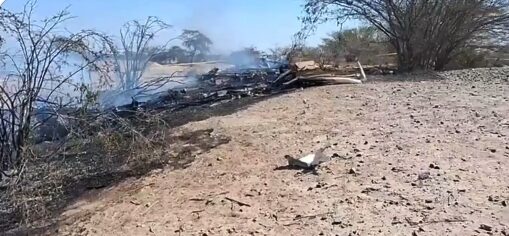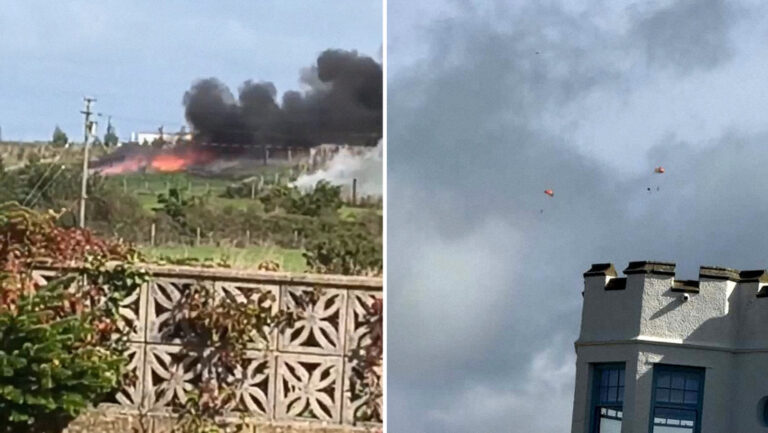

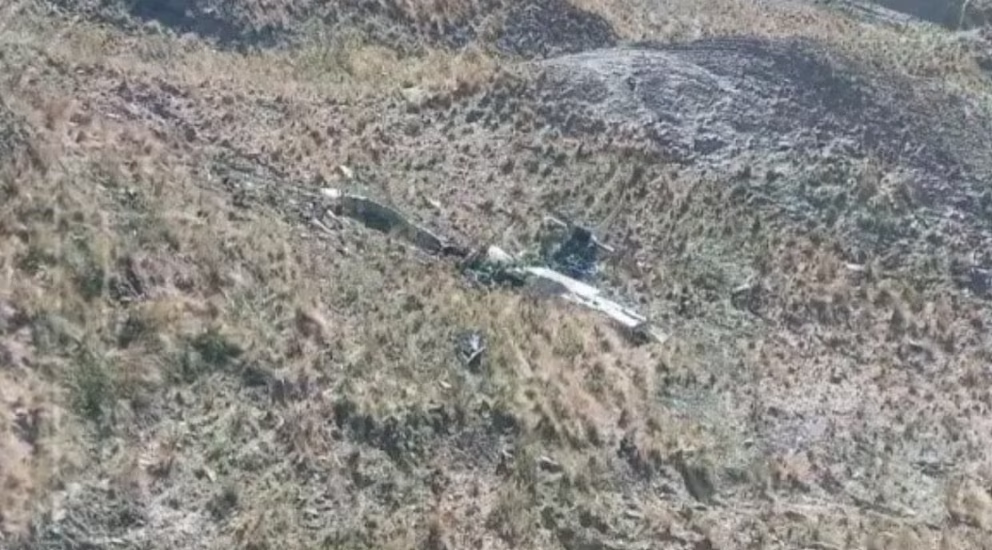

A light aircraft of the Bolivian Air Force (FAB) crashed this Sunday in the mountainous area of Cerro Sayari, in the department of Cochabamba, killing all six people on board. The Ministry of Defense confirmed the death of four military personnel and two civilians, with no survivors. The aircraft, a Cessna Turbo 210 with registration FAB-409, was on a support flight between La Paz and Cochabamba when it disappeared from radar under circumstances that authorities are still investigating.
n” “nAccording to the Bolivian Air Force, the aircraft took off in the morning from El Alto International Airport, the terminal serving the city of La Paz, located at an altitude of over 4,000 meters. During the flight, it maintained coordination with air traffic services, but at a certain point, it stopped reporting its position. Faced with the loss of contact, military authorities activated the INCERFA phase—a technical aeronautical term for the state of uncertainty when the status of an aircraft is unknown—and immediately deployed search and rescue teams. The teams located the wreckage of the aircraft in the Cerro Sayari sector, about 220 kilometers east of La Paz, in the mountain range that separates the departments of La Paz and Cochabamba.
n” “nThe accident occurs at a time of exceptional political and social tension in Bolivia. President Rodrigo Paz Pereira declared a nationwide state of emergency in the early hours of Saturday, June 20, following more than 51 consecutive days of road blockades led by sectors affiliated with former president Evo Morales. The measure, which prohibits road blockades and restricts mass gatherings for a period of ninety days, sought to restore transit on the country’s main routes after weeks of shortages that affected access to food, medicine, and fuel in several regions.
n” “nWe recommend reading:

The blockades, led largely by coca grower unions from the Tropics of Cochabamba, the same region where the small plane crashed, defied the presidential decree and announced the radicalization of their pressure measures. Leaders of the Six Federations of the Tropics also rejected the pacification agreement that the Bolivian Workers’ Center (COB) had signed hours earlier with the government, and reaffirmed that their mobilizations will not cease until Paz Pereira leaves the presidency. That stance turned the department of Cochabamba into the epicenter of the confrontation between the government and the mobilized sectors.
n” “nIn that context, at least one Bolivian source indicated that the aircraft was conducting aerial reconnaissance of the active blockade points on the route, although the official statement from the FAB made no mention of that purpose and limited itself to describing the mission as a “civic action.” The disparity between both versions regarding the purpose of the flight was not clarified by military authorities as of the closing of this edition.
n” “nThe tragedy adds an additional burden to a government simultaneously facing pressure from blockades, the validity of a state of emergency, and the resistance of social sectors demanding its resignation. For the families of the four military personnel and two civilians who died, the accident turns what was a routine mission in extraordinary times into an irreparable loss.
n”