
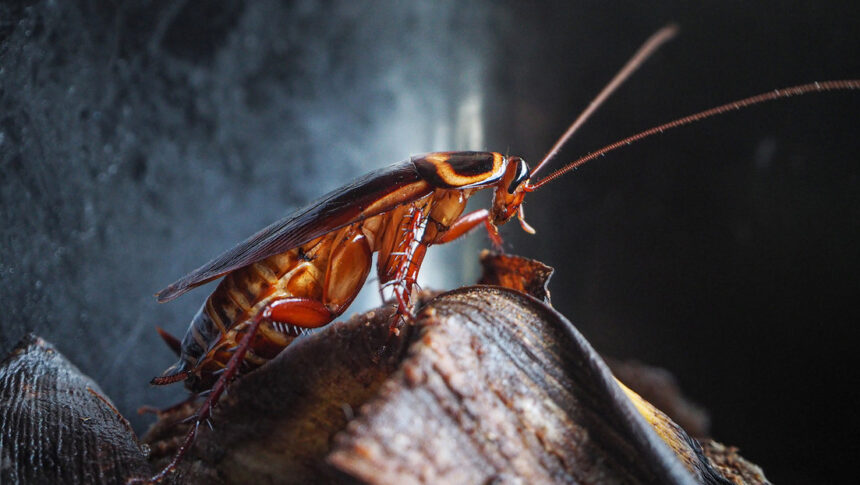
Scientists have identified what may be a key factor behind the remarkable survival of cockroaches: a form of collective memory that emerges from interactions within the group rather than from individual insects.
The findings, published by researchers at the Free University of Brussels, showed that groups of American cockroaches (Periplaneta americana) continued to occupy the same shelter even after environmental conditions changed, suggesting that the colony’s social structure influenced its decisions.
In the experiment, researchers placed two nearly identical shelters inside an enclosure. One was illuminated with red light, which cockroaches perceive as darker and therefore more attractive, while the other was lit with green light. Most of the insects initially chose the red-lit shelter.

After the scientists switched the lighting between the shelters, individual cockroaches tended to move to the darker refuge. Colonies, however, largely remained where they had already settled. Researchers concluded that once enough cockroaches gather in one place, their interactions become stronger than the environmental cues encouraging them to move.
To test the theory, the team also developed a computer model using virtual cockroaches with no memory. By programming them only to prefer darker shelters and stay close to one another, the model reproduced the same group behavior observed in the experiments.
More Read
The researchers said similar forms of collective memory may also exist in other animals that make decisions as groups, including fish, birds, ants, bees and even humans.