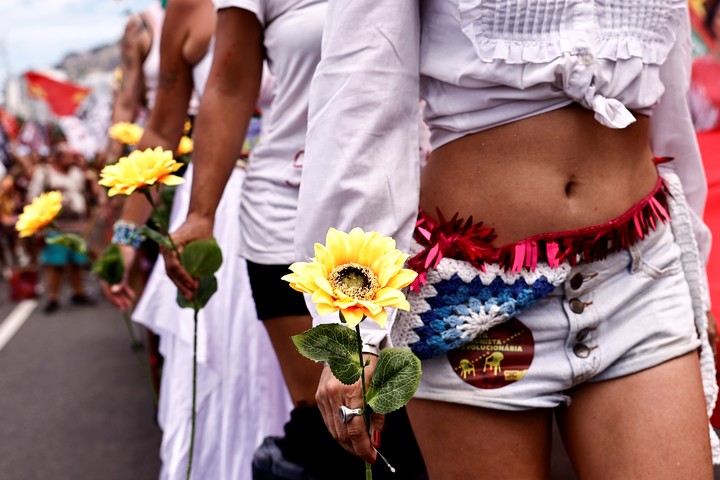
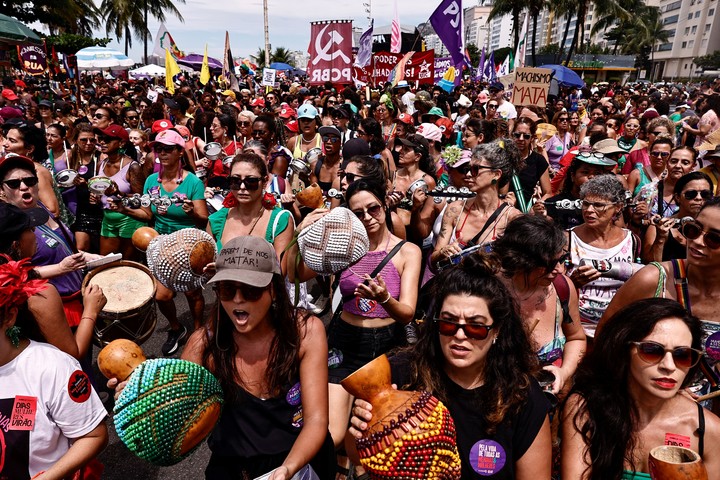
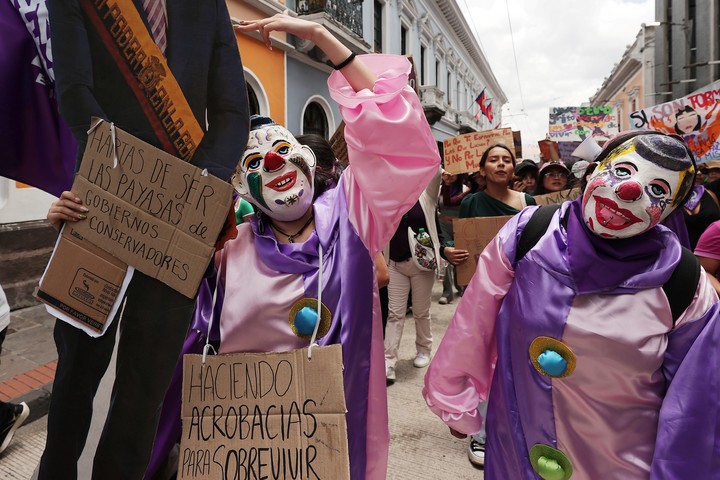
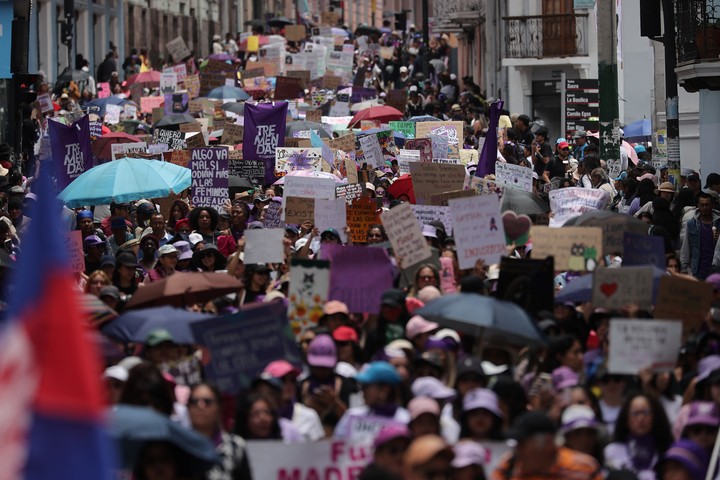
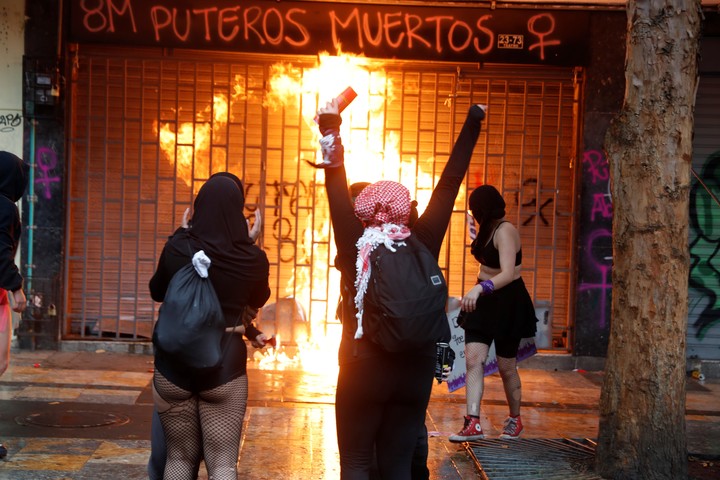
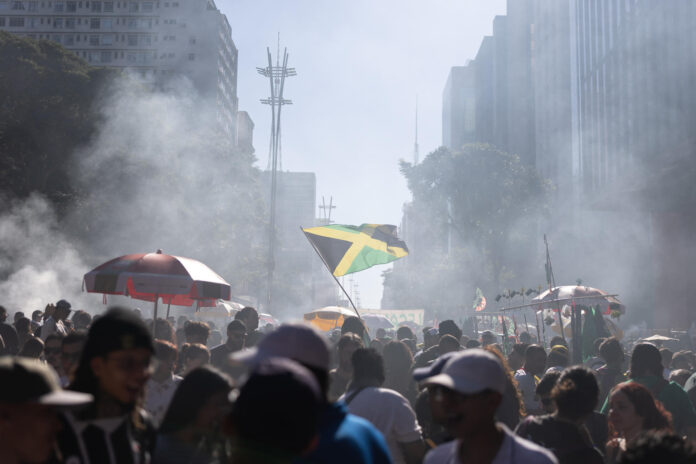
Thousands of women mobilized this Sunday, March 8, in various cities in Latin America to commemorate International Women’s Day, a day marked by protests, marches, and symbolic acts demanding equal rights, justice, and an end to gender-based violence in the region.
The mobilizations of the so-called 8M were carried out under the slogan “Rights, justice and action for and for all women and girls”, promoted by the United Nations (UN), with the aim of making visible the barriers that still limit equitable access to human rights and justice for millions of women.
In several Latin American capitals, feminist groups, social organizations, and citizens marched through the main avenues to denounce the persistence of gender violence, wage inequality, and the lack of access to opportunities in areas such as politics, education, and employment.
Political context influences the protests
The regional political context also influenced the tone of the demonstrations. Activists and specialists expressed concern about possible setbacks in gender policies following electoral victories of conservative leaders such as José Antonio Kast in Chile, Nasry Asfura in Honduras, and Laura Fernández in Costa Rica.
Concerns increased following decisions made by Argentine President Javier Milei, a political ally of US President Donald Trump, whose administration eliminated the sub-secretariat against gender violence and reduced subsidies and social programs aimed at women.
For the executive director of the Mexican organization Intersecta, Estefanía Vela, the political shift towards conservative sectors could imply a “return to traditional roles” that threatens progress made in recent decades.
Advances and challenges in the region
In contrast, some countries have promoted initiatives to strengthen the protection of women’s rights. In Mexico, the government of Claudia Sheinbaum —who in 2024 became the first female president of the country— has promoted reforms aimed at guaranteeing equal pay and demanding gender-sensitive investigations in cases of femicide.
However, regional figures highlight the magnitude of the problem. According to the Economic Commission for Latin America and the Caribbean (ECLAC), at least 3,828 women were victims of femicide or violent death due to gender-based reasons in 2024 in 26 countries and territories of the region, which is equivalent to 11 daily murders.
The highest rates were recorded in Honduras, followed by Mexico, Guatemala, Dominican Republic, Puerto Rico, Cuba, and Bolivia.
According to estimates from the World Health Organization and United Nations agencies, one in three women over 15 years old in Latin America has suffered physical or sexual violence at least once in their life.
Obstacles to reporting persist
The UN Women agency warns that, despite legislative advances in several countries, factors such as stigmatization, fear, and distrust in institutions continue to prevent many victims from reporting.
In Mexico, for example, barely 13.1% of women who suffer violence from their partner file a formal complaint, which reflects the challenges the region still faces in ensuring effective protection.
With the mobilizations of International Women’s Day, organizations and activists seek to maintain social pressure on governments to implement public policies that guarantee security, equality, and justice for all women and girls in Latin America Latina.
We are a multiplatform outlet offering news and television content. The fastest-growing news outlet in audience in the history of Caribbean communication.