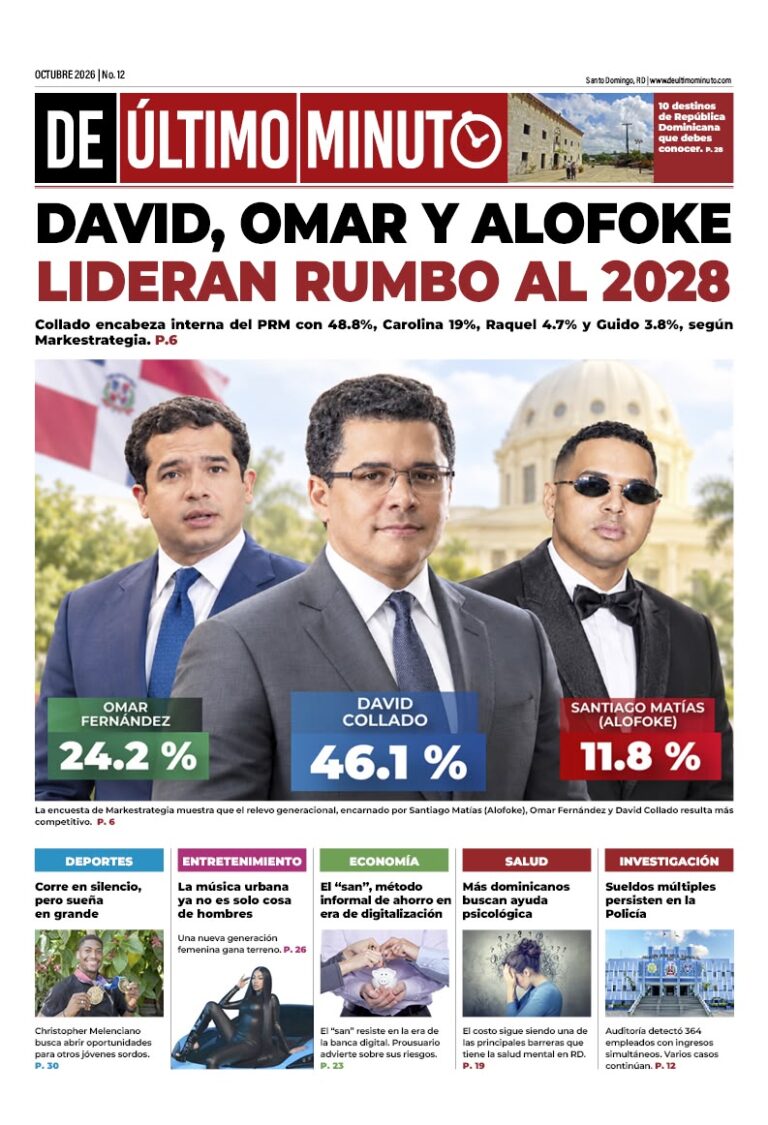


Numbers help to understand a reality that discourse, perception, or habit often do not show completely. A survey reveals concerns; an audit identifies flaws; a statistic allows us to know how much a public policy is advancing. But measuring, on its own, does not solve anything.
The true value of data begins when it is used to make decisions, correct errors, and produce results.
In this edition of De Último Minuto, various works reflect that need. Insecurity appears among the main citizen concerns, although at the same time a majority positively values certain actions by the authorities. Both realities can coexist and force us to look at the problem beyond a single figure.
The same applies to public finances. If a technical study identifies distortions capable of representing billions of pesos in uncollected revenue, the finding must lead to review, oversight, and transparency.

Audits also lose their meaning if their conclusions do not generate corrective actions. Detecting an irregularity is just the first step; the important thing is to ensure that it does not happen again.
Public management needs indicators, deadlines, and monitoring. But those numbers must meet reality: a permit issued faster, a completed project, an irregularity corrected, or a citizen who receives a response.
Data should not be used to decorate speeches or to declare problems that still persist as solved. They should serve to diagnose, explain, and improve.
Measuring is necessary. Correcting is what produces results.