


Minister of Tourism, David Collado, leads electoral preferences ahead of the 2028 presidential elections, both in internal scenarios for the Modern Revolutionary Party (PRM) and in hypothetical matchups against the main opposition figures, according to the results of the most recent national survey by Markestrategia, conducted on October 2, 3, and 4, 2026.
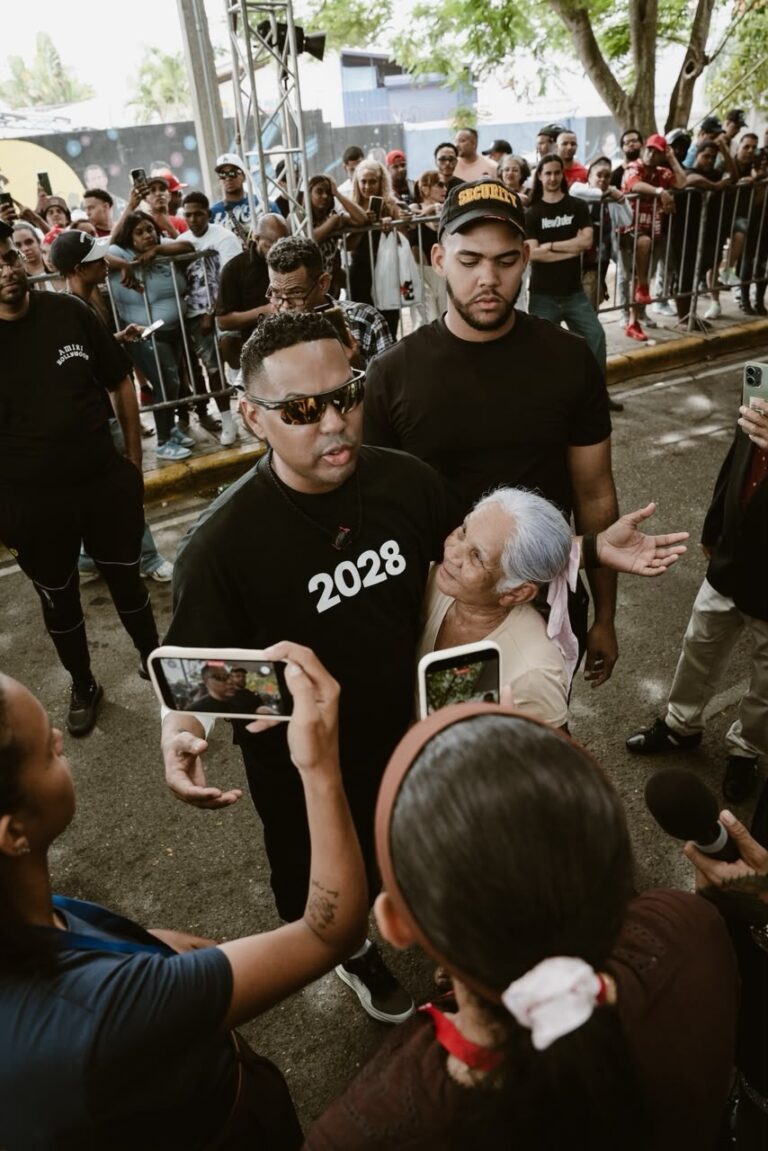
The study also positions Senator Omar Fernández as one of the main opposition figures, with a higher voting intention than former President Leonel Fernández in the respective scenarios evaluated against Collado. Likewise, it evidences the presence of Santiago Matías (Alofoke) in presidential preferences, with percentages exceeding 11%.
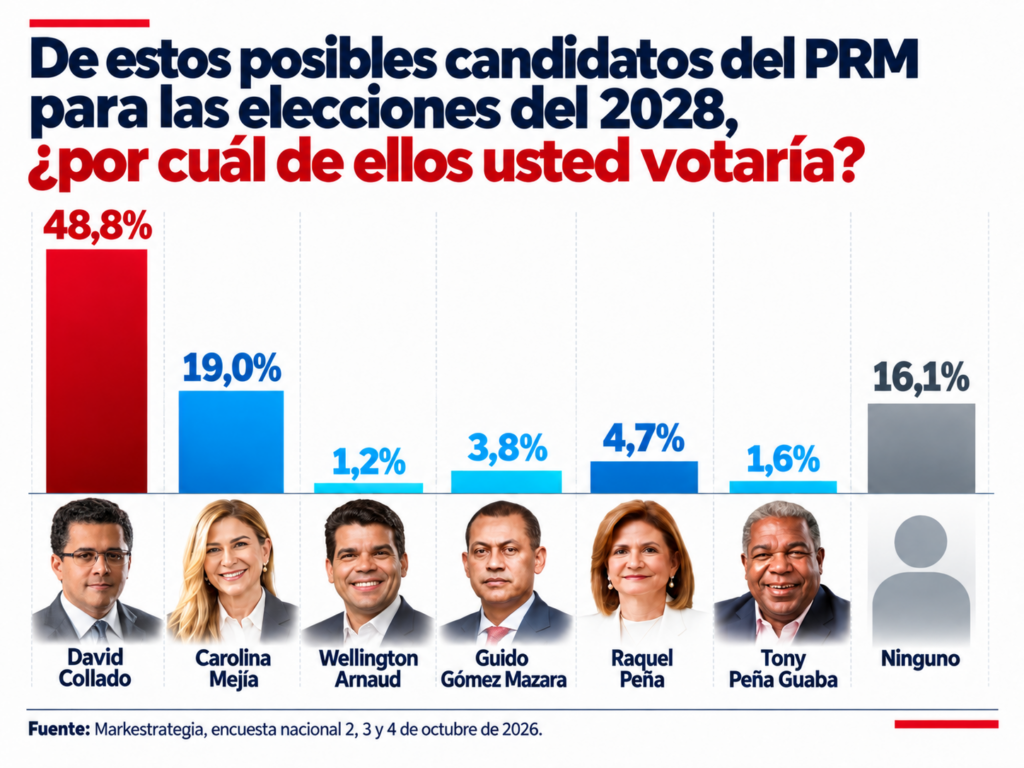
Regarding the internal preferences of the ruling party, Collado obtains 48.8% support among those surveyed, widely surpassing the mayor of the National District, Carolina Mejía, who registers 19.0%.
In the following positions appear the Vice President of the Republic, Raquel Peña, with 4.7%; Guido Gómez Mazara, with 3.8%; Tony Peña Guaba, with 1.6%; and Wellington Arnaud, with 1.2%.

For their part, 16.1% of respondents stated that they would not choose any of the mentioned leaders, while 4.9% did not respond.
When the measurement is limited to a head-to-head between the two main figures of the PRM, Collado raises his preferences to 50.8%, compared to 21.8% for Carolina Mejía. In that scenario, 20.5% would choose neither and 6.9% do not know or do not respond.
Presidential scenarios against the opposition
In the voting intention scenarios for the 2028 presidential elections, Markestrategia’s results show differences in support for Fuerza del Pueblo candidates, depending on the figures included in each measurement.
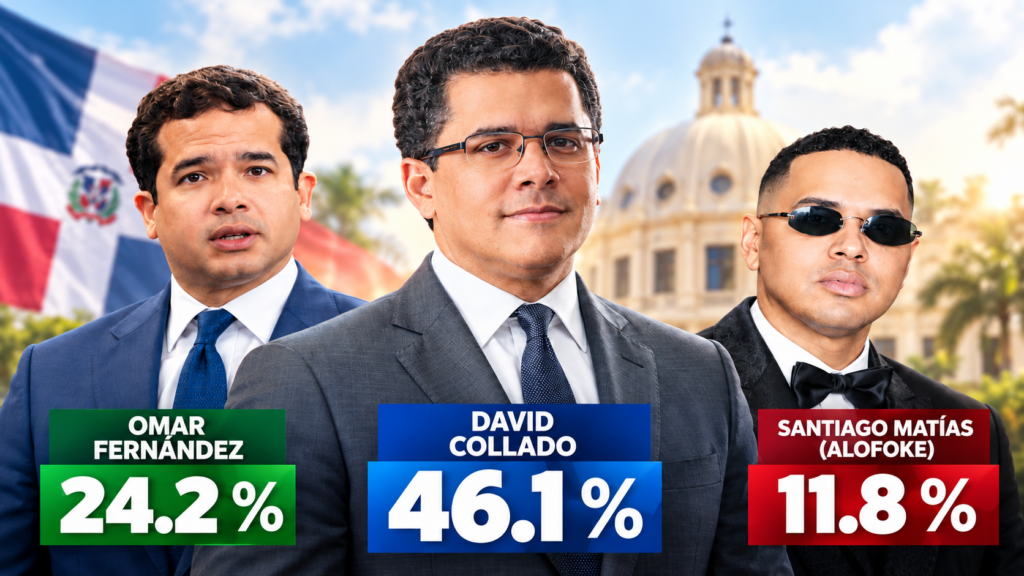
In a scenario where David Collado faces Omar Fernández, the Minister of Tourism obtains 46.1% of the preferences, compared to 24.2% for the current senator of the National District.

In that same measurement, Santiago Matías (Alofoke) reaches 11.8%, while Gonzalo Castillo, of the Dominican Liberation Party (PLD), registers 9.5%. 5.3% of those surveyed would not vote for any of them and 3.2% do not know or did not respond.
By replacing Omar Fernández with former president Leonel Fernández, Collado increases his voting intention to 48.5%, while the leader of the Fuerza del Pueblo obtains 20.6%.
In this second scenario, Santiago Matías reaches 12.8%, consolidating a significant presence among the evaluated options, while Gonzalo Castillo registers 9.3%. The none option represents 5.7% and 3.2% corresponds to those who do not know or do not respond.
The results reflect that, in the respective scenarios against Collado, Omar Fernández records a higher level of preference than that obtained by Leonel Fernández, although these are independent measurements and not a direct confrontation between both leaders.
Carolina Mejía also surpasses opposition figures
The Markestrategia poll also evaluated voting intention in presidential scenarios in which Carolina Mejía appears as a potential candidate for the Modern Revolutionary Party.
In a matchup against Omar Fernández, the mayor of the National District obtains 38.6% of the preferences, while the senator from the Fuerza del Pueblo reaches 32.3%.
In that same scenario, Gonzalo Castillo registers 11.9%, while 12.3% of respondents state that they would not vote for any of them and 5.0% do not know or do not respond.
When the measurement includes former President Leonel Fernández instead of Omar Fernández, Mejía increases his support to 40.0%, compared to 25.8% for the former president and 12.3% for Gonzalo Castillo.
In this last scenario, 15.2% would not choose any of the candidates and 5.8% remain in the don’t know or no response category.
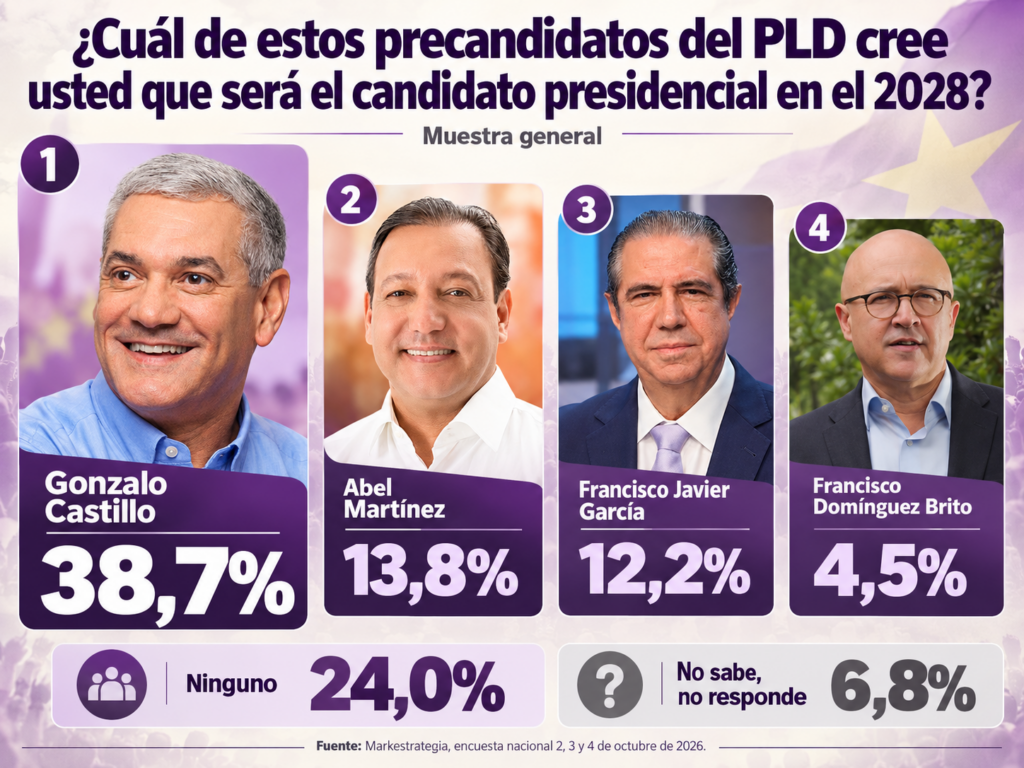
The results show that both Collado and Mejía lead the presidential scenarios evaluated against opposition representatives, although with significant differences in their respective levels of support.
Survey technical sheet
The Markestrategia survey was conducted on October 2, 3, and 4, 2026, through in-person interviews with a national sample of 1,200 people registered in the electoral roll of the Central Electoral Board (JCE).
The study presents a 95% confidence level and a national sample margin of error of ±2.8 percentage points.
By region, the margins of error are ±4.9 percentage points in Greater Santo Domingo; ±4.6 in the North; ±6.9 in the South; and ±8.0 in the East.
The composition of the sample corresponds to 76.8% urban population and 23.2% rural.