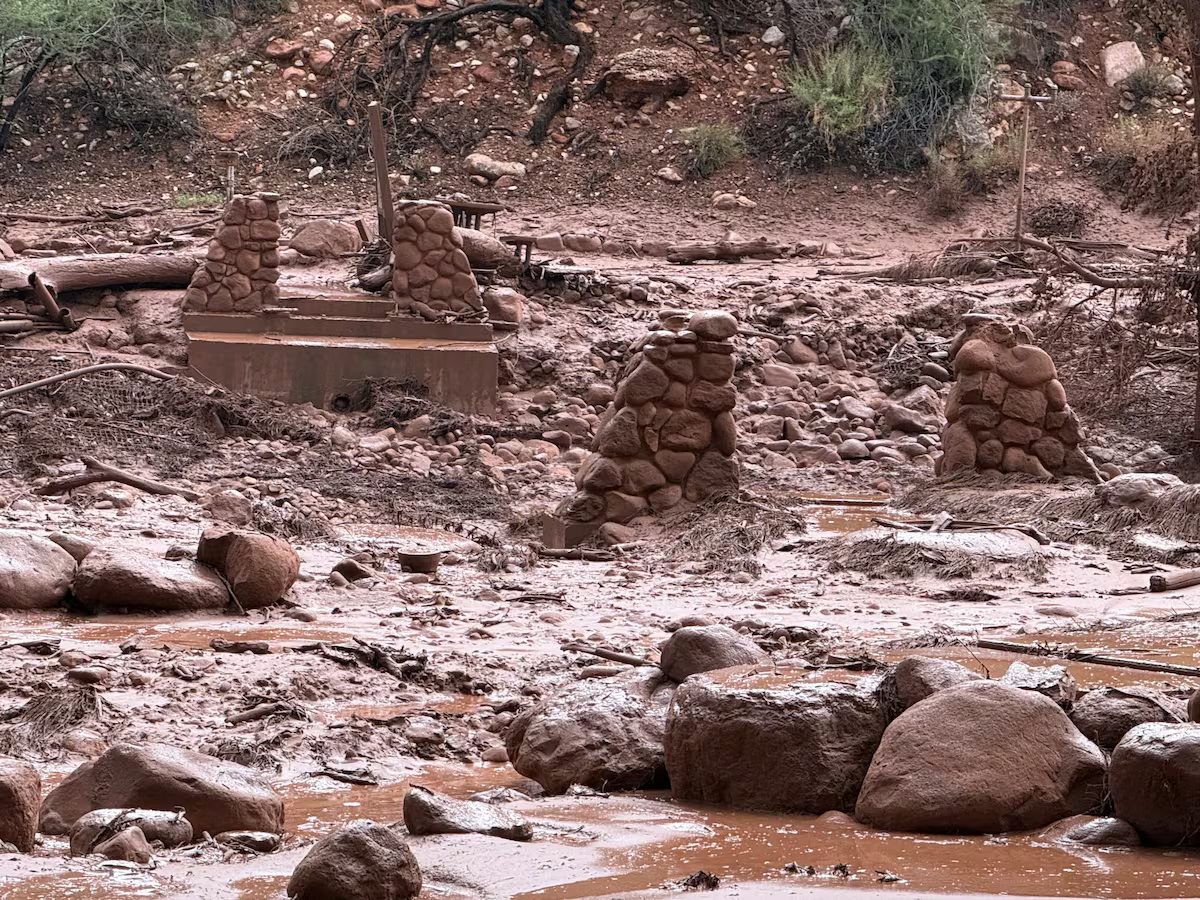

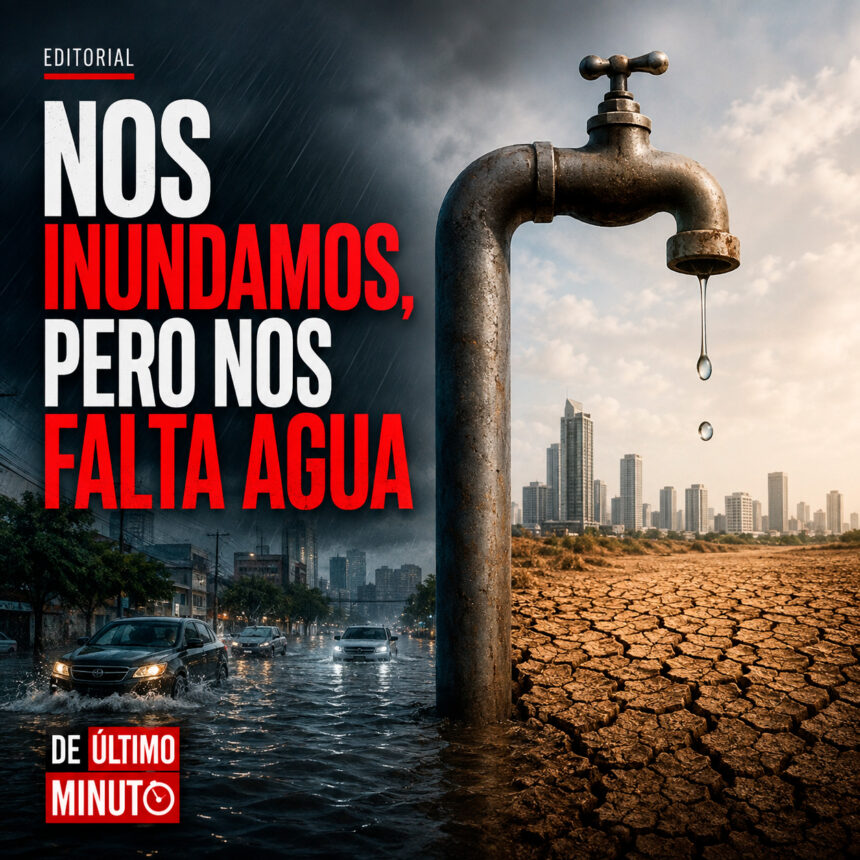
The Dominican Republic faces a paradox that can no longer be dismissed as a simple weather oddity: we lack water while, when it rains heavily, a good part of that same water ends up flooding streets, avenues, and entire sectors. This Monday, while several regions were under alert for possible flooding, the director of Inapa, Wellington Arnaud, warned about difficult drought conditions and called for the rationalization of consumption. There is no scientific contradiction: a downpour does not automatically fill dams and aquifers nor does it turn rain into drinking water. The contradiction lies elsewhere: we still have serious difficulties in managing water when there is too much and when there is too little.
During rainy periods, enormous volumes run across waterproofed surfaces, overflow ravines, and put insufficient drainage systems to the test. When weeks of low precipitation arrive, flow rates drop and restrictions begin. That cycle cannot continue to be treated as a chain of disconnected emergencies. The country needs more storage capacity, better aqueducts and drainage, protection of watersheds and aquifers, fewer losses in the networks, wastewater treatment and reuse, and greater utilization of rainwater.

There are advances that must be recognized. The Government reported investments exceeding RD$37 billion in drinking water and sanitation and announced projects such as the expansion of the Cibao Central Aqueduct and new solutions to increase the supply for Greater Santo Domingo. But precisely the magnitude of these works forces us to think beyond isolated projects. Drinking water, dams, drainage, sanitation, ravines, land use planning, and urban growth are part of the same problem and must be planned as a single system.
Citizens must save water and stop turning streets and ravines into landfills, but the primary responsibility for planning lies with the State. The Dominican Republic needs to calculate from now on how much water it will demand in 10, 20, or 30 years, what sources it will have available, and what infrastructure it must build to respond to that growth. We cannot keep waiting for a drought to talk about water or for a downpour to remember the drains. We cannot control when it rains, but we can decide whether the water that arrives becomes a resource or turns back into a problem.