

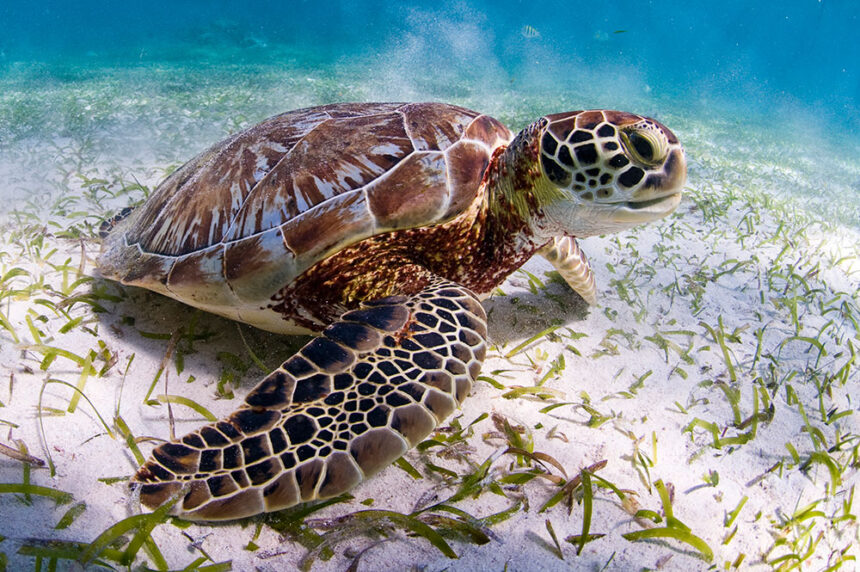
This Thursday, June 16, marks World Sea Turtle Day, a date dedicated to raising awareness about the critical situation facing these ancient inhabitants of the Earth. Sea turtles, which have been navigating the oceans for approximately 200 million years, are some of the longest-lived and, at the same time, most threatened creatures on the planet.
Sea turtles are true living fossils that have withstood climate changes and natural catastrophes since the age of the dinosaurs. However, today, their existence is seriously compromised by various threats directly related to human activity.
Why dedicate a world day to them?
June 16 also marks the birth of Archie Carr (1909), a prominent American conservationist whose life was dedicated to protecting sea turtle populations, especially in Costa Rica. His legacy inspires the global effort to ensure the survival of these species that face an uncertain future.
Threatened species and the challenges they face
Currently, there are seven species of sea turtles, six of which are endangered according to the International Union for Conservation of Nature (IUCN):

- Flatback Sea Turtle (Natator depressus)
- Green Sea Turtle (Chelonia mydas)
- Hawksbill Sea Turtle (Eretmochelys imbricata)
- Loggerhead Sea Turtle (Caretta caretta)
- Leatherback Sea Turtle (Dermochelys coriacea)
- Olive Ridley Sea Turtle (Lepidochelys olivacea)
- Kemp’s Ridley Sea Turtle (Lepidochelys kempii)
Among the main threats they face are:

- Pollution from trash and plastics in the oceans, which can trap them or be ingested by mistake.
- Accidental fishing with gillnets where they get trapped and die.
- Global warming, which alters ocean temperatures and affects the incubation of their eggs.
- Increased tourism on the beaches where they nest, which can disrupt their reproductive cycle.
Curiosities that strengthen the admiration for sea turtles
These reptiles have fascinating characteristics that make them unique:
- Their shell is not just a shield, but an integral part of their skeleton, composed of nearly 50 bones.
- They are omnivorous and feed on corals, algae, squid, and jellyfish.
- They do not have teeth, but possess keratin beaks that allow them to bite and tear food.
- During breeding season, turtles return to the beach where they were born to spawn, depositing up to more than 100 eggs that incubate for approximately 60 days.
- Out of every 1,000 hatchlings that emerge, only one manages to survive and reach adulthood.
- They are tireless migrators, capable of traveling long distances at speeds between 27 and 35 km/h.
- Their longevity is remarkable, as they can live between 150 and 200 years.
An urgent call for conservation
World Sea Turtle Day invites global society to join in the protection of these incredible animals. Various environmental organizations work tirelessly to preserve their habitats, minimize the negative impacts of human activity, and promote laws that guarantee their care.
Protecting sea turtles is preserving a natural legacy that has survived for millions of years. The responsibility belongs to everyone: preserving the balance of marine ecosystems is also taking care of our own future.