

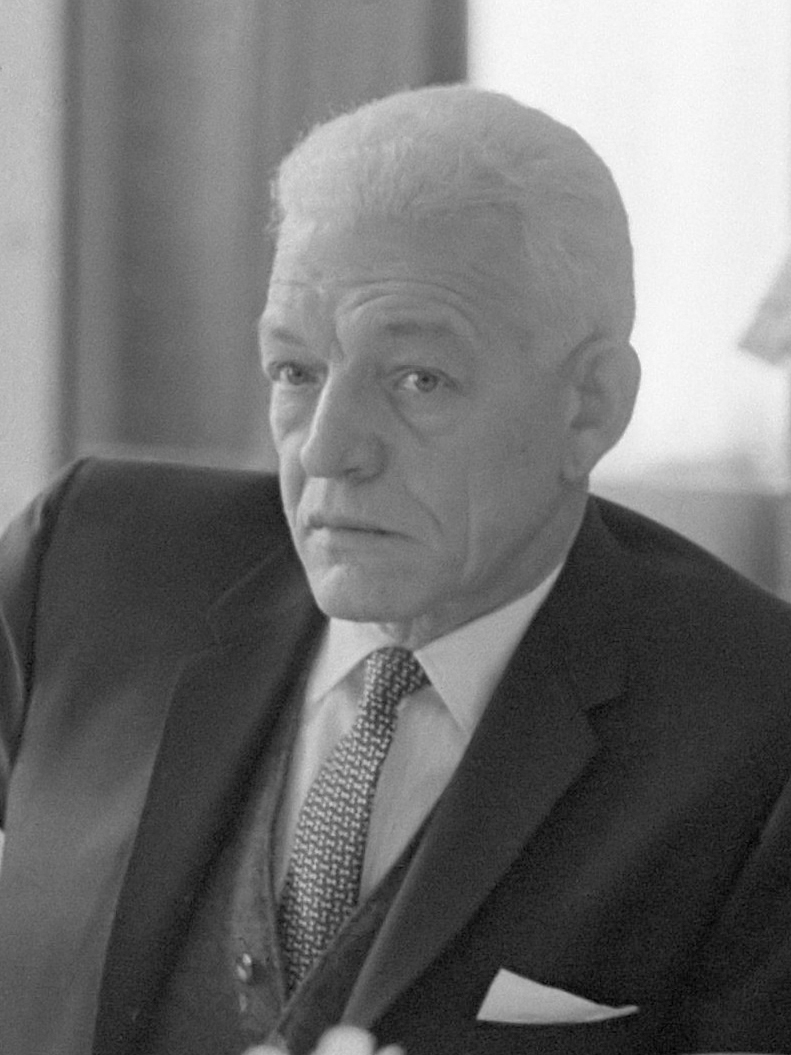
Today marks the 116th anniversary of the birth of Juan Bosch

7:00 am
Every June 30th, the Dominican Republic remembers the birth of Juan Bosch Gaviño, one of its greatest thinkers, writers, and political leaders. Born in 1909 in La Vega, Bosch not only marked an era with his pen and his ideals, but also sowed in the hearts of entire generations the hope of a more just, educated, and democratic homeland.
116 years after Bosch’s birth, his intellectual and political legacy continues to be a benchmark for understanding the country’s historical challenges and the possible paths towards a more ethical State committed to human dignity.
Juan Bosch was much more than the founder of the main political parties of the country in the 20th century (the PRD and the PLD). He was also a masterful narrator, a sharp essayist, and a passionate student of Latin American social reality. His literary work became a mirror of the Dominican people, reflecting the anxieties and hopes of the peasants, workers, and the excluded.
From an early age, he showed an unwavering commitment to the truth. During the exile he suffered for more than two decades due to the dictatorship of Rafael Leónidas Trujillo, he wrote some of his most emblematic texts, such as La Mañosa and Cuentos Escritos en el Exilio, which not only consecrated him as one of the most outstanding writers in the Caribbean, but also gave voice to those who did not have it.
A brief, but unforgettable president
In 1963, after the fall of the Trujillo dictatorship, Juan Bosch became the first democratically elected president in over 30 years. His government, although brief (he was overthrown after just seven months), laid the foundations for what he conceived as a modern democracy, with a new Constitution, respect for civil rights, and a firm fight against corruption. The coup that overthrew him did not stop his work. He continued fighting, this time from the opposition, with the same lucidity with which he wrote stories and analyzed history. He founded the Dominican Liberation Party (PLD) in 1973, convinced that the ideological and ethical formation of political cadres was indispensable to transform the country.A legacy that defies oblivion
Remembering the birth of Juan Bosch is not a ceremonial act, but an urgent invitation to revisit his ideas. In times where public ethics are threatened and political participation tends towards disenchantment, Bosch’s teachings take on new life. His speeches, his analyses of caudillismo, imperialism, and the need for a critical citizenry remain relevant tools for rethinking the present. Today, schools, streets, foundations, and universities bear his name. But beyond the visible tributes, his most powerful legacy remains invisible: it is in the consciousness of those who believe in education as an engine of change, in social justice as a horizon of struggle, and in honesty as the foundation of politics.A man who lived as he thought
Juan Bosch died in 2001, but his thinking lives on. His coherence (living as one thinks) made him an unusual figure in Dominican political history. He rejected privileges, renounced benefits, and stood firm in his principles, even when that meant going against the dominant currents. Today, on his birthday, it is not enough to repeat his name. It is necessary to read it, study it, question it and, above all, act in accordance with the values he defended. Because as he himself wrote: “The man who does not fight for justice does not deserve to live in freedom.”
Redacción de De Último Minuto


#Most read
- 1.Armed men attack U.S.-flagged vessel in Haiti’s Port-au-Prince Bay
- 2.VIDEO: Guatemalan teenager wakes up inside her coffin after being presumed dead
- 3.5D Cinema in Japan surprises the world with an immersive experience that goes viral
- 4.Biography of Juan Ramón Gómez Díaz: The Media Mogul in the Dominican Republic
- 5.VIDEO: Witnesses say man prayed and bowed to tiger before fatal zoo attack in England
- 6.The Panama Canal begins evaluation of companies interested in building two ports
- 7.VIDEO: Father throws chair at judge after driver gets 120 hours of community service for killing his daughter
- 8.Pamela Infante clarifies situation with Wander Franco
- 9.Dominican man shot by ICE in the Bronx had robbery conviction and pending drug charges
- 10.UN documents Dominican Army and police ammunition in hands of 400 Mawozo

Newsletter
Subscribe to our newsletter to receive our latest articles instantly!