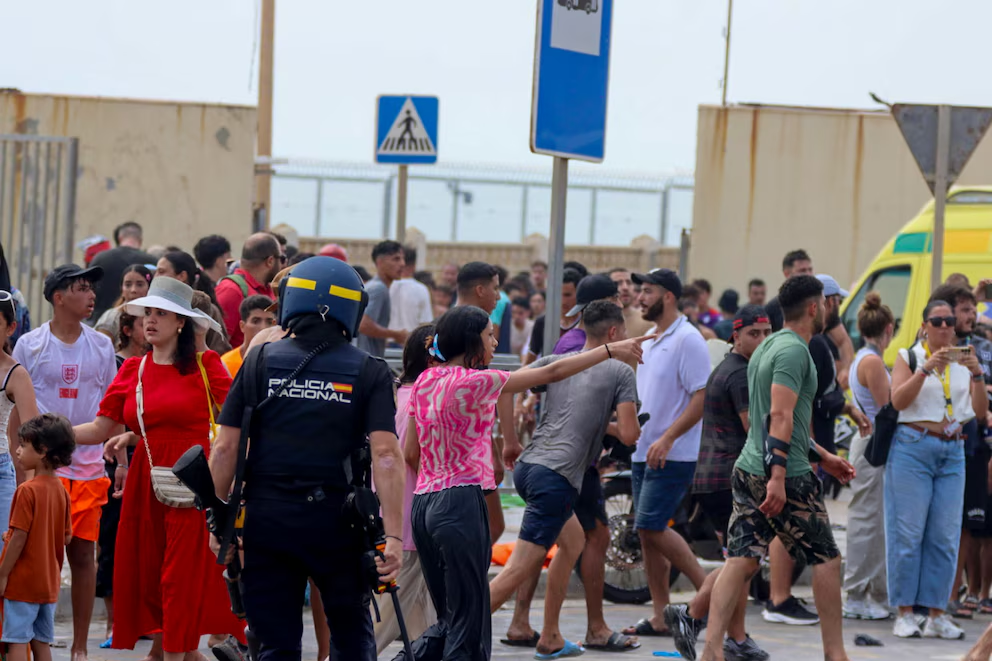


For several days, a stream of migrants swam from Morocco into Spanish territory. On July 30th and during the early hours of the following day, the stream turned into an uncontrollable avalanche. In total, Spanish authorities estimate that more than 50,000 people entered Ceuta, a small Spanish enclave on the North African coast with a permanent population of only 84,000 inhabitants. Overwhelmed, the Spanish police allowed them to pass and even offered water and sandwiches to some.
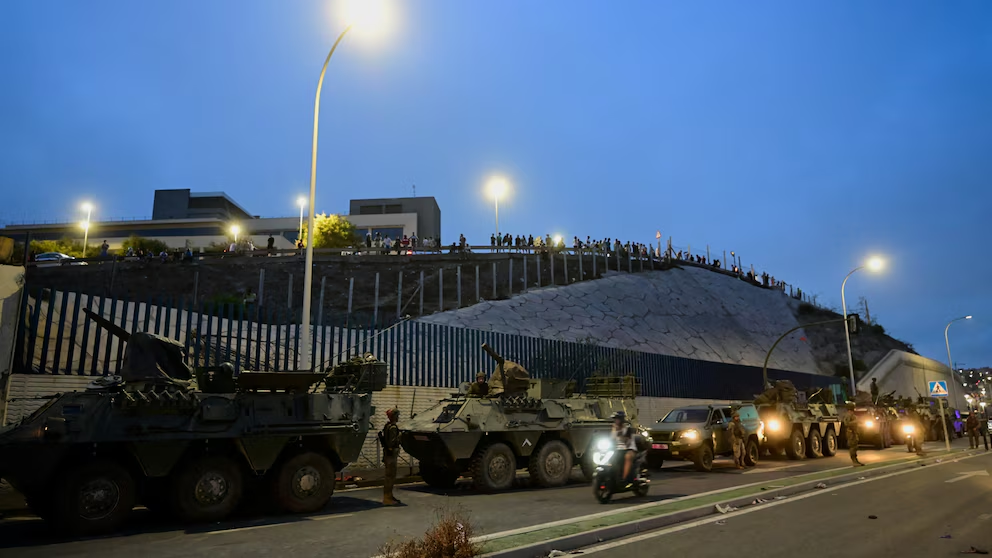
The center-left government of Pedro Sánchez remained occupied with the forest fires that have devastated the country this month and was preparing to go on vacation. At first, its reaction was slow. But faced with growing alarm across Europe, it deployed some troops, promised reinforcements, and held frantic talks with Moroccan officials. It promised that everyone who had entered illegally would be returned, with the cooperation of Morocco.
Sánchez flew to Ceuta on July 31st and ordered the deployment of more patrol boats, even as the situation became more critical. The government claims that 48,300 people have returned to Morocco, although the deportation of the rest could be more difficult.
Pedro Sánchez, President of the Spanish Government, visits the border in Ceuta during the mass migrant crossings from Morocco, on July 31, 2026.

The immediate trigger for the wave of migration was a ruling by the Spanish Supreme Court which determined that the law allowing for the immediate return of migrants who cross border barriers in Ceuta and Melilla, another Spanish enclave, does not apply to those who arrive by sea. (Those who swim, the court argued, do not technically cross border barriers, as there are none in the water). The news spread quickly on social media in Morocco, which led to the massive arrival of swimmers. Many Moroccans and others began to gather in the north of the country.
On July 30, a public holiday in Morocco, it was reported that border guards suspended patrols. This allowed thousands of people, including families with children, to simply walk around the breakwater and enter Spain through the main crossing point. Many then wandered the streets of Ceuta, sleeping on park benches or in the street. Police state that 34 people died while swimming.
The Spanish authorities have diplomatically refrained from blaming Morocco (Sánchez claimed that human trafficking networks were responsible). However, few believe that their government is innocent. Relations between both countries are usually tense.
In 2021, Morocco allowed some 8,000 people to enter Ceuta on foot, as a sign of its anger because Spain had allowed the leader of the Polisario Front, a group that has long been fighting for the independence of Western Sahara, to travel to Spain to receive medical treatment. Morocco annexed two-thirds of Western Sahara, a former Spanish colony, in 1975; almost all countries consider the annexation illegal.

The dissemination of the court ruling on social media in Morocco spurred the massive arrival of migrants to Ceuta.
In 2022, Sánchez angered Algeria, which sponsors the Polisario Front, by withdrawing Spain’s traditional support for a referendum on the territory’s future, backing instead a Moroccan plan for its autonomy. In an attempt to improve relations, earlier this month he visited Algeria, an important supplier of natural gas to Spain.
Regardless of whether Spain manages to resolve the recent migration crisis, it has highlighted the discontent of many European governments with Sánchez’s lax migration policy. During the 2021 migration wave, other European countries showed their solidarity with Spain. The European Commission declared that “Spanish borders are European borders.”
This time the reaction has been different. The Commission has offered to send agents from Frontex, its border security force. Italy announced the suspension of Schengen cooperation with Spain, which would imply passport controls for passengers arriving by ship or plane, and its Prime Minister, Giorgia Meloni, has called for the total exclusion of Spain from the Schengen area.
The French Interior Minister announced the tightening of controls at his country’s border with Spain. Numerous complaints have been raised by leaders of right-wing populist parties on the continent.
Giorgia Meloni, Prime Minister of Italy, has called for the exclusion of Spain from the Schengen Area following the wave of migration in Ceuta.
While many other European governments have restricted immigration, Sánchez has welcomed it as a driver of economic growth. Earlier this year, he announced an amnesty for irregular immigrants. Authorities expected this measure to affect about 500,000 people, but they have received 1.2 million applications. Meloni, in particular, has expressed her outrage that Spain did not consult its partners on a measure that affects the entire EU.
The Spanish authorities insist that the influx of immigrants to Ceuta was not due to the amnesty. However, the opposition claims that it has contributed to the general perception that Spain is too permissive. Several polls indicate that the majority of Spaniards believe there are too many immigrants in the country. General elections must be held before next summer. The images from Ceuta will not help Sánchez win.